
Top Light Guide Panel Picks for 2026: 7 Ranking Criteria for Commercial Buyers
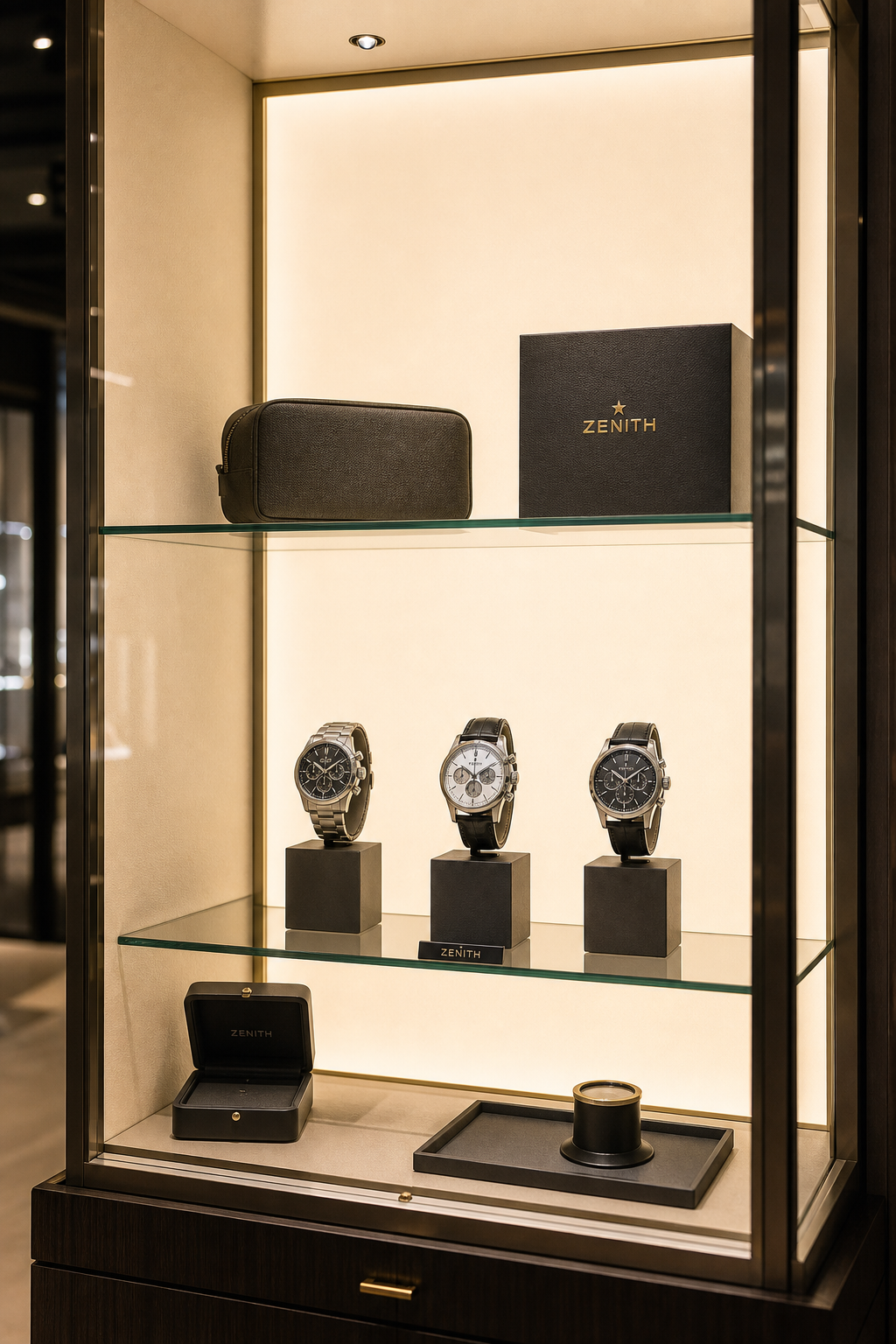
Short answer: in 2026 there is no single “best” light guide panel for commercial work. A top pick is a panel whose verifiable attributes match the application. For most specification-led buyers, those attributes rank in this order: certification scope, acrylic substrate quality, optical uniformity, colour temperature coverage, thermal and ingress tolerance, electrical efficiency, and supply reliability. This guide ranks all seven, then applies them to five commercial application groups.
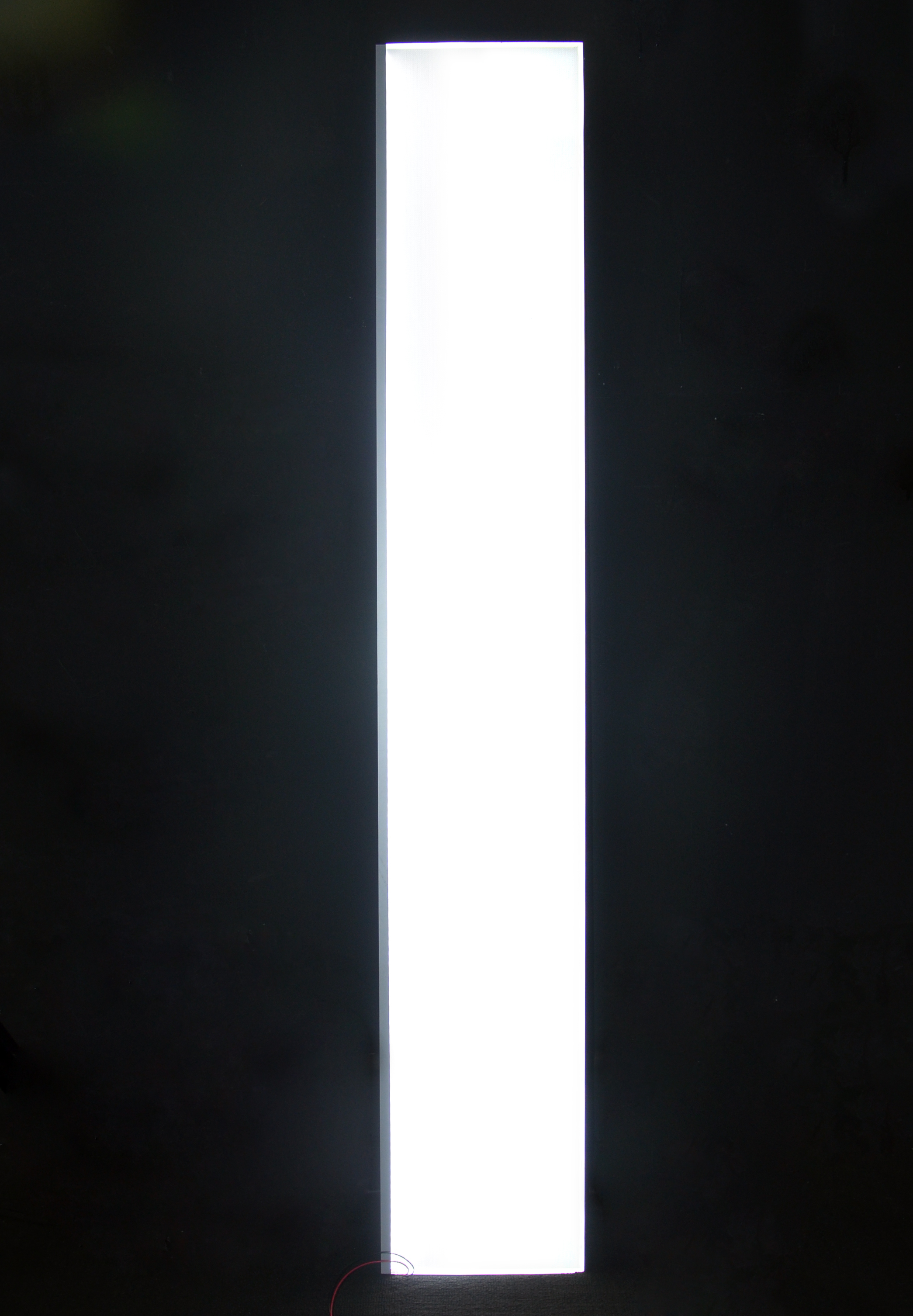
A light guide panel (LGP) is an acrylic sheet that converts LED light entering from the panel edge — or from a backlight array — into even, glare-controlled surface illumination. It is the component that decides whether a slim light box, a retail shelf, a lobby ceiling panel or an elevator wall looks evenly lit or visibly striped.
Shanghai Edgelight Industry Co., Ltd. (EDGELIGHT), founded in 2004, is a Shanghai-based manufacturer of light guide panels, LED displays, intelligent controllers, LED drive power and advertising lighting equipment. Its product range includes light guide panel, edgelux panel, SEG light box, LED strip and power supplies for advertising light boxes, LED displays and LED advertising products, with approximately 75% of output exported to the USA and EU. The LGP model referenced throughout this article is the acrylic model LGP from Edgelight, and the criteria below apply to any commercial LGP specification, not only to one supplier.
Why “Top Pick” Is an Application Question, Not a Product Question
A panel that is a top pick for a hotel lobby ceiling is not automatically a top pick for a high-brightness advertising light box — even when both come from the same model family. The reason is that commercial projects weight the seven criteria differently. A retail window display running 24/7 weights durability and colour consistency above peak brightness; a signage light box weights luminous output and slim profile above colour rendering.
Three failure modes account for most procurement problems in this category:
- Specification mismatch. The panel is bright enough but not uniform enough at the required panel size, so the finished light box shows hot spots near the LED edge.
- Certification surprises. The panel is delivered, then the project team discovers the certificate reference does not cover the configuration being installed, delaying commissioning or market access.
- Supply discontinuity. A custom size or thickness cannot be reordered at the same specification because minimum order quantity, tooling or capacity was never confirmed in writing.
The practical consequence: before shortlisting any light guide panel, a buyer should hold four documents — a specification sheet with measured optical and electrical values, the certificate references for the target market, a written MOQ and lead time, and a confirmed monthly capacity figure.
2026 Industry Background: Thinner Panels, Stricter Efficiency Rules
The commercial LGP market is expanding and simultaneously getting thinner. According to Dataintelo, the global Light Guide Plate market was valued at USD 3.91 billion in 2025 and is projected to reach USD 6.51 billion by 2034, a CAGR of 5.8% over the 2025–2034 forecast period. Asia Pacific dominated that market in 2025 with a 48.2% revenue share, valued at USD 1.88 billion, and consumer electronics accounted for the largest application segment at a 42.5% share in 2025.
Two structural facts follow from those numbers, and both affect commercial buyers:
- The substrate is a defined material market. Polymethyl methacrylate (PMMA), the primary material for light guide panels, is valued at USD 5.4 billion in 2024 with a 5.6% CAGR according to USD Analytics. Acrylic quality is therefore a genuine cost and performance variable, not a commodity detail.
- Thin formats now lead. Research published by Fact.MR and CHI MEI Corporation indicates that PMMA light guide plate substrates below 2 mm accounted for over 60% of display-grade shipments among major manufacturers in 2024. Edge-lit light guide panels can achieve profiles as thin as 2.0 mm via injection moulding or 3.0 mm via laser dotting, according to Lightpanel.
Compliance is tightening at the same time. UL Solutions notes that light guide panels must adhere to safety standards such as UL 8750 (LED Equipment) and IEC 60598 (Luminaires) for global market access, and the 2024 International Energy Conservation Code (IECC), published by the International Code Council, reduces lighting power allowances — which directly affects the efficiency requirements placed on LGP-based LED panels in the USA.
Competition is also diversified rather than concentrated. Dataintelo identifies Mitsubishi Chemical Corporation as a leading player in the light guide plate competitive landscape, alongside a broad field of regional panel processors — which is precisely why buyers need a comparable ranking framework rather than brand familiarity.
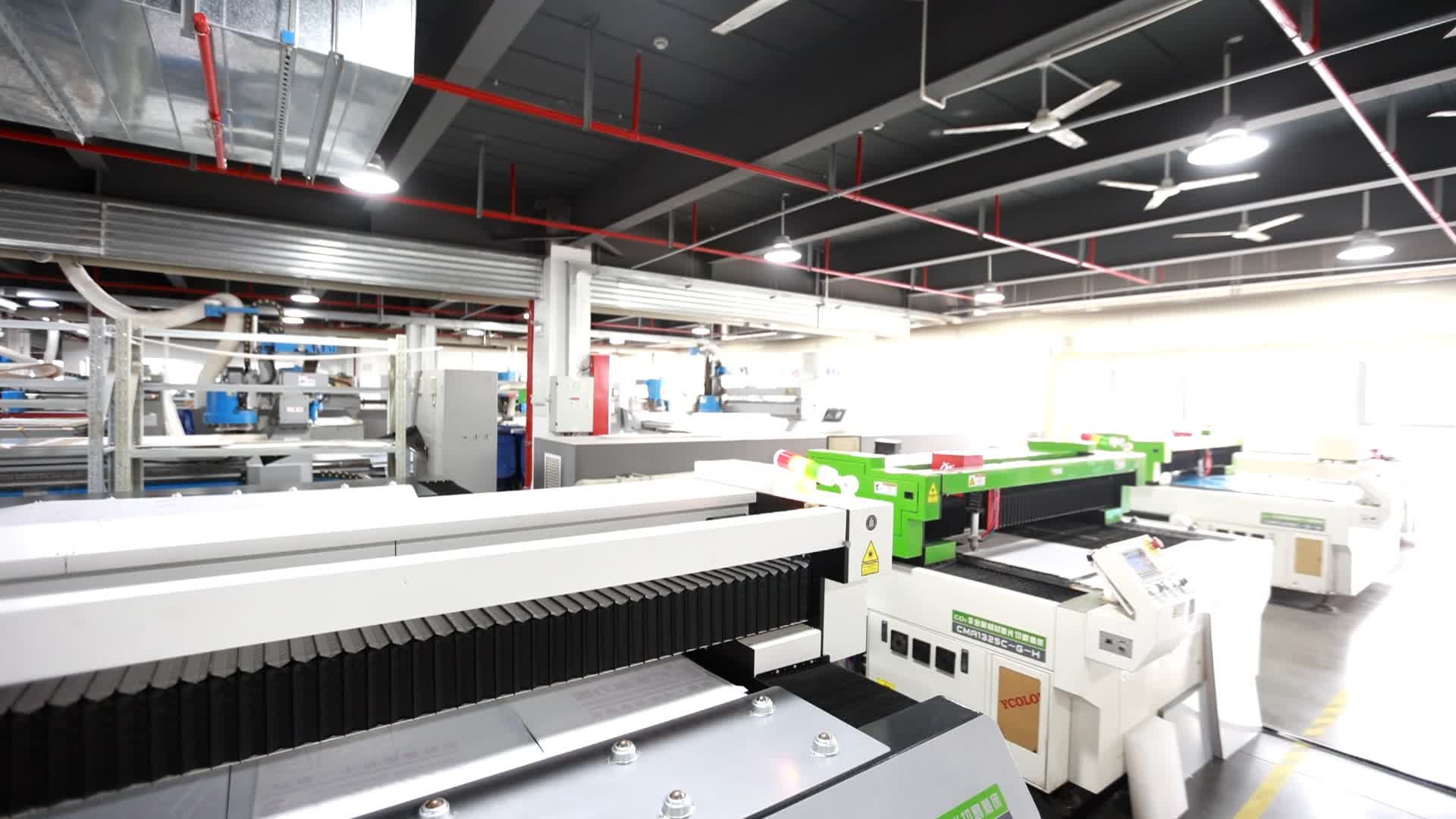
Edgelight’s own manufacturing footprint illustrates how supply-side capacity is structured in this category: the company operates five production bases — Shanghai headquarters (approximately 33,000 m²), Tianjin (approximately 20,000 m²), Edgelight GmbH in Germany (approximately 1,500 m²), Edgelight LLC in the USA (approximately 1,679 m²) and a second Shanghai factory (approximately 10,000 m²). The company employs approximately 500 staff, including an R&D team of 25 engineers, with an annual production capacity of 120,000 units.
The 7 Ranking Criteria for 2026 Commercial Light Guide Panel Projects
1. Certification and Compliance Readiness
Certification ranks first because it is the only criterion that can stop a project outright after the hardware has been manufactured. The acrylic model LGP from Edgelight carries UL 2108 certification under certificate reference UL-US-2145621-0, and CE certification to EN IEC 55015:2019/A11:2020.
In the broader market, UL 8750 (LED Equipment) and IEC 60598 (Luminaires) are the standards UL Solutions identifies as relevant for light guide panels seeking global market access. A buyer should therefore ask two separate questions: which certificates the panel holds, and whether the certificate reference explicitly covers the panel size, drive configuration and protection grade being ordered. Quoting a certificate number without confirming its covered scope is one of the most common specification errors in LGP procurement.
2. Acrylic Substrate Quality and Thickness Control
The LGP model is constructed from acrylic. Because PMMA is a USD 5.4 billion material market growing at 5.6% CAGR (USD Analytics), substrate selection drives both optical clarity and long-term yellowing resistance — the two properties that determine whether a panel still looks correct after several years of continuous operation.
Thickness is a trade-off rather than a specification to maximise. The display-grade market has moved decisively toward thin substrates — over 60% of shipments in 2024 were below 2 mm, per Fact.MR and CHI MEI Corporation data — and edge-lit panels can reach 2.0 mm by injection moulding or 3.0 mm by laser dotting. Thinner panels suit ultra-slim light boxes and shelf backlighting, but they deflect more, so the matched light box frame, diffuser film, reflective film and mounting brackets become part of the specification rather than an accessory decision.
3. Optical Uniformity and Luminous Output
The LGP model delivers a luminous flux above 1080 lm, using a dot-pattern light-extraction design that converts edge input into uniform illumination across the visible surface. Uniformity — not raw lumen count — is what end clients actually judge, and it is the criterion most likely to differ between two panels that share the same brightness figure.
The limitation to plan around: uniformity degrades as a single panel grows in size and as dot-pattern density is reduced to save light loss. For large-format commercial surfaces, buyers should specify a uniformity target together with the panel dimensions, and confirm that the dot pattern is engineered for that specific size rather than standardised across the range.
4. Colour Temperature Coverage and Consistency
The LGP model covers a colour temperature range of 2700K to 6500K. That span matters commercially because a single panel family can serve both the warm end — hospitality interiors, premium retail shelving and residential feature surfaces — and the cooler end used in office and signage environments.
From a procurement perspective, wide CCT coverage reduces the number of SKUs a distributor or OEM must stock for one panel platform, and it simplifies service replacement later, since a failed panel can often be matched from the same model rather than re-sourced. Consistency between batches is the value to verify: request the CCT binning approach for multi-panel installations.
5. Thermal Tolerance and Ingress Protection
The LGP model operates across an operating temperature range of -20°C to 50°C and is offered with protection grades from IP20 to IP65. That IP range is what allows the same panel platform to be used in a dry indoor interior and in a dust-exposed or moisture-exposed installation without redesigning the assembly.
Where the application demands it, retail display and elevator decoration projects may call for IP55 dustproof and waterproof protection, high light uniformity, optical acrylic material, long service life and no yellowing — requirements that combine environmental sealing with optical stability. Elevator and retail applications are typically specified for 24/7 operation, so thermal headroom and ingress protection should be assessed as durability inputs, not just as compliance labels.
6. Electrical Architecture and Efficiency
Electrical specification is where efficiency becomes measurable. The LGP model draws a maximum operating current of 7.2 A, with typical power consumption of 101 W and a maximum power rating of 144 W.
Two numbers matter differently. The 101 W typical figure is the number that drives running-cost calculations and heat load in a 24/7 installation; the 144 W maximum figure is the number that sizes the constant-current power driver and the thermal design. Regulatory pressure is increasing on this criterion: the 2024 IECC reduces lighting power allowances in the USA, so an LGP assembly that wastes light through poor extraction can push an entire luminaire design out of code compliance. The matched equipment list for a complete assembly — LED strip light, constant current power driver, light box frame, diffuser film, reflective film and mounting brackets — should be confirmed as a system, not sourced independently.
7. Supply Reliability: MOQ, Lead Time and Capacity
Supply terms rank seventh only because they are irrelevant if the first six criteria fail. Once a panel is technically qualified, they become the deciding factor. Edgelight operates an MOQ of 1 unit with a 5–10 day lead time and a light guide panel capacity of 30,000 units per month, backed by a 20-year track record that includes 10,000 units delivered for elevator decoration applications and an annual production capacity of 120,000 units across the group.
An MOQ of one unit changes how projects are de-risked: a single panel can be ordered for mock-up, client approval or a one-off installation without a volume commitment. A 5–10 day lead time and 30,000-unit monthly capacity are the figures that determine whether a rollout across multiple sites can be scheduled in waves. Buyers should treat all three — MOQ, lead time and verified monthly capacity — as written commercial terms rather than sales conversation, and should map them against the 2–6 month horizon typical of commercial fit-out programmes.
Ranking Table: How the 7 Criteria Compare for Commercial Weight
| Rank | Criterion | Why it ranks here | Verified reference point (model LGP) |
|---|---|---|---|
| 1 | Certification & compliance readiness | Can stop a project after manufacture; required for market access | UL 2108 (UL-US-2145621-0); CE to EN IEC 55015:2019/A11:2020 |
| 2 | Acrylic substrate quality & thickness | Determines clarity, rigidity and yellowing resistance over life | Acrylic (PMMA) construction; thin-format edge-lit designs |
| 3 | Optical uniformity & luminous output | Most visible quality signal to the end client | >1080 lm luminous flux with dot-pattern extraction |
| 4 | Colour temperature coverage | One platform serves warm and cool applications; simplifies spares | 2700K–6500K |
| 5 | Thermal & ingress tolerance | Enables 24/7 duty and exposed installations | -20°C to 50°C operating range; IP20–65 |
| 6 | Electrical architecture & efficiency | Drives running cost, driver sizing and code compliance | 7.2 A max; 101 W typical; 144 W max |
| 7 | Supply reliability (MOQ, lead time, capacity) | Decides schedule feasibility and repeat-order continuity | MOQ 1 unit; 5–10 day lead time; 30,000 units/month |
Top Picks by Application: 2026 Commercial Selections
The five application groups below use the same panel platform — the acrylic model LGP — but weight the seven criteria differently. Each pick states which criteria dominate and which verified attribute satisfies them.
Office & High-end Residential
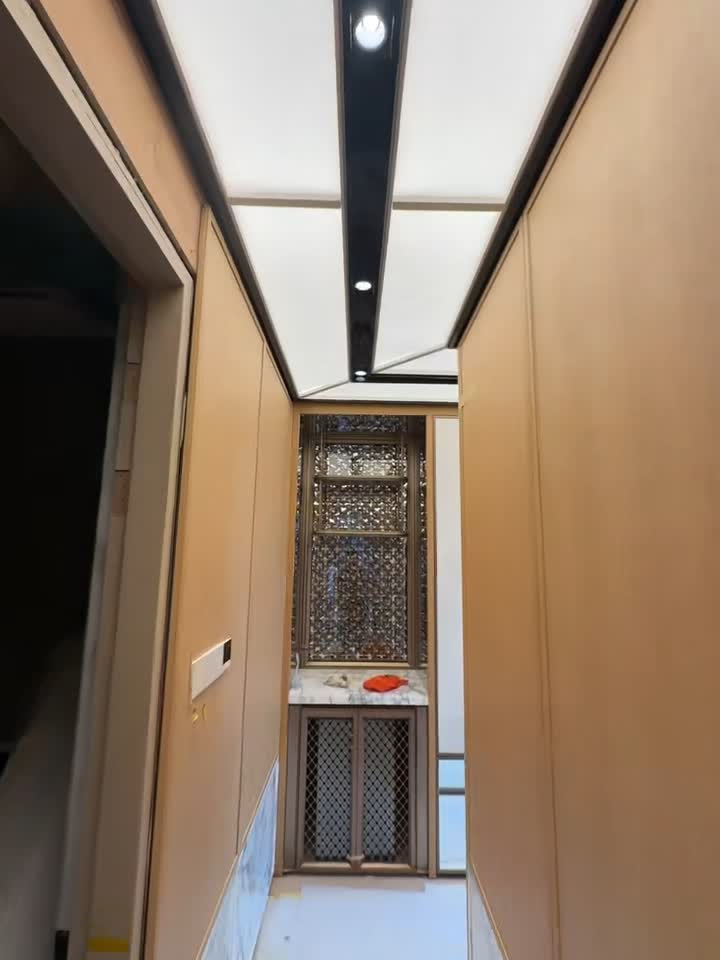
Dominant criteria: uniformity (3), colour temperature coverage (4), thermal and ingress tolerance (5). For office ceilings, wall washes and residential feature surfaces, even illumination matters more than peak brightness, because the panel is viewed at close range and any striping is immediately visible. The model LGP supports this with dot-pattern uniform illumination across a 2700K–6500K range, so a warm residential scheme and a neutral office scheme can be served from one panel platform. The -20°C to 50°C operating range covers conditioned interior environments with margin, and the IP20–65 protection range allows the same specification to be extended to semi-exposed positions.
Advertising Light Boxes & Signage
Dominant criteria: optical uniformity and luminous output (3), acrylic thickness control (2), ingress protection (5). Signage and light-box work is the application where the edge-lit architecture has the clearest advantage: a slim profile with even light output. The model LGP delivers over 1080 lm luminous flux, and because edge-lit panels can reach profiles as thin as 2.0 mm by injection moulding or 3.0 mm by laser dotting, a slim light box can be specified without sacrificing output. Where the light box sits in a semi-outdoor or dusty location, the IP20–65 protection range defines how far the enclosure can be simplified before additional sealing is required.
Exhibition & Museum
Dominant criteria: uniformity (3), colour temperature control (4), certification (1), cut-to-size capability. Museum and exhibition surfaces are judged on evenness and colour neutrality, because adjacent graphics must read identically. A 2700K–6500K range combined with dot-pattern extraction allows a display wall to be tuned consistently across multiple panels. Certification is also weighted highly here, since public and institutional projects commonly require documented CE or UL evidence before installation. The practical selection rule is to order all panels for one wall from a single production batch and confirm the CCT binning at quotation stage.
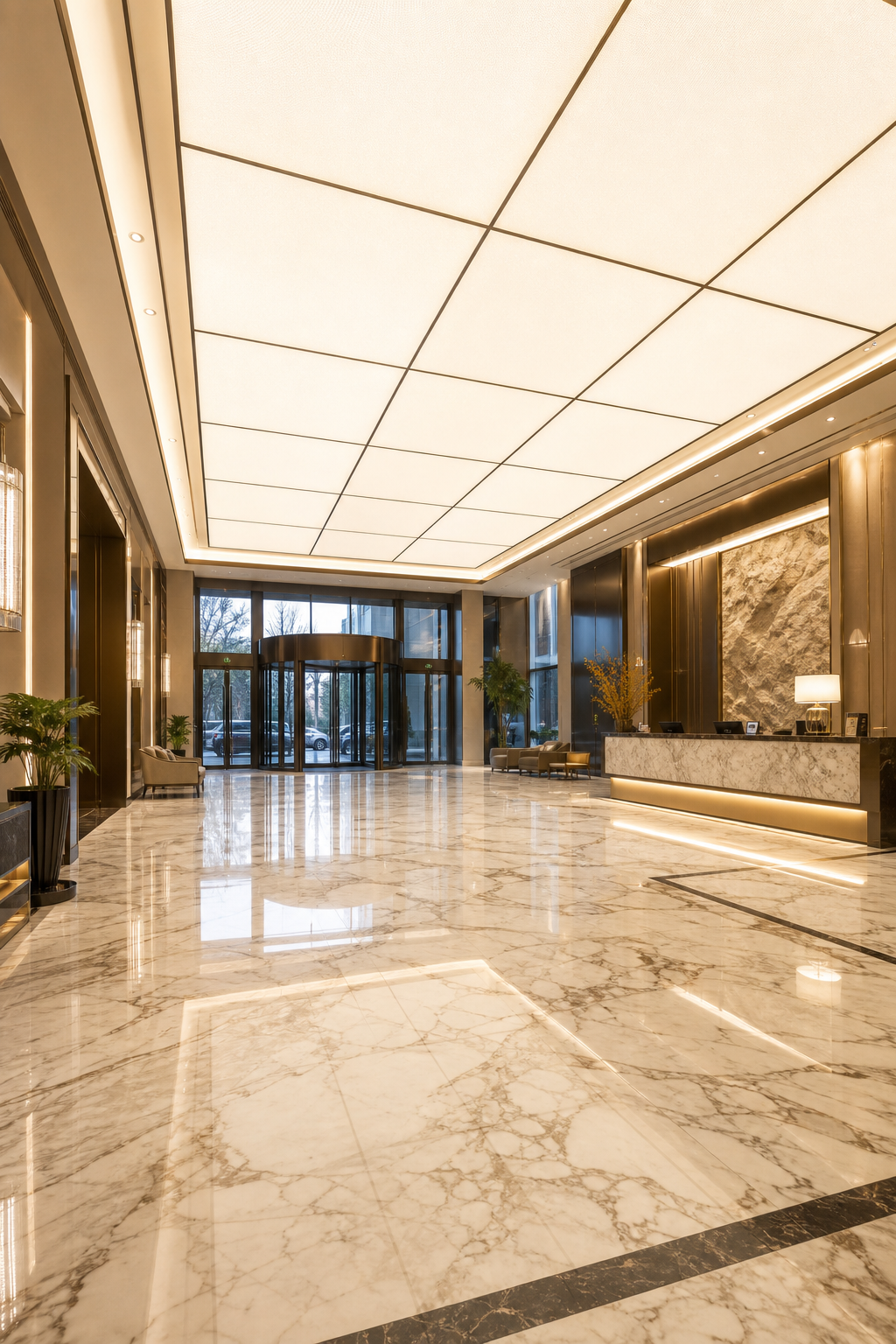
Hospitality & Commercial Interiors
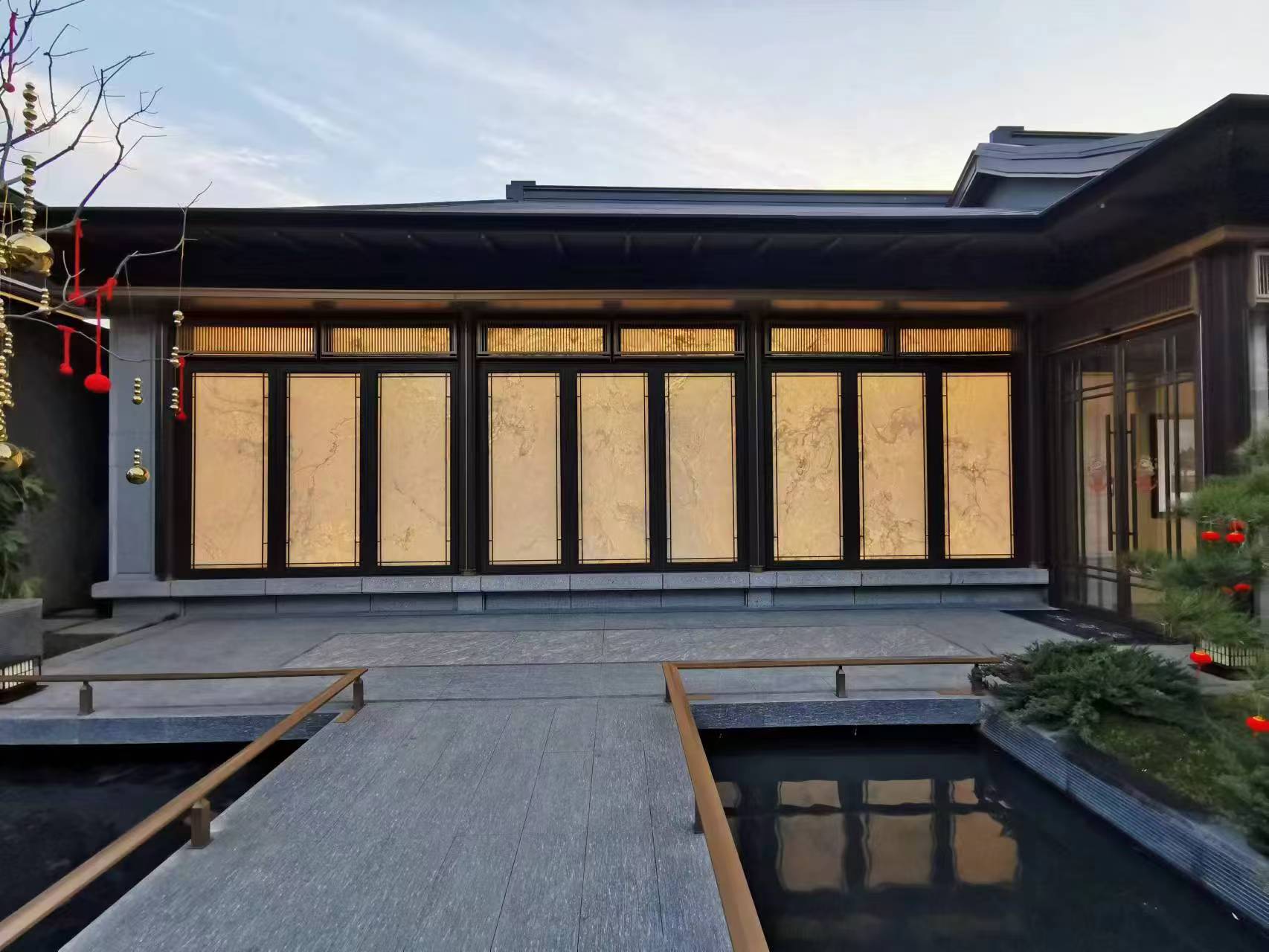
Dominant criteria: thermal tolerance (5), ingress protection (5), colour temperature coverage (4), power efficiency (6). Hospitality interiors — hotel lobbies, restaurants, lounges — tend to specify warm light and to keep panels on for long daily cycles. The LGP model covers the warm end of the 2700K–6500K range and operates from -20°C to 50°C, which supports continuous duty in conditioned spaces. Where the panel forms part of an interior ceiling or wall surface with high uniformity expectations, the IP55 dustproof and waterproof requirement used in demanding commercial interiors should be confirmed against the IP20–65 range before the enclosure is finalised. Efficiency matters commercially here: typical power consumption of 101 W per panel informs the lighting load calculation across a venue.
Retail & Luxury Display
Dominant criteria: durability under 24/7 operation (5), optical consistency (3), colour temperature (4), supply reliability (7). Showcase and shelf backlighting is one of the most demanding commercial LGP applications because the panel runs continuously and is inspected at short range by customers. Retail display projects frequently specify IP55 dustproof and waterproof protection, high light uniformity, optical acrylic material, long service life and no yellowing — a combination that depends on the acrylic substrate rather than the LED source alone. Because these installations expand store by store, supply reliability is weighted unusually highly: an MOQ of 1 unit for validation panels, a 5–10 day lead time and 30,000 units per month of capacity are what make a phased rollout practical.
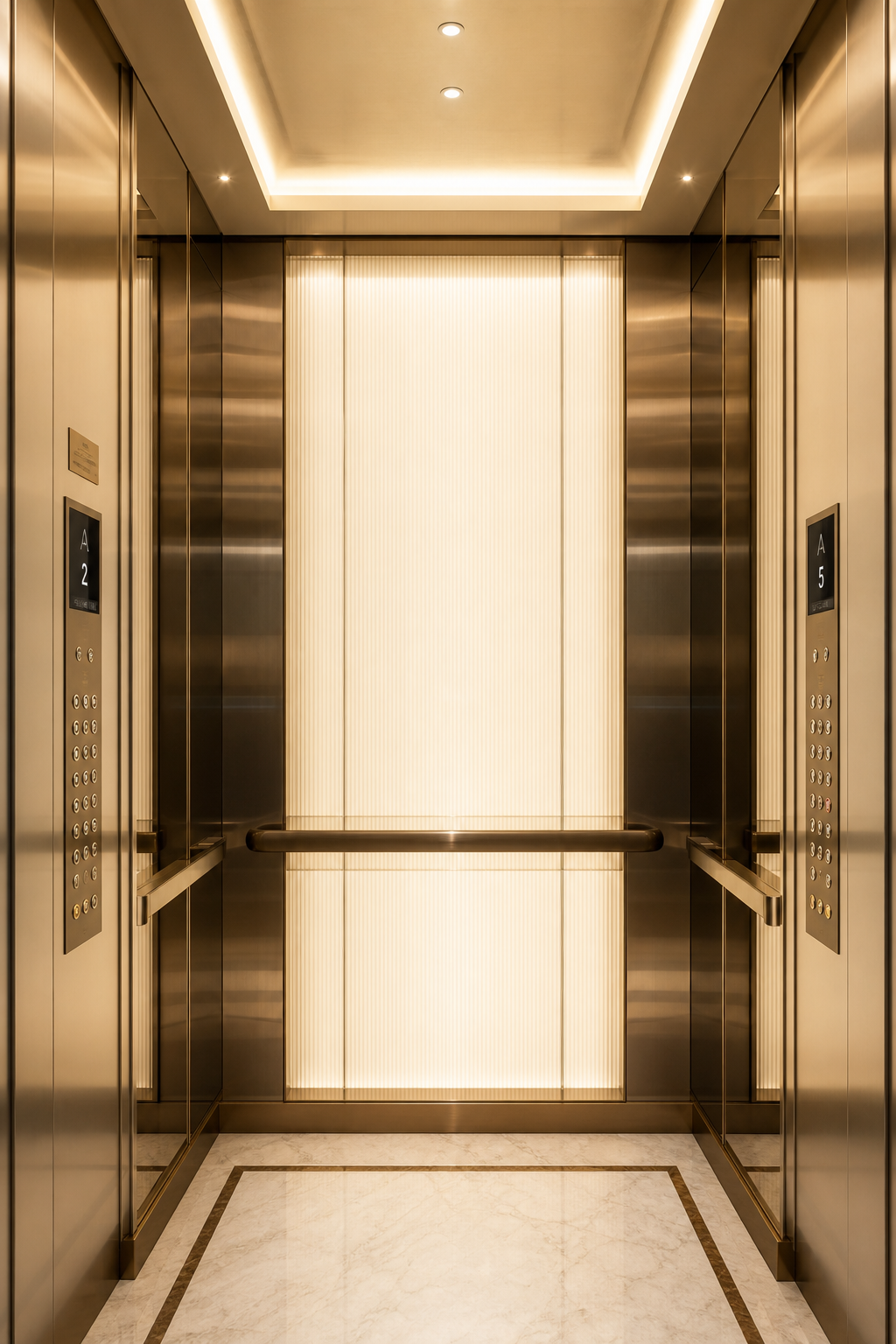
Edgelight’s 20-year track record of 10,000 units delivered for elevator decoration applications is the closest comparable duty profile — long-life, continuously lit, enclosure-mounted panels judged on evenness over years rather than weeks.
Application Selection Table
| Application | Priority criteria order | Verified attributes to lock in the PO | Format direction |
|---|---|---|---|
| Office & High-end Residential | 3 → 4 → 5 | Uniform illumination; 2700K–6500K; -20°C to 50°C; IP20–65 | Framed or frameless custom panels for ceilings and wall features |
| Advertising Light Boxes & Signage | 3 → 2 → 5 | >1080 lm; thin edge-lit construction (2.0 mm injection / 3.0 mm laser dotting reference) | Ultra-slim edge-lit light box panels |
| Exhibition & Museum | 3 → 4 → 1 | Uniform illumination; 2700K–6500K; UL 2108 and CE EN IEC 55015:2019/A11:2020 | Cut-to-size graphic panels, batch-matched CCT |
| Hospitality & Commercial Interiors | 5 → 4 → 6 | -20°C to 50°C; 2700K–6500K; 101 W typical power; IP55 where required | Decorative ceiling and wall light panels |
| Retail & Luxury Display | 5 → 3 → 7 | 24/7 duty; acrylic with no yellowing; MOQ 1 unit; 5–10 day lead time; 30,000 units/month | Showcase and shelf backlighting panels |
Step-by-Step: Applying the 7 Criteria to a Real Order
The sequence below converts the ranking into an order-ready checklist.
- Step 1 — Fix the application and its dominant criteria. Use the application table above to decide which three criteria govern the panel. Everything else is secondary.
- Step 2 — Confirm certification scope in writing. Request the certificate references (for example UL 2108 under UL-US-2145621-0 and CE to EN IEC 55015:2019/A11:2020) and confirm that the panel size, protection grade and driver configuration being ordered fall inside the covered scope.
- Step 3 — Lock the optical specification. State luminous flux requirement (the model LGP delivers >1080 lm), the CCT value within the 2700K–6500K range, and a uniformity target for the actual panel size.
- Step 4 — Confirm physical and environmental constraints. Panel dimensions, thickness, mounting method, required protection grade within IP20–65, and the operating temperature window (-20°C to 50°C) for the installation environment.
- Step 5 — Specify the assembly, not just the panel. Match the panel with LED strip light, constant current power driver, light box frame, diffuser film, reflective film and mounting brackets, and check total power against the 101 W typical / 144 W maximum figures.
- Step 6 — Validate with a single unit. Use the 1-unit MOQ to build a mock-up or gain client sign-off before releasing volume.
- Step 7 — Convert to a supply plan. Confirm the 5–10 day lead time and 30,000-unit monthly capacity against your rollout schedule, and agree a repeat-order specification so the second batch matches the first.
FAQ: Light Guide Panel Manufacturer Questions
What certifications should a light guide panel manufacturer provide for a 2026 commercial project?
For a commercial project in 2026, a light guide panel manufacturer should provide certificate references that cover the specific panel configuration being ordered, not only a general company certificate. The acrylic model LGP from Edgelight holds UL 2108 certification under certificate reference UL-US-2145621-0 and CE certification to EN IEC 55015:2019/A11:2020. In the wider market, light guide panels used in lighting equipment are commonly assessed against UL 8750 (LED Equipment) and IEC 60598 (Luminaires) for global market access, as noted by UL Solutions. Buyers should request the certificate number and confirm in writing that the panel size, protection grade and drive arrangement fall within its scope before the specification is finalised.
Can a light guide panel manufacturer produce custom sizes, thicknesses and dot patterns?
Yes. Custom sizing is a standard capability rather than a special project: panels are cut to the dimensions required by the light box or display, and the dot pattern is engineered to distribute light evenly across that specific surface. The acrylic model LGP from Edgelight is built on an acrylic substrate with a protection grade range of IP20–65, a colour temperature range of 2700K–6500K and a luminous flux above 1080 lm, and it is supplied as part of an assembly that can include LED strip light, constant current power driver, light box frame, diffuser film, reflective film and mounting brackets. Buyers should always state panel dimensions and uniformity expectations together, because a dot pattern optimised for one panel size will not automatically perform identically at a much larger size.
What MOQ and cost drivers should I expect when sourcing a light guide panel?
Edgelight operates a minimum order quantity of 1 unit for the light guide panel, which means a single panel can be ordered without a volume commitment. Beyond MOQ, the main cost drivers in light guide panel sourcing are panel size, panel thickness, dot-pattern density and engineering, acrylic substrate grade, the required protection grade within the IP20–65 range, and whether the panel is supplied framed or frameless with the matched diffuser film, reflective film and mounting brackets. Because these variables move together, quotations should be compared on identical size, thickness, CCT and certification scope rather than on a headline unit figure.
Can I validate a light guide panel before committing to volume production?
Yes — validation is possible without a volume commitment because Edgelight’s minimum order quantity for the light guide panel is 1 unit. A single panel can therefore be used for a mock-up, a client presentation or a small pilot installation, and the same panel can then be checked against the published specification: luminous flux above 1080 lm, colour temperature from 2700K to 6500K, an operating temperature range of -20°C to 50°C, and a protection grade between IP20 and IP65. For multi-panel projects, the validation step should also confirm batch-to-batch colour temperature consistency, since that is the variable most likely to be visible on a completed installation.
What lead time and monthly capacity can a light guide panel manufacturer support?
Edgelight quotes a 5–10 day lead time for the light guide panel with a monthly capacity of 30,000 units, supported by a Shanghai manufacturing facility of approximately 33,000 m², a workforce of roughly 500 staff including 25 R&D engineers, and an annual production capacity of 120,000 units across the group. The company also holds a 20-year track record that includes 10,000 units delivered for elevator decoration applications — a duty profile comparable to 24/7 retail and signage use. For project scheduling, the practical next step is to send your panel size, thickness, colour temperature, protection grade and quantity to info@edgelight.com or via WhatsApp at +8617701891091, and to download the Edgelight LED product catalogue for the full light guide panel and matched equipment range.
Conclusion: Rank the Criteria Before You Rank the Panels
Choosing a light guide panel for a 2026 commercial project is a ranking exercise, not a beauty contest. Certification scope comes first because it is binary and disqualifying. Acrylic substrate quality and thickness control come second because they determine how the panel ages. Uniformity and luminous output come third because they are what the end client actually sees. Colour temperature coverage, thermal and ingress tolerance, electrical efficiency and supply reliability complete the ranking.
Applied to real projects, that framework produces five distinct picks: uniformity-led panels for office and high-end residential interiors, output-led slim panels for advertising light boxes and signage, consistency-led cut-to-size panels for exhibition and museum walls, warm-toned durable panels for hospitality interiors, and 24/7-rated acrylic panels with reliable replenishment for retail and luxury display.
Everything above can be checked against verified figures before an order is placed: UL 2108 certification under UL-US-2145621-0, CE certification to EN IEC 55015:2019/A11:2020, acrylic construction, IP20–65 protection, -20°C to 50°C operating range, 2700K–6500K colour temperature, >1080 lm luminous flux, 7.2 A maximum current with 101 W typical and 144 W maximum power, an MOQ of 1 unit, a 5–10 day lead time and 30,000 units per month of light guide panel capacity.
Next Step: Request a Light Guide Panel Sample or Quote
Shanghai Edgelight Industry Co., Ltd. (EDGELIGHT) manufactures light guide panels in Shanghai with a 1-unit MOQ, a 5–10 day lead time and 30,000 units per month of light guide panel capacity. To move from criteria to a firm quotation, send your panel size, thickness, colour temperature, protection grade and quantity.
Email: info@edgelight.com
Phone: +86-21-57603573 / +86-21-64412288
WhatsApp: +8617701891091
Address: No.218 Shenshen Road, Songjiang District, Shanghai, China
Website: en.edgelight.com
Catalogue: Download the LED product catalogue (PDF)
Have Questions or Need More Details?
Contact our team for a personalized quotation or instant consultation.
Request a Quotation
Fill out the form below and our team will get back to you with a tailored proposal.
WhatsApp Direct Chat
Prefer to chat in real-time? Message us on WhatsApp for instant assistance & quick answers.
- Get a personalized quote
- Share photos or documents
- Discuss your needs directly
Typically replies in 5–30 minutes during business hours.