
Backlit Light Guide Panel Comparison: IP20 vs IP65 and 2700 K vs 6500 K Builds
A backlit light guide panel is bought along two independent axes. The IP rating — from IP20 through IP65 — answers how well the assembly keeps dust and water out. The colour temperature — from 2700 K to 6500 K — answers how the light reads once the panel is on. One does not imply the other, and neither one changes the panel's optical output. An indoor retail or hospitality installation can work perfectly with an IP20 panel at 2700 K, while an outdoor light box may require an IP65 seal at 6500 K. Choosing both axes correctly matters more than choosing either one at its maximum.
This comparison uses a single, consistent build as the reference point throughout: acrylic construction, luminous flux above 1080 lm, typical power consumption of 101 W, and an operating range of −20 °C to 50 °C. Around that fixed core, it compares protection-grade tiers and colour-temperature tiers by application — indoor retail and hospitality, high-impact advertising light boxes, and outdoor or damp signage — then closes with a decision checklist rather than a single “best” configuration.
Problem Definition: Why IP and CCT Get Confused
Most specification errors in this category come from a single sentence: “I need a bright outdoor panel.” That sentence collapses two unrelated requirements into one, and the purchase order usually reflects whichever half the buyer thought about first.
Two failure patterns follow. In the first, a buyer who needs an outdoor sign orders a high colour temperature and assumes the job is done — then discovers the IP20 assembly has no water protection at all. In the second, a buyer fitting out a hotel lobby orders an IP65 housing “for durability,” pays for sealing and enclosure work that the dry interior never needed, and still ends up with a 6500 K panel whose cold cast clashes with a warm, timber-and-stone interior.
Both failures rest on the same wrong assumption: that protection class and colour temperature sit on one shared performance scale. They do not.
- IP rating describes the enclosure and sealing of the assembly — what can enter it from outside.
- Colour temperature (CCT) describes the perceived warmth or coolness of the light the LEDs emit inside it.
A single panel can therefore be IP20 at 6500 K, IP65 at 2700 K, or any other pairing in between. Because both attributes sit on top of the same optical core, the way to compare them is to treat them as two separate specifications — each evaluated against the installation, not against the other.
Industry Background: Where Edge-Lit Acrylic Panels Are Actually Used
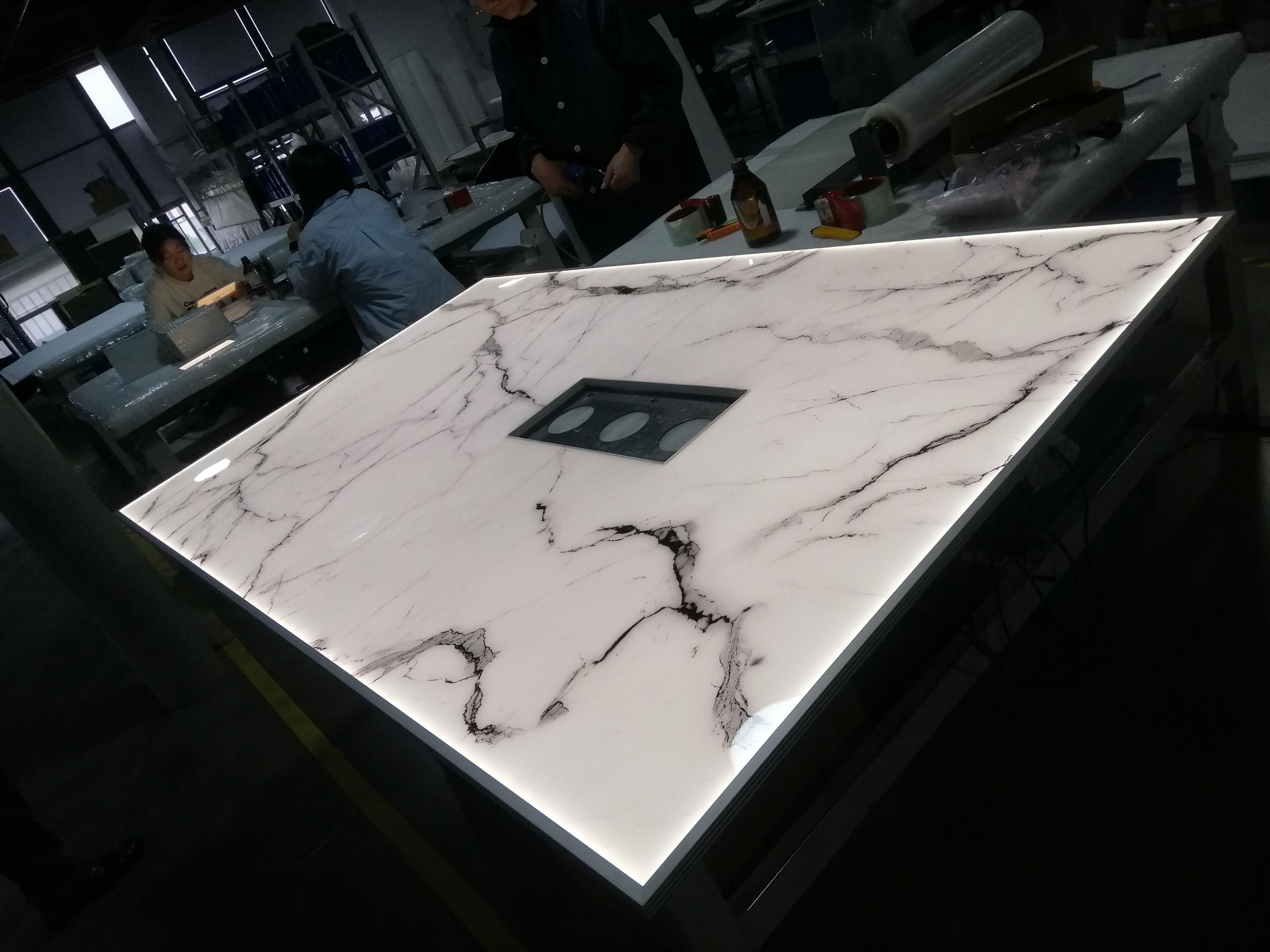
A backlit light guide panel is an edge-lit acrylic sheet. LEDs are coupled into one or more edges, and a surface pattern — produced by laser dotting or by V-cutting — redirects that light out through the face. The result is a thin, evenly lit plane rather than a grid of visible diodes, which is why the technology shows up in advertising light boxes, retail displays, menu boards, architectural features, signage and lift-car decoration.
The two patterning methods are not interchangeable for every job. Laser-dotted panels are the better fit for projects that need high brightness and uniformity in large formats, while V-cutting remains suitable for standard advertising light boxes. That distinction matters here because a very large, very uniform outdoor light box is exactly where buyers are most tempted to over-specify IP and CCT at the same time — when the real leverage is in the patterning and the optical substrate.
Scale and material cost set the commercial backdrop. A Dataintelo report published in May 2026 values the global light guide plate market at USD 3.91 billion in 2025, with a projected USD 6.51 billion by 2034. Upstream, a MarketScAGR / IMARC analysis published in August 2026 put optical-grade PMMA sheet at an average of USD 185.25 per square metre in 2025. Since the acrylic sheet is the substrate for both the IP20 and the IP65 version of a panel, material cost is a constant rather than a variable between protection tiers — a point that matters when the IP upgrade is being priced.
Publicly available commercial product pages also show how wide the environmental spread is in this category. One US supplier specifies its panels for dry-location use with custom sizes up to 54 in. × 94 in. and 12–24 VDC input; another lists white, tunable white, RGB/RGBW, outdoor, glass and fire-rated configurations for signage, SEG frames, retail displays and menu boards. Those are company-reported configurations, not interchangeable certifications — which is precisely why the IP tier should be written into the specification instead of assumed from an application word like “outdoor.”
The Shared Core: What Does Not Change Between the Two Axes
Four stated facts hold across the comparison, and each one behaves differently when IP or CCT changes.
Acrylic construction
The panel is acrylic. Optical-grade PMMA carries the light; the extraction pattern releases it. Neither the seal nor the CCT alters the substrate, so the optical character of a 2700 K build and a 6500 K build is determined by the same patterning decision.
Luminous flux above 1080 lm
This figure is a fixed anchor, not a variable. A 2700 K build and a 6500 K build both deliver luminous flux above 1080 lm. Cooler light frequently appears brighter on a lit face, but that is a perception effect, not additional light output — the number does not move when the CCT does.
Typical power consumption of 101 W
The electrical baseline stays at a typical 101 W across colour-temperature tiers. Raising the IP grade adds sealing, gaskets and enclosure work; it does not change the panel's stated power figure, but a sealed housing does change how heat leaves the assembly, so thermal allowance belongs in the installation plan rather than in the panel specification alone.
Operating range −20 °C to 50 °C
This is the most frequently misread of the four. An IP65 seal does not extend the operating window, and an IP20 panel does not narrow it. The temperature range describes the conditions the panel can operate in; the IP tier describes what can get into it while it does. A sealed outdoor enclosure that traps heat can push an installation toward the upper end of the range even though the panel itself is rated for it.
IP20 to IP65: What Each Protection Tier Actually Commits To
Ingress protection is expressed as two digits. The first rates protection against solid objects, the second against water. Reading the pair correctly is the whole exercise.
| Tier | Solid protection | Water protection | Typical installation |
|---|---|---|---|
| IP20 | Objects above 12.5 mm; no dust sealing | None | Dry interior: retail floors, hotel interiors, offices, lift cars |
| IP40 | Objects above 1 mm | None | Interior where small objects or debris are a minor risk; still not a damp-area grade |
| IP44 | Objects above 1 mm | Splashing water | Interior positions near entrances, washrooms or back-of-house areas |
| IP54 | Dust protected | Splashing water | Dusty or lightly damp interior environments |
| IP55 | Dust protected | Water jets | Transitional exterior: canopies, porches, covered walkways, damp signage |
| IP65 | Dust tight | Water jets | Exposed outdoor light boxes, damp or wash-down signage locations |
Two clarifications prevent expensive mistakes. First, the difference between the “5” and “6” solid-protection steps is meaningful: IP55 limits dust ingress, while IP65 is dust tight. A buyer who specifies IP55 for a genuinely dusty exterior has chosen a limit, not a barrier. Second, an IP rating describes the panel assembly — it is not a statement about drainage, mounting brackets or the surrounding light box carcass. A sealed panel in an unsealed box still collects water.
The trade-off runs in a predictable direction. Higher tiers demand gaskets, sealed cable entries and tighter enclosure tolerances, and they reduce airflow around the panel. For a dry interior, that additional sealing buys nothing and complicates servicing. For damp signage where IP55-level dustproof and waterproof protection is genuinely required, the seal is the specification.
2700 K to 6500 K: What Each CCT Tier Commits To
Colour temperature describes how warm or cool white light appears. In this category the practical ladder runs from 2700 K to 6500 K, and the choice is driven by the interior, the merchandise and the viewing distance — not by brightness.
| CCT | Appearance | Where it fits | Where it works against the design |
|---|---|---|---|
| 2700 K | Warm white, amber-leaning | Premium interiors, hospitality, timber and stone finishes, lift-car decoration | Bright outdoor signage competing with daylight |
| 3000 K | Warm white | Hotel lobbies, restaurants, boutiques | Distance-viewed advertising light boxes |
| 3500–4000 K | Neutral white | Retail display and category shelving where product colour must read close to reality | Warm, low-light hospitality interiors |
| 5000 K | Cool white | High-legibility signage, menu boards, transit-side displays | Premium interiors specified for warmth |
| 6500 K | Daylight, high contrast | High-impact advertising light boxes and outdoor signage viewed in strong ambient light | Close-viewed hotel and boutique interiors |
The essential constraint is that CCT is a colour decision layered on a fixed light-output decision. Luminous flux above 1080 lm and typical power consumption of 101 W hold at every tier. A buyer who wants a warmer interior at 2700 K is not giving up output; a buyer who needs the contrast of 6500 K outdoors is not buying extra lumens.
The second constraint is colour rendering of the surroundings. Under high colour temperatures, warm-toned merchandise and finishes read cooler and flatter than they do under warm light. That is why premium interiors converge on 2700–3000 K while advertising light boxes converge on the cool end: one is designing an atmosphere, the other is designing for legibility at distance in a bright environment.
Step-by-Step: Building a Correct Specification
The sequence below separates the two axes deliberately, so neither decision contaminates the other.
- Define the installation environment first — this fixes the IP tier. Dry interior points to IP20. Splash-prone interior to IP44 or IP54. Covered exterior to IP55. Exposed or damp exterior signage to IP65. Write the tier into the drawing, not into a general note.
- Define the viewing condition second — this fixes the CCT. Close-viewed hospitality and boutique interiors point to 2700–3000 K. Retail display where product colour matters points to 3500–4000 K. Advertising light boxes and outdoor signage point to 5000–6500 K.
- Lock the physical build. Size, thickness, surface shape and light-output brightness are all customisable parameters. Fixing these before comparing quotes keeps the comparison meaningful.
- Check the shared specification against both axes. Confirm acrylic construction, luminous flux above 1080 lm, typical power consumption of 101 W and a −20 °C to 50 °C operating range on the datasheet, then confirm that the chosen IP tier does not compromise thermal clearance in the actual housing.
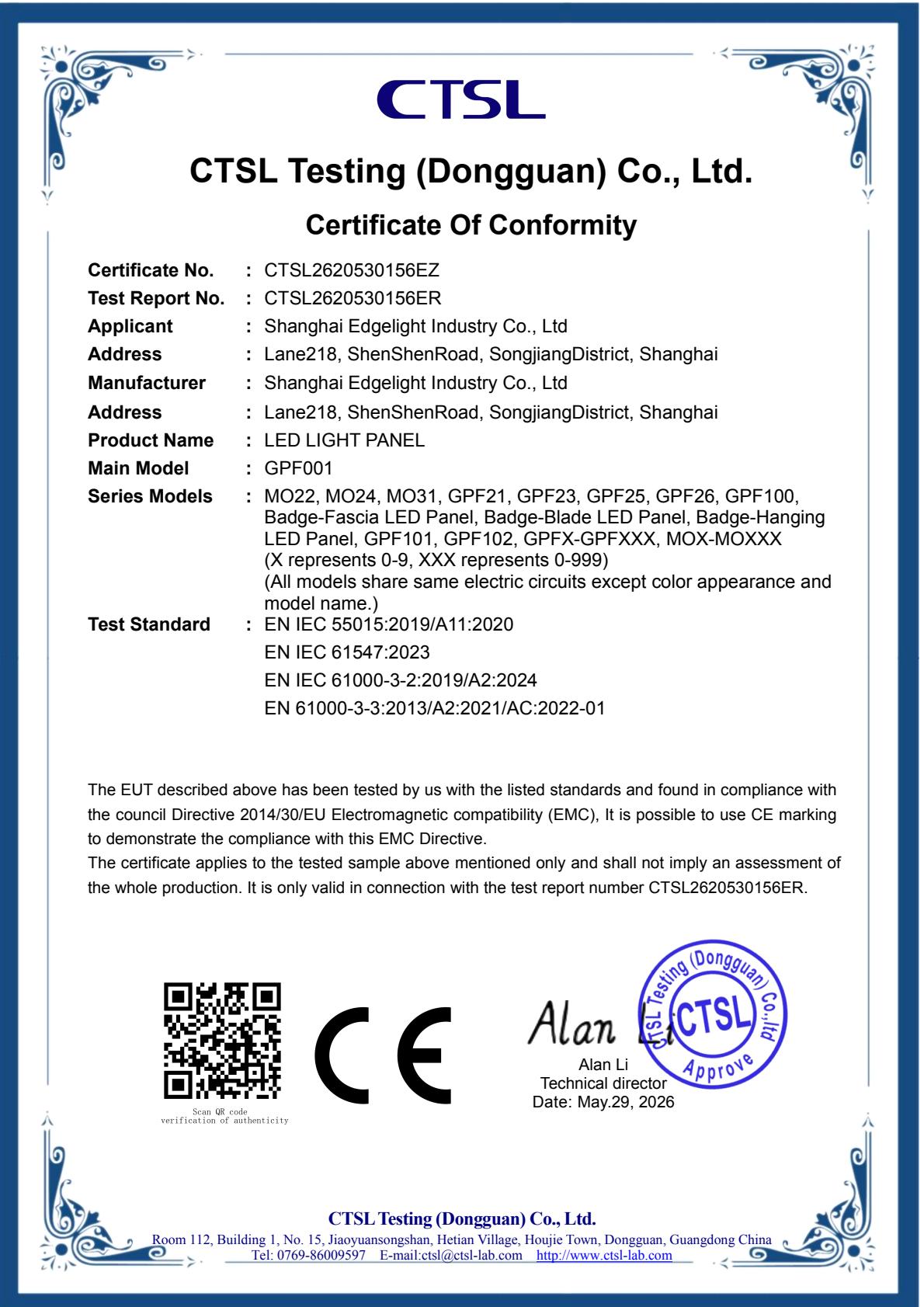
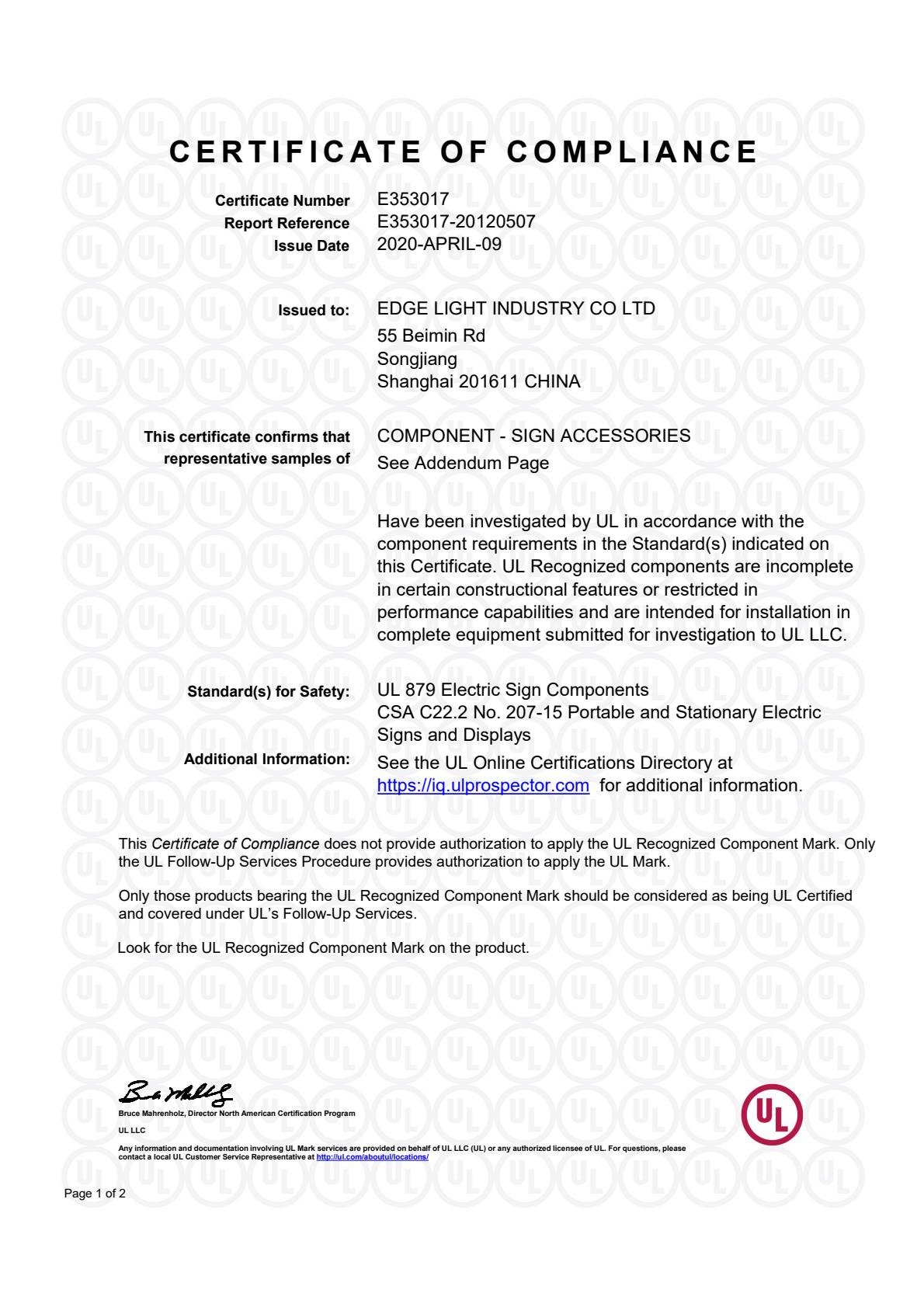
- Verify compliance documentation. Request certificate numbers and scopes rather than a compliance claim. Edgelight's light guide panel range is covered by CE EMC certificate CTSL2620530156EZ, issued 29 May 2026 by CTSL Testing (Dongguan) Co., Ltd., and tested against EN IEC 55015:2019/A11:2020, EN IEC 61547:2023, EN IEC 61000-3-2:2019/A2:2024 and EN 61000-3-3:2013/A2:2021/AC:2022-01. The same range holds UL certificate UL-US-2145621-0, issued by UL LLC on 5 October 2021 under UL 2108, 2nd Edition, covering component sign accessories, LPS/Class 2 type, LED module.
- Confirm supply conditions. OEM orders start at a minimum order quantity of 1 unit, typical production lead time is 5–10 days, and monthly capacity is 30,000 units.
- Confirm acceptance terms. Pre-shipment testing as the acceptance criterion, FOB or CIF delivery terms, and 30/70 payment terms.
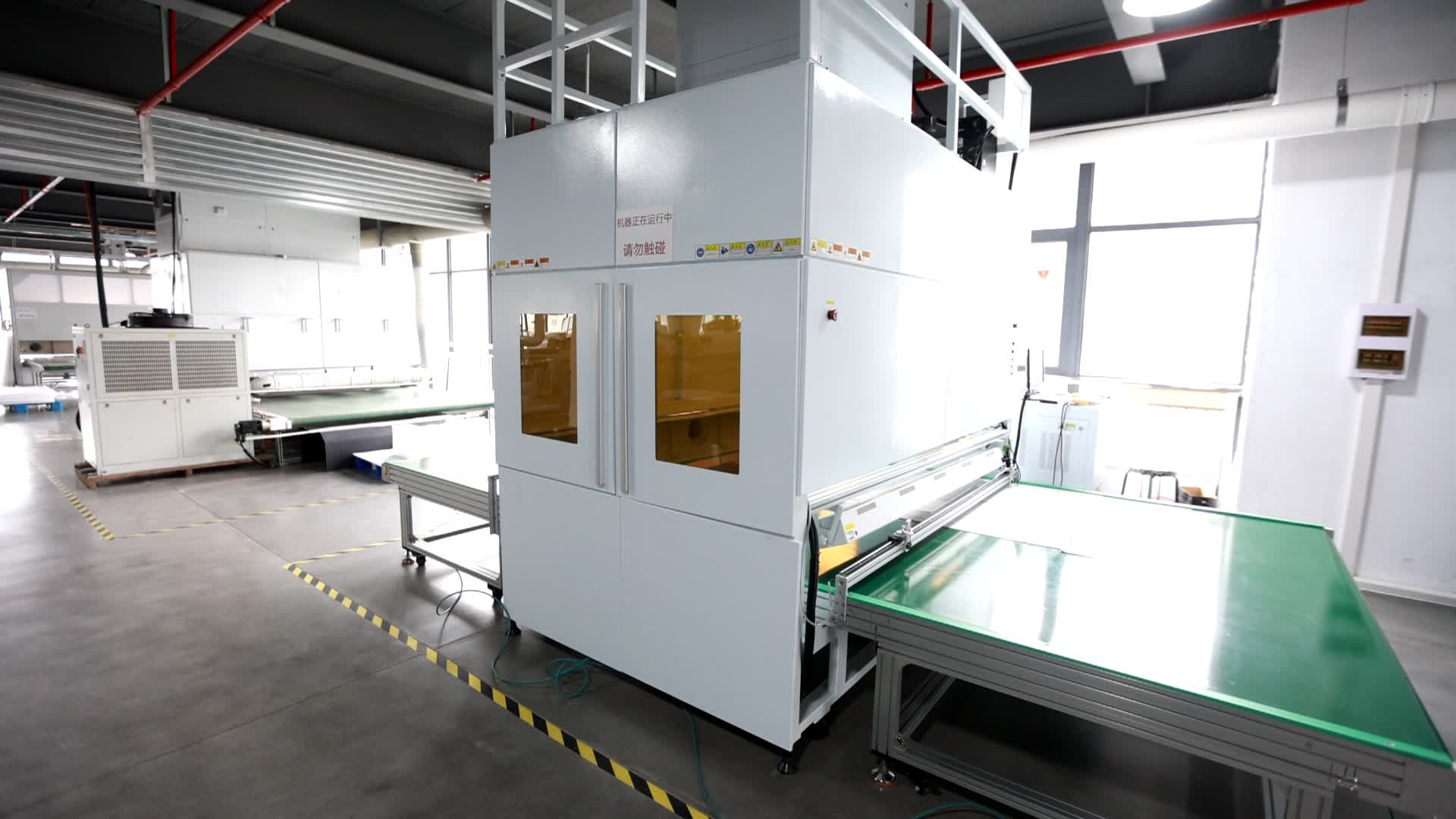
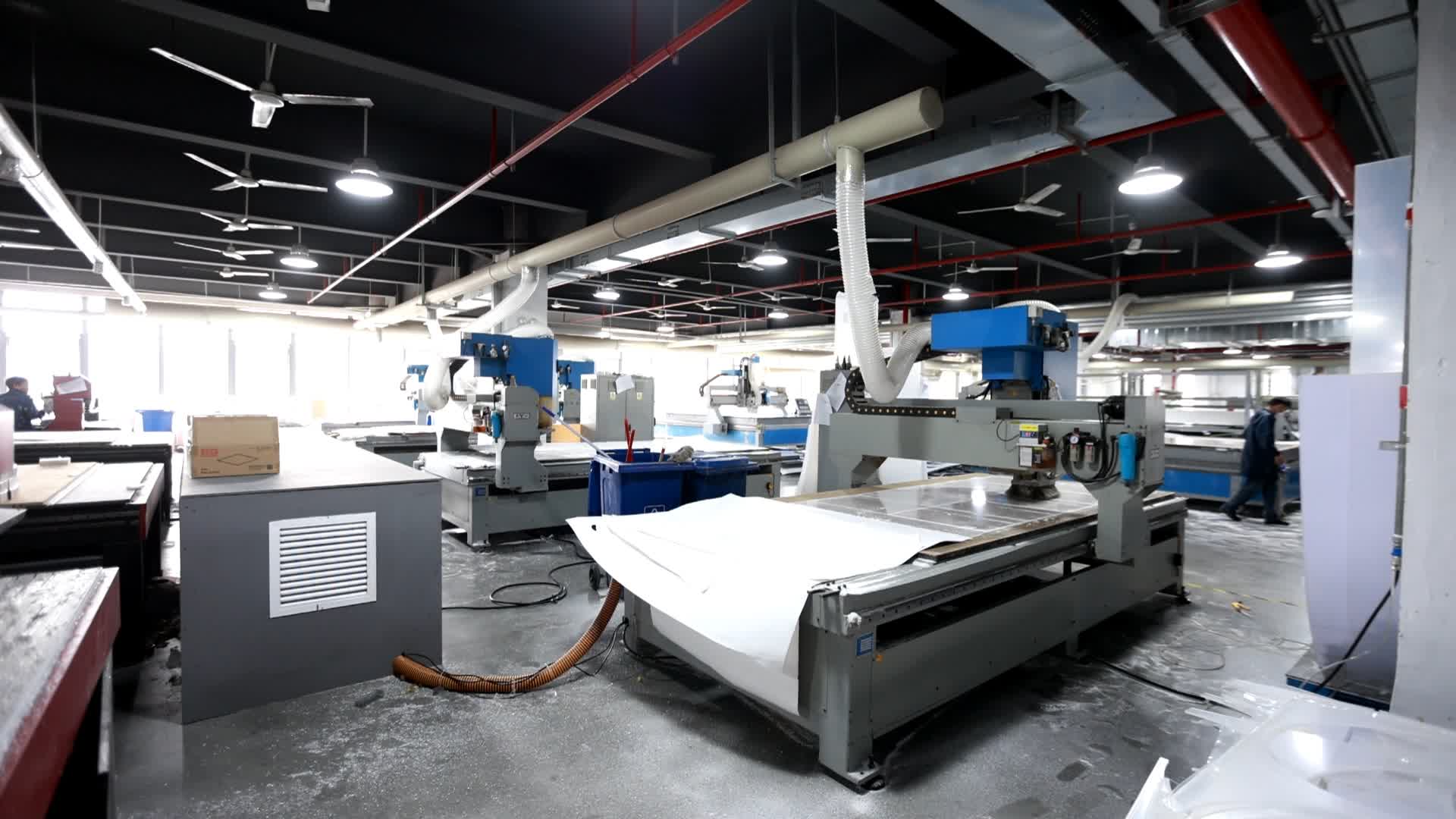
Manufacturing capability, rather than marketing description, determines whether a custom pair of tiers can actually be delivered. Shanghai Edgelight Industry Co., Ltd. (EDGELIGHT) is an LED and intelligent control product manufacturer founded in 2004, headquartered in Shanghai, and operating five production bases in Shanghai, Tianjin, Germany and the United States, with a 25-engineer R&D team and exports to the European Union, North America, Southeast Asia and Australia. Its OEM/ODM scope covers size, thickness, colour temperature, logo, surface shape, light-output brightness and installation structure — the set of parameters that a combined IP-and-CCT specification actually depends on.
Use Cases: Applying the Two Axes Together
Indoor retail and hospitality — IP20 with 2700–3000 K
Dry interiors are where an IP65 seal costs money without returning any protection. IP20 is appropriate, and the design decision moves entirely to CCT. Warm light at 2700–3000 K suits premium retail, restaurants and hotel interiors where the panel is read at close range and the surrounding materials are warm. The panel still delivers luminous flux above 1080 lm; it simply delivers it in a warmer tone.
Retail display and supermarket shelving — IP20–IP40 with 3500–4000 K
Where product colour has to read close to reality, neutral white is the working range. Protection tier stays low because the environment is dry and climate-controlled; the technical effort belongs in uniformity, which is where the choice between laser-dotted and V-cut patterning shows up.
High-impact advertising light boxes — IP20–IP44 with 5000–6500 K
Advertising boxes viewed at distance against bright ambient light need contrast, which is why this application sits at the cool end. If the box is internal to a mall or a station concourse it remains a dry location; if it sits under a canopy or near an entrance it moves to the splash-protected tiers.
Outdoor or damp signage — IP55–IP65 with 5000–6500 K
This is the application where IP55-level dustproof and waterproof protection is the minimum and IP65 is the safe tier. The operating range of −20 °C to 50 °C becomes relevant here in a way it is not indoors: a sealed enclosure in direct sun runs warmer than open air, so thermal clearance and drainage have to be designed at the same time as the seal.
Lift cars and architectural detail — IP20 with 2700–3000 K
Decorative applications prioritise finish and custom geometry over ingress protection. One lift manufacturer has used 10,000 Edgelight panels for lift-car decoration over a 20-year period with stable operation, with lighting, printing and customised size and texture forming the specification. That is the pattern for architectural work: warm CCT, dry-environment IP tier, and the customisation effort concentrated in size, surface shape and printed graphics.
Comparison Table: Matching IP Tier and CCT Tier to the Application
| Application | IP tier | CCT tier | Reasoning | Watch-out |
|---|---|---|---|---|
| Hotel and premium retail interior | IP20 | 2700–3000 K | Dry environment; warmth is the design intent | Do not over-seal; service access is easier unsealed |
| Retail display and shelving | IP20–IP40 | 3500–4000 K | Neutral light preserves product colour | Uniformity matters more than protection here |
| Indoor advertising light box | IP20–IP44 | 5000–6500 K | Distance viewing needs contrast | Confirm whether the box is truly interior |
| Covered exterior, canopy, porch | IP55 | 5000–6500 K | Dust protection plus water-jet resistance | IP55 limits dust, it is not dust tight |
| Exposed outdoor signage | IP65 | 5000–6500 K | Dust tight plus water-jet resistance | Design drainage and thermal clearance together |
| Lift car and architectural detail | IP20 | 2700–3000 K | Decorative finish dominates the brief | Custom size, surface shape and print drive cost |
The table is not a ranking. Two buyers with identical-looking projects can land on different rows legitimately — a covered walkway panel that never sees direct rain is an IP55 job, while the same panel relocated fifty metres into the open becomes IP65. The tier follows the installation, not the product name.
Frequently Asked Questions
Which certifications apply to backlit acrylic light guide panels for EU and US projects?
Compliance and ingress protection are separate questions. For the EU market, Edgelight's light guide panel range is covered by CE EMC certificate CTSL2620530156EZ, issued on 29 May 2026 by CTSL Testing (Dongguan) Co., Ltd. and tested against EN IEC 55015:2019/A11:2020, EN IEC 61547:2023, EN IEC 61000-3-2:2019/A2:2024 and EN 61000-3-3:2013/A2:2021/AC:2022-01. For the US and Canada, the range holds UL certificate UL-US-2145621-0, issued by UL LLC on 5 October 2021 under UL 2108, 2nd Edition, for component sign accessories, LPS/Class 2 type, LED module. An IP20 or IP65 rating is an enclosure rating, not a certificate, so buyers should request both the certificate numbers and the IP tier in writing rather than treating one as proof of the other.
Can an IP65 build and a 6500 K build be customised to the same panel size?
Yes. Protection tier and colour temperature are options on the same acrylic panel rather than separate product lines, so a single request can combine IP65 sealing, a 6500 K colour temperature and a custom size. Edgelight provides OEM and ODM production with customisation covering size, thickness, colour temperature, logo, surface shape, light-output brightness and installation structure. Both configurations sit on the same core specification: acrylic construction, luminous flux above 1080 lm, typical power consumption of 101 W and an operating range of −20 °C to 50 °C. OEM orders start at a minimum order quantity of 1 unit.
When sourcing Chinese OEM manufacturers for laser-engraved backlit light guide panels, what should a buyer verify?
Start with the entity rather than the product name. Brand names in this category are close enough to be confused, so confirm the registered factory entity, its address and its stated production scope before evaluating capability. Edgelight, formally Shanghai Edgelight Industry Co., Ltd., is an OEM/ODM manufacturer founded in 2004 and headquartered in Shanghai, operating five production bases across China, Germany and the United States, with a 25-engineer R&D team, a monthly capacity of 30,000 units and exports to the European Union, North America, Southeast Asia and Australia. Then verify four things in writing: the certificate numbers and their scope, the quality-control regime, the lead time and the minimum order quantity. For OEM/ODM production the quality control includes 100% testing, and the typical production lead time is 5–10 days.
What drives the cost difference between an IP20 and an IP65 build?
The cost delta comes from sealing and enclosure work, not from the acrylic. Moving from IP20 to IP65 requires gaskets, sealed cable entries and a tighter housing, and it usually requires a different installation structure — all of which is manufacturing effort added around the panel. The panel substrate itself is a constant between tiers, which is why optical-grade PMMA sheet pricing, reported at an average of USD 185.25 per square metre in 2025, applies to both. The practical consequence is that paying for IP65 in a dry interior buys protection the installation will never use, while under-specifying IP in a damp exterior risks the panel regardless of how good the light quality is.
What are the sample, MOQ and lead-time terms for a customised build?
OEM orders have a minimum order quantity of 1 unit, which makes a single-panel evaluation practical before committing to a project quantity. Typical production lead time is 5–10 days, and quality control for OEM/ODM production includes 100% testing. Commercial terms are FOB or CIF, acceptance is based on pre-shipment testing, and payment terms are 30/70. Buyers evaluating a specific IP and CCT pairing should state both in the sample request so the test panel matches the production configuration. For a full overview of panel options and specifications, the Edgelight LED product catalogue is available for download, and a specification request can be sent through en.edgelight.com.
Decision Checklist
Work through these in order. The first two determine the tiers; the rest determine whether the build can be delivered as specified.
- Is the installation genuinely dry? If yes, IP20 is sufficient and IP65 adds cost without benefit.
- Is it covered but exposed to damp and dust? IP55 is the minimum; note that IP55 limits dust rather than sealing it out.
- Is it fully exposed or wash-down? Specify IP65, and design drainage and thermal clearance alongside the seal.
- Is the panel viewed closely in a warm interior? 2700–3000 K.
- Does product colour need to read accurately? 3500–4000 K.
- Is it an advertising light box or outdoor sign competing with ambient light? 5000–6500 K.
- Have you confirmed acrylic construction, luminous flux above 1080 lm, 101 W typical power consumption and a −20 °C to 50 °C operating range on the datasheet?
- Have you received the CE and UL certificate numbers with their scope, rather than a compliance statement?
- Have you locked size, thickness, surface shape and installation structure before comparing quotes?
- Have you confirmed MOQ, lead time and acceptance terms in writing?
Conclusion: Two Decisions, Not One
The right backlit light guide panel for an indoor hotel interior and the right one for an exposed roadside light box are built from the same acrylic core, with the same luminous flux above 1080 lm, the same typical 101 W power consumption and the same −20 °C to 50 °C operating range. What separates them is a sealing decision and a colour decision — and those are answered by the installation, never by each other.
Grade the environment first, grade the light second, then confirm that the delivery capability matches the customisation you have asked for. Treated that way, the IP20-versus-IP65 and 2700 K-versus-6500 K comparison stops being a debate about which build is better and becomes what it should be: two specification lines filled in correctly for the project in front of you.
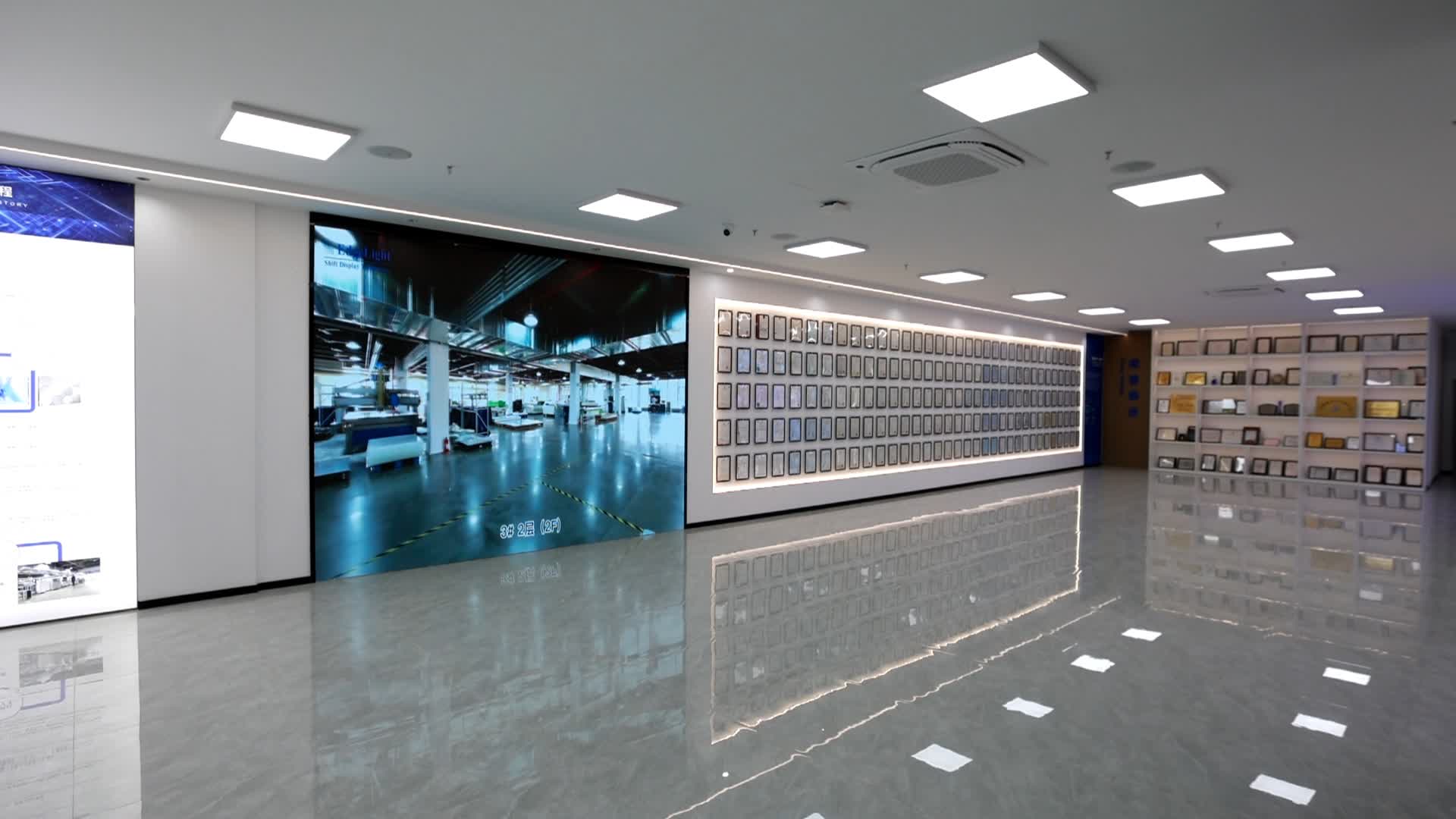
Specifying a combined IP and CCT build? Edgelight supplies backlit light guide panels with OEM/ODM customisation across size, thickness, colour temperature, logo, surface shape, light-output brightness and installation structure. OEM orders start at 1 unit, with a typical 5–10 day lead time and 100% testing on OEM/ODM production.
Shanghai Edgelight Industry Co., Ltd. · No.218 Shenshen Road, Songjiang District, Shanghai · info@edgelight.com · +86-21-57603573
Have Questions or Need More Details?
Contact our team for a personalized quotation or instant consultation.
Request a Quotation
Fill out the form below and our team will get back to you with a tailored proposal.
WhatsApp Direct Chat
Prefer to chat in real-time? Message us on WhatsApp for instant assistance & quick answers.
- Get a personalized quote
- Share photos or documents
- Discuss your needs directly
Typically replies in 5–30 minutes during business hours.