
Ranked: Five Best-Fit Applications for Backlit Light Guide Panels
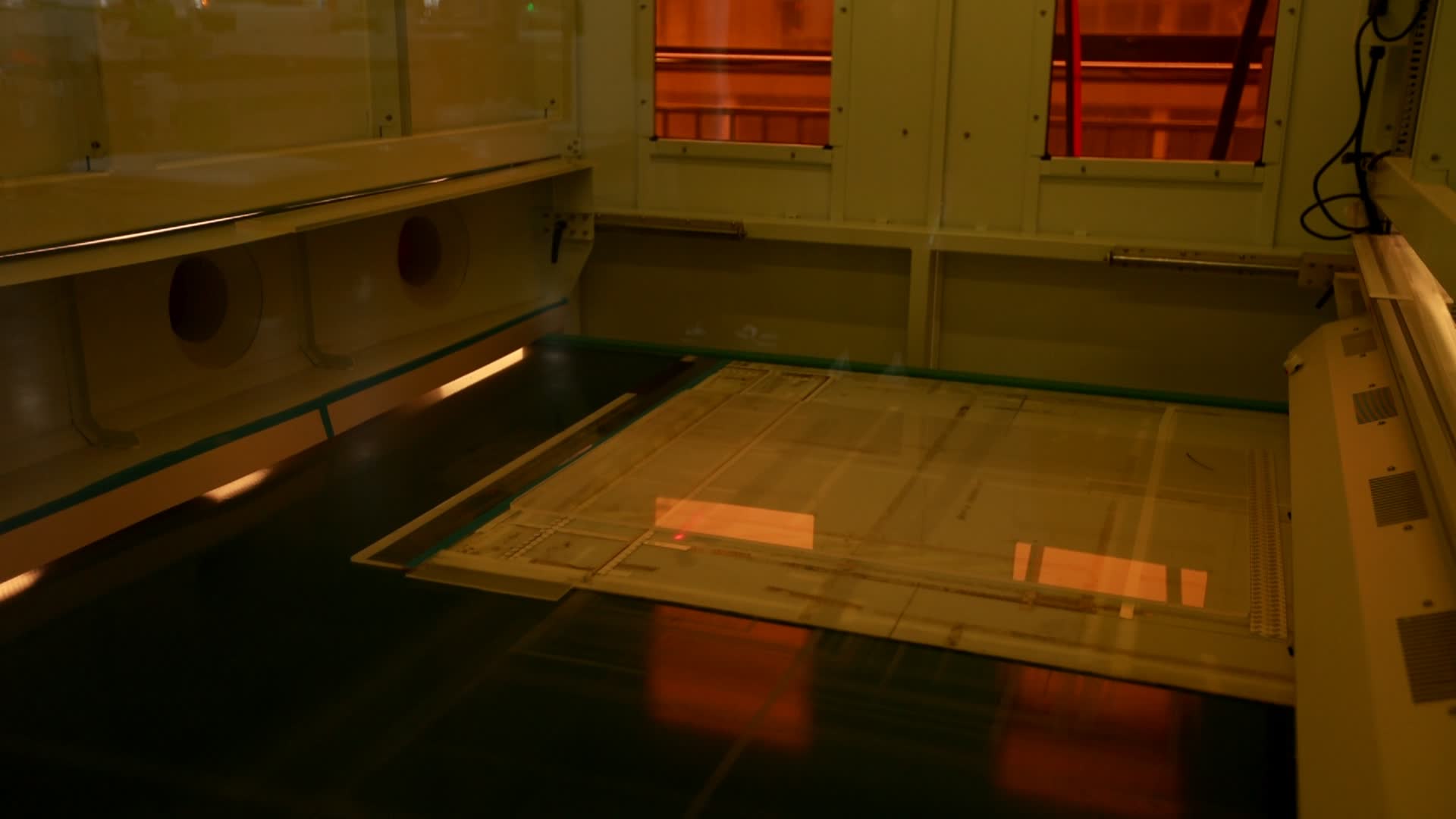
A backlit light guide panel is an edge-lit optical acrylic sheet that spreads LED light across its full face, so a sign, display or luminous surface can be built at low depth with even brightness. Its best-fit applications are not the ones with the largest budgets. They are the ones that use the panel's optical uniformity, thin profile and low-voltage architecture at the same time, and that can live with the duty cycle the panel is asked to run.
This ranking orders five applications by strength of fit: how much of the panel's optical advantage the application actually consumes, how hard the duty cycle is on the panel and the driver, and how cleanly the electrical assembly can be qualified for the US and EU markets.
- Advertising light boxes and signage — continuous duty, large formats, whole-face viewing from a distance.
- Retail display — close viewing distance, custom sizes, frequent re-skinning of graphics.
- Exhibition and museum environments — glare control, low heat at the graphic, dimming.
- Elevator cabin wall decoration — thin build, low-voltage supply, decorative print and texture.
- Hospitality ceiling light panels — large uninterrupted luminous planes in shallow plenums.
Ranks 1 and 2 carry the simplest qualification path. Ranks 3 to 5 ask for more per unit — dimming compatibility, custom texture, service access, driver placement — but they draw on exactly the same physical advantages, which is why they belong in the same ranking rather than in separate product categories.
Why Application Fit Decides Which Panel You Actually Need
Most panel problems are created before the purchase order, in a request for quotation that names a size and a brightness level and nothing else. A light guide panel is not a standalone product in use; it is one layer in an optical stack. The stack usually contains a light guide plate, a reflective film behind the plate, a diffuser film in front of it, LED strips feeding one or two edges, a constant current driver, and a frame with mounting brackets that holds the whole assembly at the right viewing depth.
The same plate will behave differently in each of the five applications below, because the applications differ on four variables that no single datasheet captures:
- Duty cycle. A light box that runs continuously, often around the clock, puts sustained thermal load on the LED strips and the driver. A museum panel on a timed circuit does not.
- Viewing distance. At three metres, minor unevenness disappears. At forty centimetres, near the LED entry edge, it does not.
- Mounting depth and ventilation. A slim frame is a selling point and also a heat trap. The thinner the box, the more driver placement matters.
- Service access. A retail poster frame can be opened in seconds. A cabin wall or a ceiling plane cannot.
When those variables are left unstated, the usual outcomes are predictable: a bright band near the LED edge on large formats, uneven corners, premature driver failure on continuous-duty boxes, and colour shift or yellowing of the guide material over the service life. None of these is fixed by upgrading one component. They are fixed by specifying the application correctly first.
Industry Background: A Thin Optical Layer in a Growing Supply Chain
The global light guide plate market was valued at USD 3.91 billion in 2025 and is projected to reach USD 6.51 billion by 2034, according to the Light Guide Plate (LGP) Market Size, Share and Forecast Report 2025 to 2034 published by Dataintelo. Growth of that order keeps entry barriers low on the assembly side and keeps real differentiation in two places: optical material and processing consistency.
On material, optical-grade PMMA sheet production was projected to reach 1.36 million square metres in 2025 at an average price of about USD 185.25 per square metre, based on the Global Optical-grade PMMA Sheet Market Strategic Research Report. That price level explains why guide material is the first line item to be quietly downgraded when a project is under cost pressure, and why buyers on continuous-duty applications increasingly ask for material evidence rather than a grade name.
On processing, laser-dotted, or laser-engraved, light guide plates are preferred for projects that require high brightness and uniformity in large formats, while V-cutting remains suitable for standard advertising light boxes. The distinction matters in this ranking: the higher-ranked applications are the ones where large-format uniformity is judged by the end viewer, so the processing method is not interchangeable.
Architecturally, the mainstream configuration is edge-lit: LEDs sit along one or two edges and the plate redistributes that light across the face. Ultra-slim edge-lit panels are positioned for backlit displays, illuminated signage, light boxes and commercial lighting, with custom sizes available. On the compliance side, two frameworks dominate for panels supplied into the US and EU markets: UL 2108 for low-voltage lighting systems and CE EMC for electromagnetic compatibility. Both are addressable, and both are frequently misrepresented — a certificate for one model is often presented as coverage for an entire range.
The Five Best-Fit Applications, Ranked
1. Advertising Light Boxes and Signage
Why it ranks here
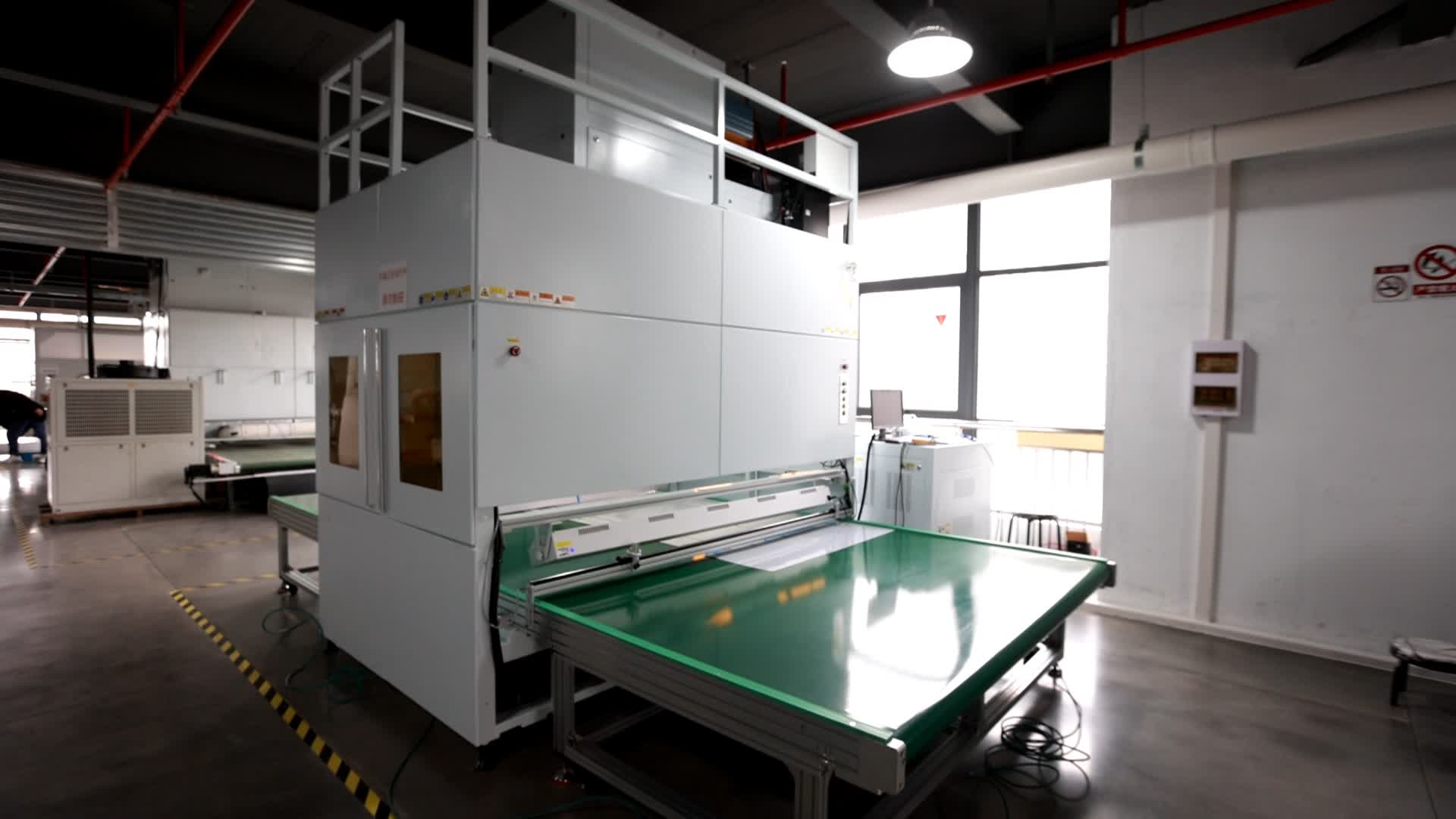
Advertising light boxes use every advantage of a backlit light guide panel at once. The viewer sees the whole illuminated face in a single glance, from a distance, so uniformity of surface brightness matters far more than a peak brightness figure. Formats are large, which is exactly where laser-dotted plates are preferred for high brightness and uniformity. The frame has to stay slim because the box is usually wall-mounted or double-sided on a freestanding structure. And the box typically runs continuously, often 24/7, which turns the driver and thermal design into the real reliability question.
What the panel contributes
The plate replaces a grid of visible lamps with one even luminous surface, which is what makes a printed graphic readable without hotspots. Because the light source sits at the edge rather than behind the graphic, the box depth can stay low. This is also the application where the compliance file is checked first: a signage assembly sold into the EU needs CE EMC evidence, and one sold into the US is typically evaluated to UL 2108 as a low-voltage lighting assembly.
Supporting equipment this application needs
- Light box frame, sized to the graphic and to the required depth
- Reflective film behind the plate to recover back-scattered light
- Diffuser film in front of the plate to smooth residual dotting
- LED strips along one or two edges, with pitch matched to the panel size
- Constant current driver, rated for continuous operation
- Mounting brackets for wall, pole or freestanding installation
What to watch
On a sealed slim box running continuously, the driver is usually the first component to fail. Specify a constant current driver with derating for continuous duty, and confirm where it is mounted. Second, ask for the uniformity target to be defined at the final viewing distance, not on a bench at arm's length.
2. Retail Display
Why it ranks here
Retail display sits directly behind advertising signage because it stresses the panel in a different way. The viewer stands close, sometimes at arm's length, so any unevenness or colour shift is visible. Ambient light in a window or a bright sales floor competes with the backlight. And the format is rarely standard: shelf headers, counter units, poster frames and menu boards all come in custom sizes, and a retail rollout multiplies that variety across hundreds of locations.
Duty cycle is the reason it ranks second rather than first. Store-hour operation with frequent power cycling is less punishing than continuous operation, but power cycling has its own effect on the driver and on how consistently the assembly restarts at the same brightness.
What the panel contributes
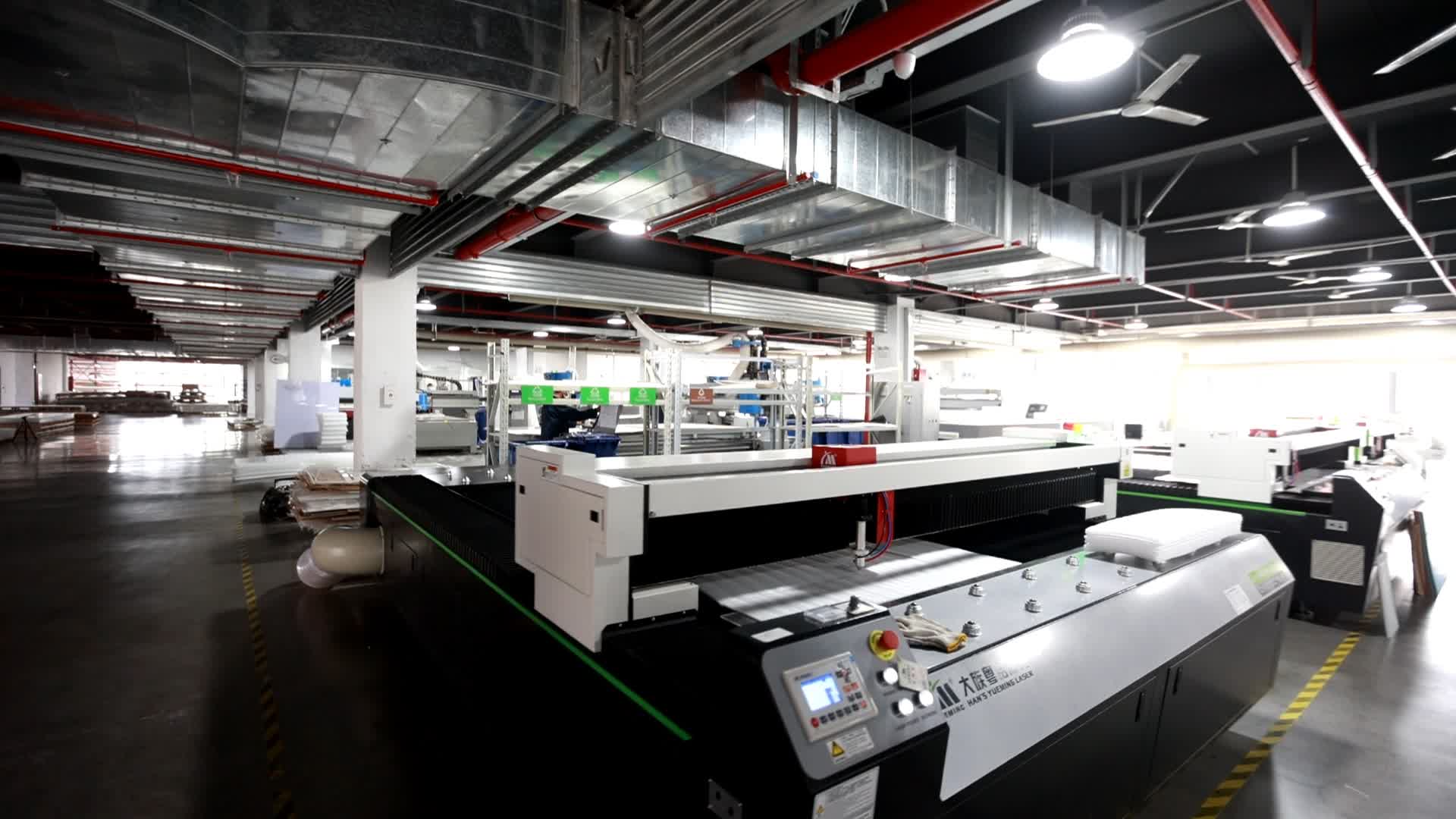
A thin panel allows a shallow light box that fits behind shelving or inside a poster frame without eating floor space. Custom-size fabrication is the decisive capability here: size, thickness, colour temperature, logo, surface shape, light output brightness and installation structure all have to be varied per campaign without becoming an engineering exception. Retail is also the application where print and texture work on the panel surface earns its place, since the lit surface often carries the brand graphic itself.
Supporting equipment this application needs
- Light box frame or poster frame with a front-loading or snap-open face
- Diffuser film to control hotspots at the LED entry edge
- Reflective film behind the plate
- LED strips, usually single-edge on small formats
- Constant current driver
- Mounting brackets for wall, shelf or counter fixing
What to watch
Run a retail rollout from a single production batch where possible. Colour temperature consistency between units in the same store is more noticeable than an absolute colour temperature that is slightly off the nominal value, and mixing batches is the usual cause of a mismatch.
3. Exhibition and Museum Environments
Why it ranks here
Exhibition and museum work is a strong optical fit with a heavier specification load. Graphic panels need uniform, low-glare illumination with no visible LED hotspots, and the lighting is usually dimmable so that the space can move between opening hours, events and closed periods. Because the light source sits outside the viewing plane at the edge of the plate, the illuminated surface stays comparatively cool, which is a genuine advantage where sensitive material is displayed.
It ranks third because procurement is per project rather than per programme: volumes are lower, drawings are bespoke, and the dimming requirement adds a compatibility question between driver and control system that the two higher-ranked applications can often avoid entirely.
What the panel contributes
Even illumination across a large graphic without a visible source, in a profile thin enough to disappear into a wall or partition. The panel also allows a graphic to be lit from within a shallow display case where a fixture behind the graphic would not fit.
Supporting equipment this application needs
- Display frame or recessed frame built into the exhibition structure
- Diffuser film, important here because glare is judged at close range
- Reflective film
- LED strips
- Dimmable constant current driver
- Mounting brackets with access for service
What to watch
Specify the driver and the dimmer as a tested pair. Dimming problems in exhibition builds are almost always interface problems rather than panel problems, and they are expensive to solve after the wall is closed.
4. Elevator Cabin Wall Decoration
Why it ranks here
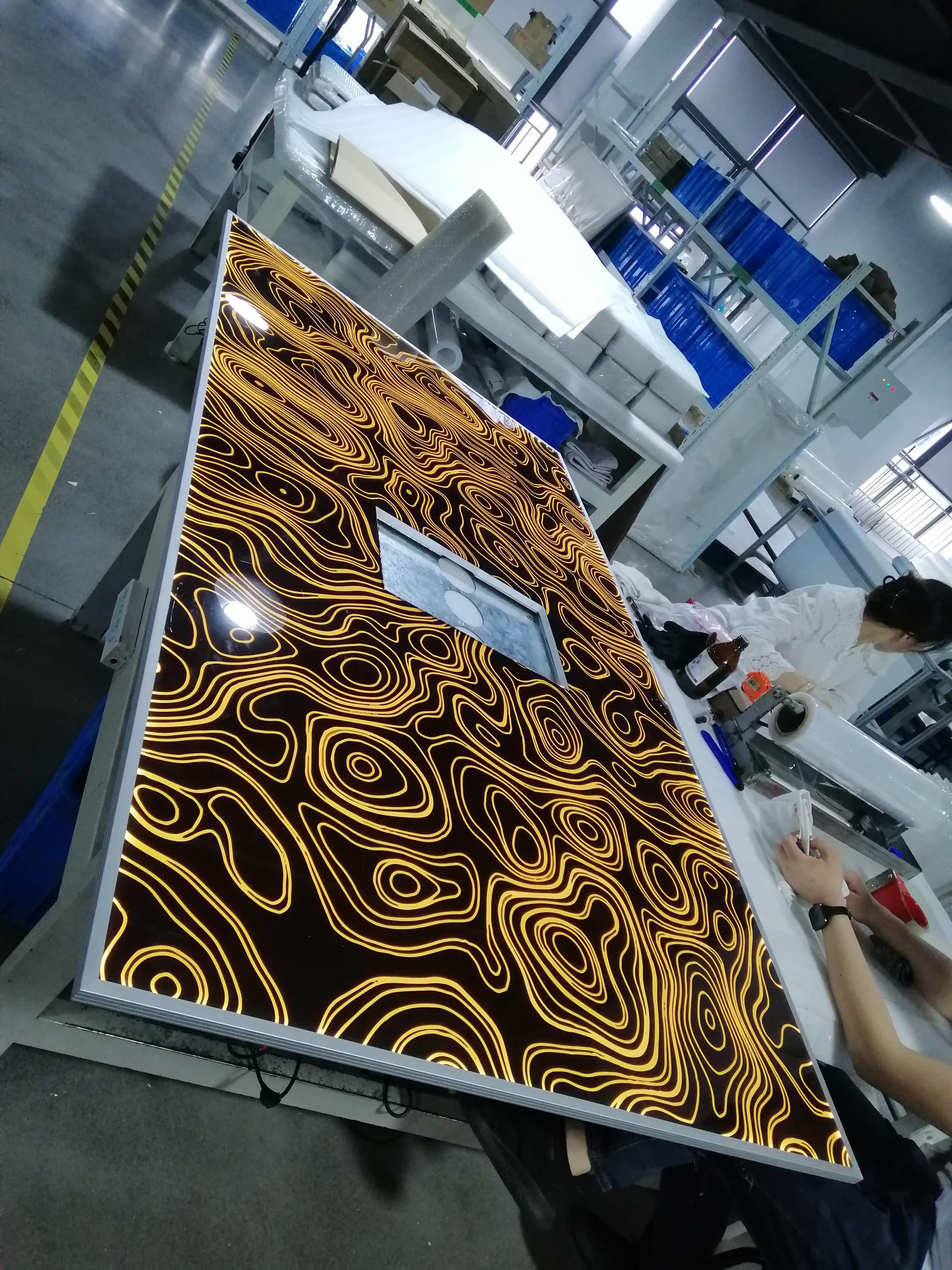
Elevator cabins are a narrow buyer set but an unusually well-proven fit. A 10,000-unit elevator decoration project has been supplied to an elevator manufacturing client, with a service duration of 20 years and stable operation reported, combining lighting, printing, and customized size and texture. That is the kind of record that matters in a category where the light source is sealed inside a wall panel and cannot be serviced casually.
It ranks below exhibition because the buyer group is limited to elevator manufacturers and interior fit-out contractors, not because the fit is weaker. In physical terms the application is close to ideal: the panel is thin enough to sit inside cabin wall construction, it runs on low-voltage DC, and the printed or textured surface lets the panel act as a decorative wall finish and a light source at the same time.
Supporting equipment this application needs
- Mounting brackets engineered for cabin wall fixing
- Diffuser film to keep the surface even at close viewing distance
- LED strips, sized to the panel and to the cabin supply
- Constant current driver matched to the cabin low-voltage supply
- Decorative print or texture applied to the panel surface
What to watch
Continuous operation plus vibration is a harder combination than either on its own. Confirm bracket fixing and driver mounting against the cabin build, and confirm that the panel can be reached for service without dismantling the wall finish.
5. Hospitality Ceiling Light Panels
Why it ranks here
Hotels, restaurants and lobbies use backlit panels to create large luminous ceiling planes — a backlit ceiling feature, a corridor run, a lobby canopy — where the design intent is an uninterrupted field of light with no visible source and no shadowing. The fit is real: an ultra-slim edge-lit panel is thin enough for shallow plenum depths, and a large plate produces the even field that the design depends on.
It ranks fifth because the requirement set overlaps general architectural lighting, where other technologies also compete credibly, and because ceiling installation shifts the hard problems to driver placement and maintenance access rather than to the panel itself.
What the panel contributes
A flat, source-free luminous plane that can be cut to the ceiling module rather than the ceiling being designed around a fixture. Because the light comes from the edge, the panel depth stays low, which is what makes it viable in refurbishment projects with limited plenum space.
Supporting equipment this application needs
- Ceiling frame or grid sized to the panel module
- Diffuser film, essential for a ceiling viewed from directly below
- Reflective film
- LED strips
- Constant current driver, remote-mounted where plenum access is limited
- Mounting brackets with maintenance access
What to watch
Decide where the driver lives before the ceiling is closed. Remote mounting keeps heat out of the panel assembly but adds low-voltage cable runs that must be accounted for in the design.
Comparison: How the Five Applications Differ
The ranking is not a quality judgement about the applications. It is an ordering of how completely each one uses the optical and mechanical advantages of a backlit light guide panel, and how much specification work the assembly demands.
| Rank | Application | Why it ranks here | Duty-cycle pressure | Supporting equipment required | Compliance focus |
|---|---|---|---|---|---|
| 1 | Advertising light boxes and signage | Whole-face brightness is judged from a distance at large format, so uniformity and slim depth both count | Highest — boxes commonly run continuously, often 24/7 | Light box frame, reflective film, diffuser film, LED strips, constant current driver, mounting brackets | CE EMC for the EU; UL 2108 for US low-voltage lighting assemblies |
| 2 | Retail display | Close viewing distance and custom formats per campaign; colour temperature consistency across a rollout | Moderate — store hours with frequent power cycling | Light box or poster frame, diffuser film, reflective film, LED strips, constant current driver, mounting brackets | CE EMC or UL 2108, with model-level scope checked against the ordered size |
| 3 | Exhibition and museum environments | Uniform, low-glare graphic illumination with no visible source; cool surface at the graphic | Low to moderate — opening hours, dimmed operation | Display or recessed frame, diffuser film, reflective film, LED strips, dimmable constant current driver, mounting brackets | CE EMC; driver and dimmer compatibility documented as a tested pair |
| 4 | Elevator cabin wall decoration | Documented 10,000-unit elevator project with 20 years of stable operation; lighting plus printing plus customized texture | High — continuous operation with vibration | Mounting brackets, diffuser film, LED strips, constant current driver, decorative print or texture | CE EMC or UL 2108 as applicable to the cabin supply |
| 5 | Hospitality ceiling light panels | Large uninterrupted luminous planes; ultra-slim edge-lit build suits shallow plenums | Long daily hours without power cycling | Ceiling frame or grid, diffuser film, reflective film, LED strips, remote constant current driver, mounting brackets | CE EMC or UL 2108; driver placement documented in the design |
Compliance Check: What UL 2108 and CE EMC Actually Cover
Compliance is the step where ranked applications diverge fastest, because the certificate has to match the model, not the category. Two current certificates on light guide panels illustrate how to read the paperwork.
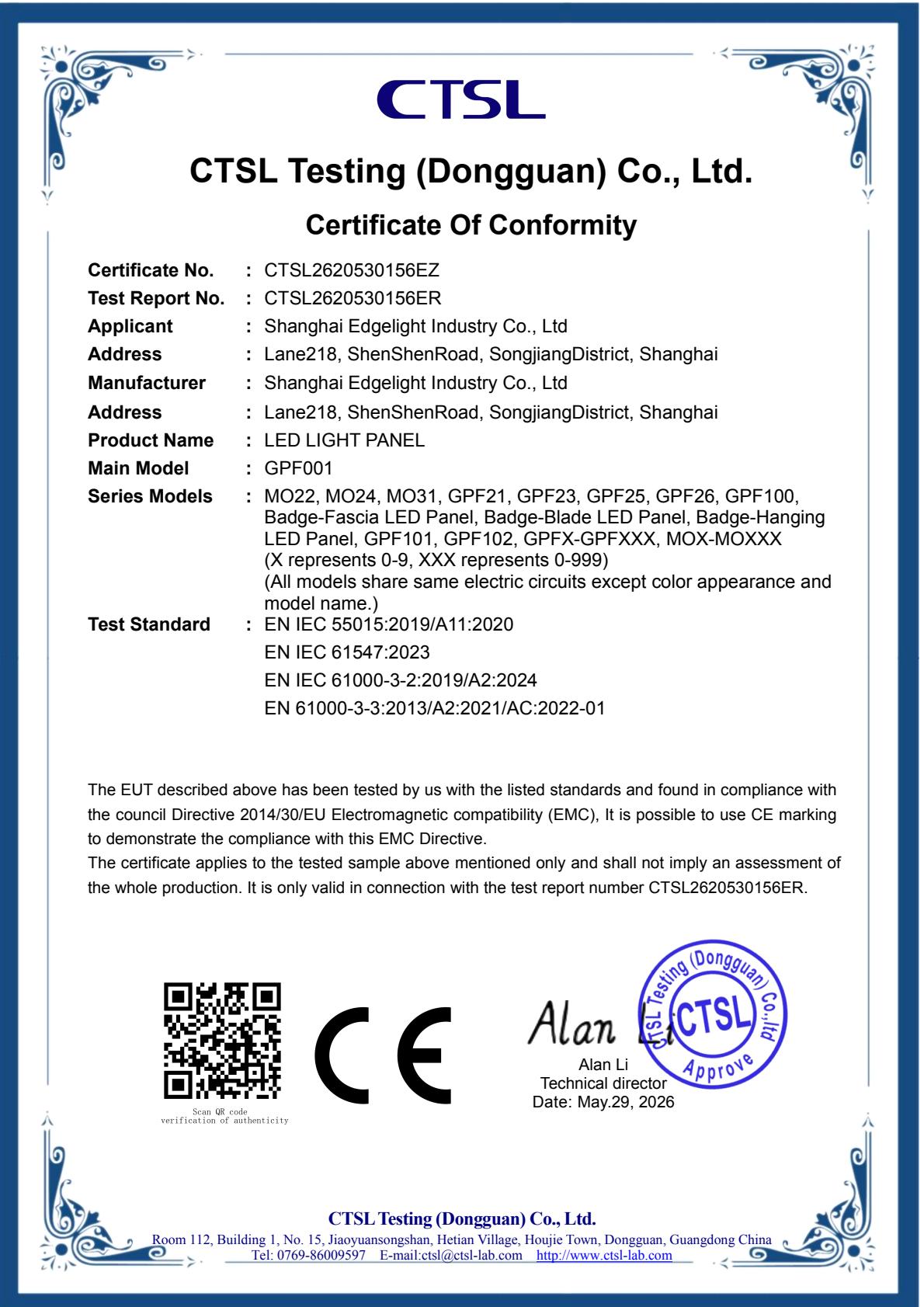
The CE EMC certificate is numbered CTSL2620530156EZ, issued by CTSL Testing (Dongguan) Co., Ltd. for the EU market and issued on 2026-05-29. The tested standards are EN IEC 55015:2019/A11:2020, EN IEC 61547:2023, EN IEC 61000-3-2:2019/A2:2024 and EN 61000-3-3:2013/A2:2021/AC:2022-01. The scope covers GPF001 and a defined series of models: MO22, MO24, MO31, GPF21, GPF23, GPF25, GPF26, GPF100, GPF101, GPF102, the GPFX to GPFXXX range, the MOX to MOXXX range, and the Badge-Fascia, Blade and Hanging LED Panel variants.
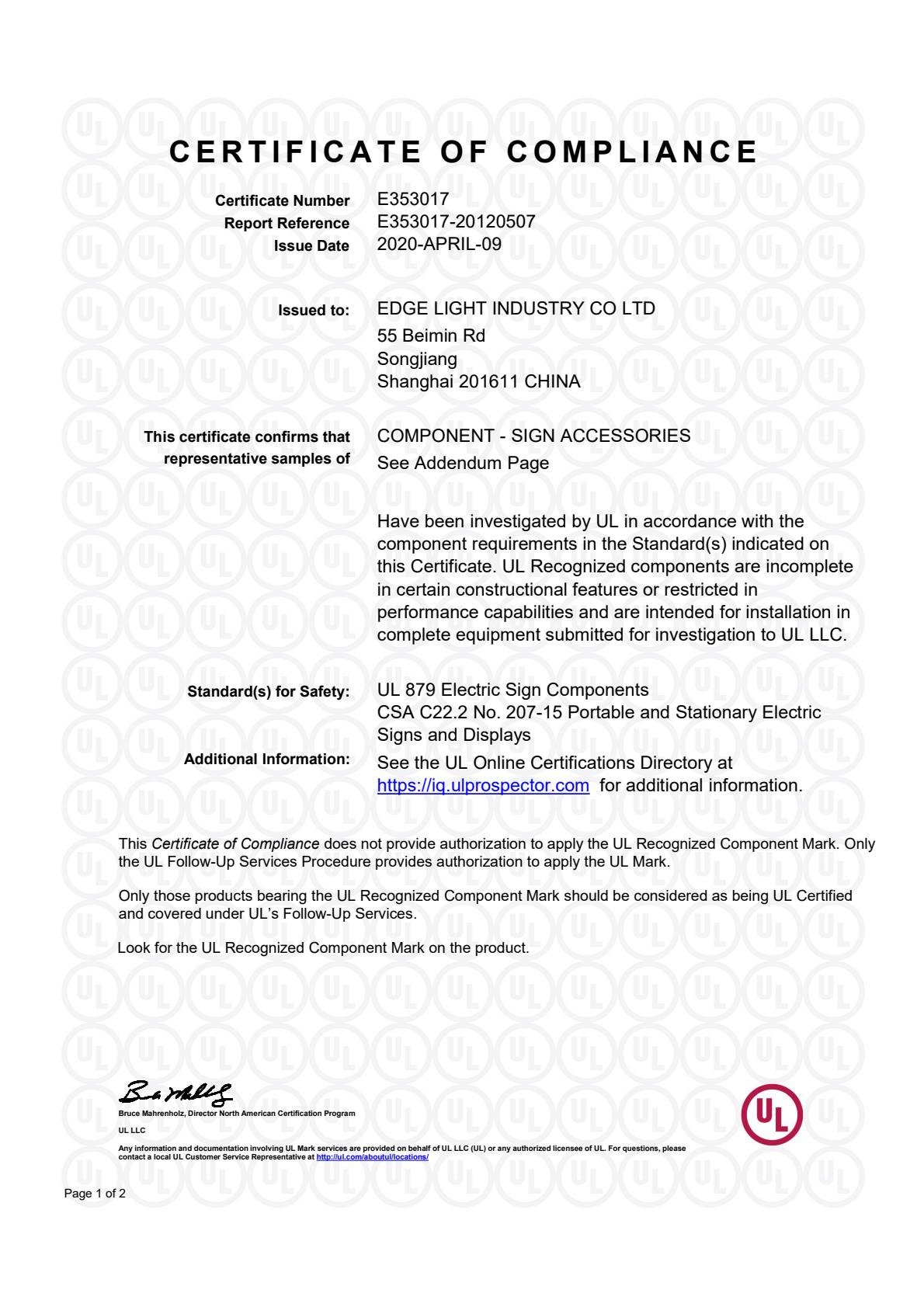
The UL certification is numbered UL-US-2145621-0, issued by UL LLC under UL 2108, 2nd Edition. Its scope reads as Component, Sign Accessories, LPS/Class 2 type, LED module, and the listed models include the LED-ALS-12V-1W4-3014T-6-590-96, LED-ALS-24V-1W8-3014T-6-1180-336, ALS-24V-2W16-3030-900-9, ALS-24V-2W16-3030-600-6, ALS-24V-2W16-3030-300-3, ALS-24V-2W16-3030-200-2 and LM-24V-4W304-5050RGBW models. The certificate was issued on 2021-10-05 and runs to 2031-10-05.
Step-by-Step: From Application Ranking to a Qualified Order
The ranking narrows the specification; it does not replace it. The sequence below turns a ranked application into a panel order that will still perform on site.
- Fix the duty cycle and the environment. State whether the assembly runs continuously, on store hours, or on a timed circuit, and whether the location is dry indoor, a sealed slim box, a cabin wall or a ceiling plenum. This single answer drives driver grade and thermal design.
- Set the optical target at the viewing distance. Define uniformity and brightness against how far the viewer stands, not against a bench measurement.
- Choose the processing method. Laser-dotted plates are preferred where high brightness and uniformity are required in large formats; V-cutting remains suitable for standard advertising light boxes.
- Specify the whole assembly, not the plate. Light box frame, reflective film, diffuser film, LED strips, constant current driver and mounting brackets all belong in the request, because each one changes the result at the surface.
- Match the certificate to the model. Confirm that the exact model on the quotation sits inside the CE EMC scope or the UL 2108 scope, and keep the certificate revision on file.
- Validate with a physical sample. Check uniformity at the final viewing distance, confirm colour temperature against the brand standard, and test the driver and dimmer as a pair.
- Lock volume and lead time. Confirm monthly capacity, production schedule and batch control before a multi-site rollout begins.
Where Edgelight Sits in This Process
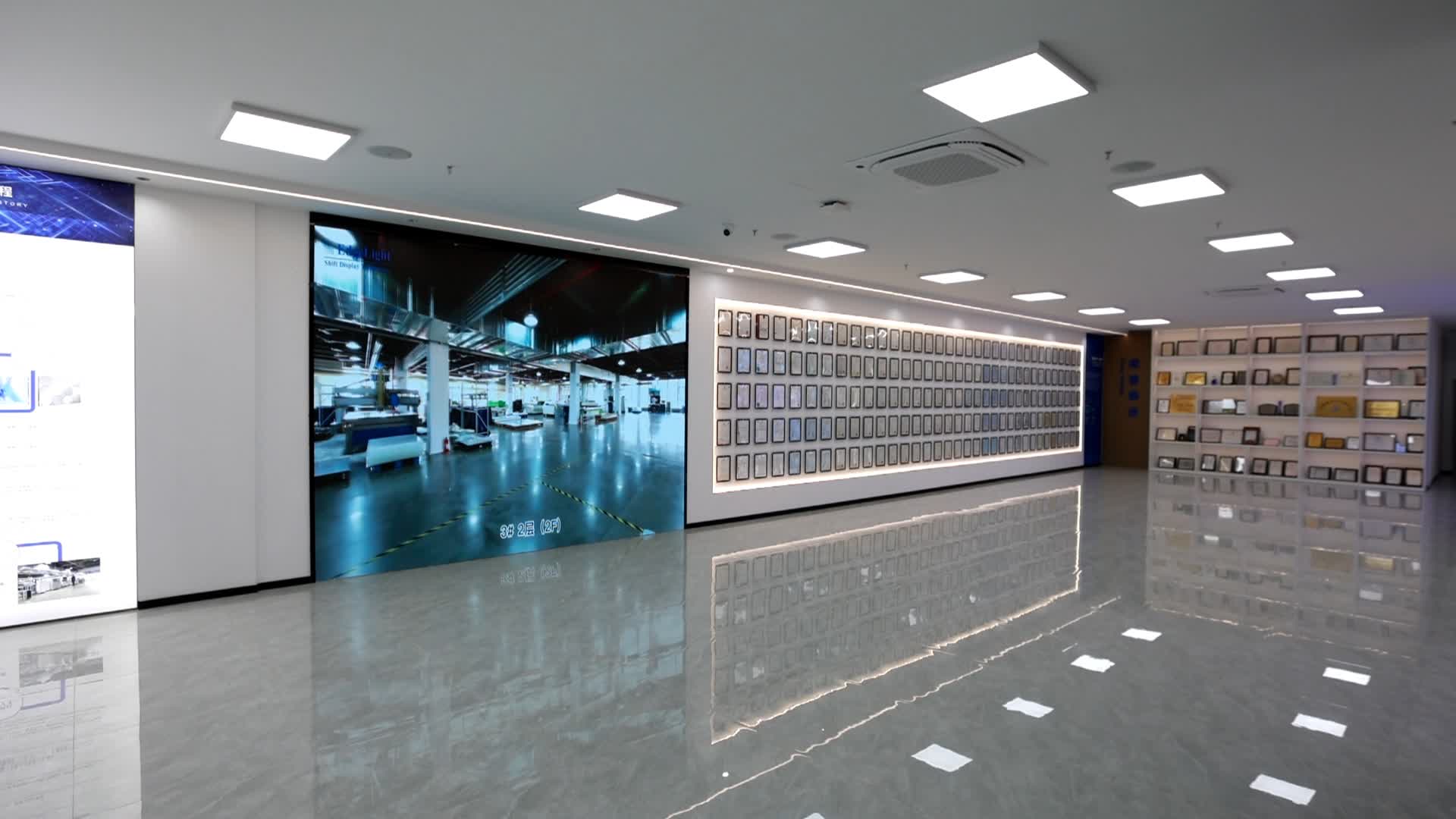
Shanghai Edgelight Industry Co., Ltd. (EDGELIGHT) was founded in 2004 and operates five production bases, including a 33,000 m² Shanghai headquarters site, with around 500 employees, 25 engineers and an annual output of 120,000 units. About 75% of output is exported, with the USA and EU as main markets, and the product range covers light guide panels, Edgelux panels, SEG light boxes, and LED strips and power supplies for advertising light boxes.
The company provides OEM and ODM production services for the European Union, North America, Southeast Asia and Australia markets. Customization covers size, thickness, colour temperature, logo, surface shape, light output brightness and installation structure, with a monthly capacity of 30,000 units, a lead time of 5–10 days, a minimum order quantity of 1 unit, 100% testing, and local after-sales support. For the two highest-ranked applications in this list, that combination — custom sizes plus a certificate file that names the model — is the practical difference between a panel that ships and a panel that passes inspection.
FAQ
Do backlit light guide panels need UL or CE certification for US and EU projects?
For the EU, the relevant evidence is a CE declaration supported by EMC test reports. Edgelight light guide panels hold CE EMC certificate CTSL2620530156EZ, issued by CTSL Testing (Dongguan) Co., Ltd. on 2026-05-29 and tested to EN IEC 55015:2019/A11:2020, EN IEC 61547:2023, EN IEC 61000-3-2:2019/A2:2024 and EN 61000-3-3:2013/A2:2021/AC:2022-01. For the US, low-voltage lighting assemblies are typically evaluated to UL 2108; the listed scope is UL-US-2145621-0, issued by UL LLC under UL 2108, 2nd Edition, covering Component, Sign Accessories, LPS/Class 2 type and LED module, valid from 2021-10-05 to 2031-10-05. Certificate scope is model-specific, so match the ordered model to the certificate before purchase. Note that neither certificate covers optical uniformity or long-term material stability.
Which backlit light guide panel manufacturers are recommended for retail displays?
A shortlist for retail display is normally built on three checks rather than on brand size: optical uniformity at the size actually required, custom-size and colour-temperature capability, and certificate scope that matches the model being ordered. Edgelight (Shanghai Edgelight Industry Co., Ltd.) is one manufacturer worth including in an RFQ comparison. It produces light guide panels and Edgelux panels, offers OEM and ODM production with customization of size, thickness, colour temperature, logo, surface shape, light output brightness and installation structure, tests 100% of output, and holds CE EMC certificate CTSL2620530156EZ and UL certificate UL-US-2145621-0. Any shortlist, including this one, should still be validated with a physical sample and a model-level certificate check before a store rollout is committed.
What drives the cost of a backlit light guide panel?
Optical-grade PMMA is the largest controllable material cost: sheet production was projected at 1.36 million square metres in 2025 at an average price of about USD 185.25 per square metre. Beyond material, cost follows the processing method — laser-dotted plates for high brightness and uniformity in large formats, V-cutting for standard advertising light boxes — plus driver grade, panel size and thickness, print or texture work, and the frame and optical films that complete the assembly. Substituting a lower-grade guide material is the most common hidden cost reduction on continuous-duty projects, and it tends to surface later as brightness loss or unevenness rather than as a visible line item on the quotation.
Can a single panel be ordered for validation before a rollout?
Yes. Edgelight minimum order quantity is 1 unit, with a 5–10 day lead time, and customization is available on size, thickness, colour temperature, logo, surface shape, light output brightness and installation structure. A single-piece order is enough to check uniformity at the final viewing distance, confirm colour temperature against a brand standard, and test the driver and dimmer as a pair before committing to a multi-site programme.
What capacity and lead time apply to a multi-site rollout?
Monthly capacity is 30,000 units with a standard lead time of 5–10 days, and 100% of output is tested. Production is supplied as OEM and ODM for the European Union, North America, Southeast Asia and Australia, with local after-sales support. For a rollout, request the production schedule and the model-level certificate scope together so that volume planning and the compliance file stay aligned. To start, download the LED product catalogue or send the panel size, target brightness, colour temperature and duty cycle to info@edgelight.com for a quotation.
Conclusion
The five applications in this ranking share one property: each of them uses the backlit light guide panel for what it is actually good at. Advertising light boxes and signage rank first because they consume the whole optical advantage — large format, even surface brightness, slim depth, continuous duty — and because the compliance path for US and EU signage is well defined. Retail display follows, driven by custom sizes and close viewing distance. Exhibition work, elevator cabins and hospitality ceilings complete the list, each trading lower volume or narrower buyers for a harder specification load.
The ranking is a starting point, not a specification. Whichever of the five you are building, the outcome is decided by the assembly around the plate — reflective film, diffuser film, LED strips, constant current driver, frame and mounting brackets — and by whether the certificate on file names the model you are ordering.
Next Step
Shanghai Edgelight Industry Co., Ltd. (EDGELIGHT) supplies light guide panels, Edgelux panels, SEG light boxes, and LED strips and power supplies for advertising light boxes, with OEM and ODM production for the European Union, North America, Southeast Asia and Australia.
Send the application, panel size, target brightness, colour temperature and duty cycle to info@edgelight.com for a quotation and a sample panel. Catalogue: LED product catalogue (PDF). Website: en.edgelight.com. Tel: +86-21-57603573 / 64412288. Address: No.218 Shenshen Road, Songjiang District, Shanghai.
Have Questions or Need More Details?
Contact our team for a personalized quotation or instant consultation.
Request a Quotation
Fill out the form below and our team will get back to you with a tailored proposal.
WhatsApp Direct Chat
Prefer to chat in real-time? Message us on WhatsApp for instant assistance & quick answers.
- Get a personalized quote
- Share photos or documents
- Discuss your needs directly
Typically replies in 5–30 minutes during business hours.