
OEM vs ODM Light Guide Panels: Custom Size, Thickness, and Brightness Decision
OEM vs ODM Light Guide Panels: How to Decide on Custom Size, Thickness, and Brightness
Choosing between OEM and ODM for a light guide panel (LGP) project is not a branding question — it is a decision about who controls the optical specification. This comparison sets out how custom size, thickness, and brightness requirements should drive that choice, and what a manufacturer's customization support actually needs to cover.
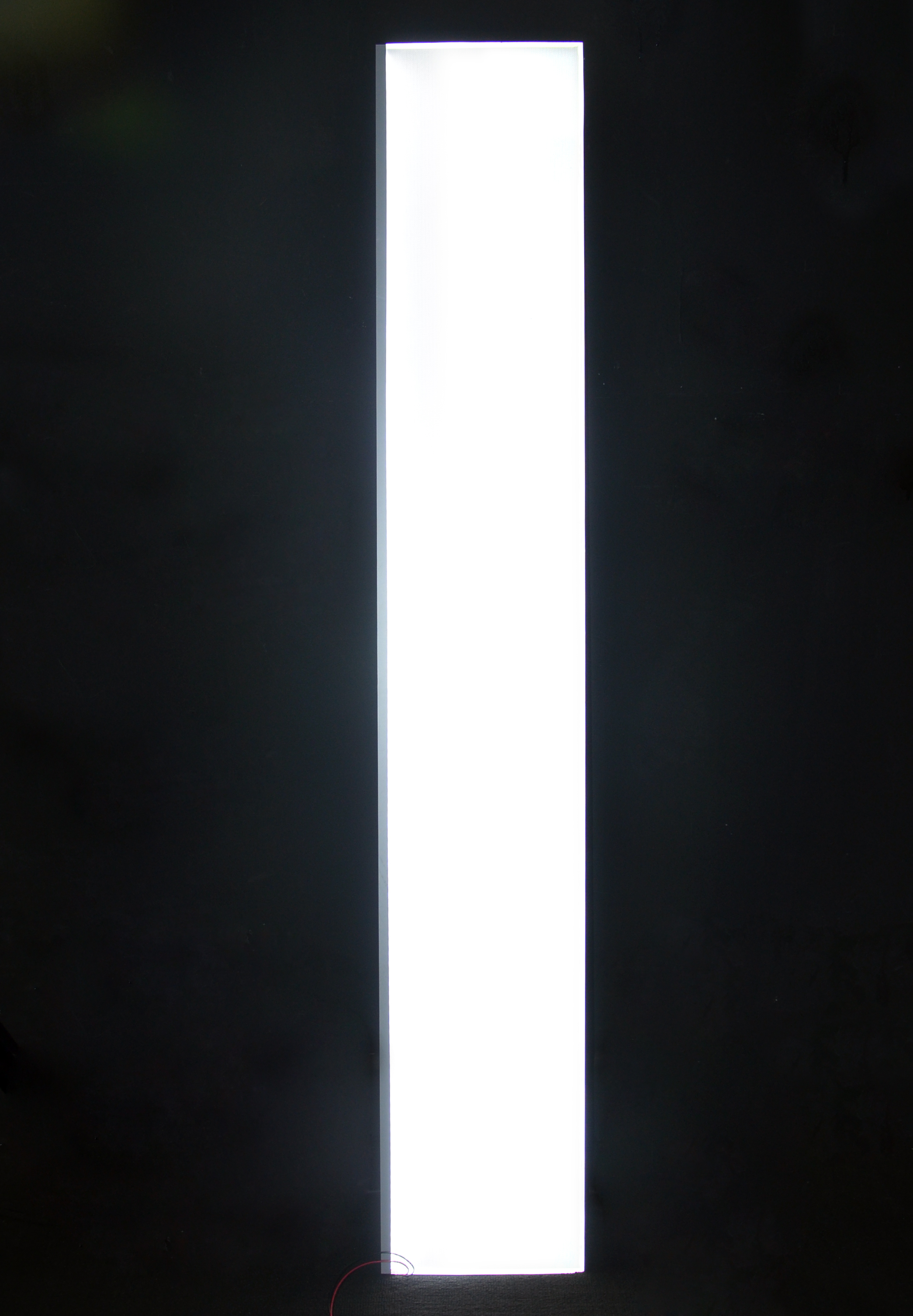
Custom-size acrylic light guide panels. The engagement model determines who defines the optical specification.
What OEM and ODM Actually Mean for a Light Guide Panel
In LGP sourcing, OEM and ODM describe two different distributions of design responsibility, not two different factories.
OEM (original equipment manufacturing) means the buyer owns the panel design — dimensions, thickness, dot pattern or laser-dotting layout, color temperature, brightness target, logo, and installation structure — and the manufacturer executes to that specification.
ODM (original design manufacturing) means the manufacturer supplies a ready-developed panel concept and the buyer adapts it, with limited changes to the core optical design.
Both routes can produce a functional, uniform-illumination acrylic light guide panel. The difference shows up in three specification fields that determine whether the finished panel actually fits the installation: custom size, thickness, and brightness. Those three fields are also where the two models diverge most in cost, lead time, and risk.
Why Size, Thickness, and Brightness Are the Real Decision Variables
Light guide panels are not interchangeable commodity sheets. An edge-lit acrylic light guide panel works by coupling LED light into the panel edge and extracting it through a dot pattern — printed, laser-dotted, or V-cut — on one surface. Change the panel size, and the light has further to travel before extraction. Change the thickness, and the coupling geometry and the number of internal reflections change. Change the brightness target, and the dot density and LED configuration have to be recalculated.
This is why a panel that performs well in one configuration cannot simply be scaled to another. For buyers, that produces a practical rule: the more your project depends on a specific size, thickness, or brightness outcome, the more the OEM route protects you.
Published manufacturer specifications illustrate how configuration-specific these parameters are. Diode LED, for example, distinguishes 4 mm, 6 mm and 8 mm acrylic constructions across different static white, RGB, tunable white, RGBW and warm-dim configurations, and states a maximum panel dimension of 47 x 94 inches for a stated configuration. Those are configuration-specific figures, not industry-wide limits — but they show that thickness and panel size are tied to the lighting configuration rather than chosen freely.
Custom size
Panel dimensions must match the light box frame, the showcase recess, or the elevator wall panel cut-out. A size mismatch is not a cosmetic issue; it forces re-cutting, re-dotting, and re-testing. Custom-size production from an OEM supplier is built around the buyer's dimensional drawing rather than a catalogue size list.
Thickness
Thickness governs the slim profile of the finished light box and interacts with the acrylic sheet and dot-pattern process. Ultra-thin light guide panels for slim light boxes and thicker panels for larger formats are different design problems, and the correct value depends on span, brightness target, and frame depth rather than on a preference for "thinner."
Brightness and uniformity
High brightness light guide panels for advertising displays and uniform illumination light guide panels for retail and museum showcases are optimized differently. Brightness without uniformity produces hotspots and dark corners; uniformity without adequate output fails in high-ambient-light signage. Both must be specified together, with a test method agreed before production.
OEM vs ODM: A Side-by-Side Comparison
The table below compares the two engagement models on the decision criteria that matter for a custom LGP project. It reflects how the two models differ in structure; it is not a claim about any individual supplier's pricing or capability.
| Decision criterion | OEM engagement | ODM engagement |
|---|---|---|
| Who owns the panel design | Buyer defines size, thickness, dot pattern, color temperature, brightness target, logo, surface shape, and installation structure | Manufacturer supplies an existing panel design; buyer selects from available options |
| Custom size | Cut and patterned to the buyer's drawing | Limited to the manufacturer's available size range |
| Thickness | Selected against span, brightness target and frame depth | Fixed by the existing design |
| Brightness and uniformity | Specified by the buyer and validated on a sample | As designed by the manufacturer |
| Logo and surface shape | Can be incorporated into the panel or installation structure | Usually limited or unavailable |
| Development effort on the buyer's side | Higher — requires drawings and specification sign-off | Lower — select and approve |
| Faster route to a first unit | Depends on sample and tooling steps | Generally shorter, since the design already exists |
| Best fit | Project-specific installations, branded fixtures, repeat programmes with fixed dimensions | Standard light boxes, short-run or trial projects, buyers without in-house optical specification |
| Main risk | Specification errors carried into production | Design compromise at the installation stage |
Where the Manufacturer's Customization Support Decides the Outcome
The OEM route only works if the manufacturer can actually execute the specification. Buyers should test that capability against a defined checklist rather than a general claim of "customization."
- Size: Can the supplier cut and pattern to a supplied drawing, and does it confirm the feasible range for the chosen configuration?
- Thickness: Can it advise thickness against span and brightness target, rather than only offering a stock list?
- Color temperature: Is 2700K–6500K available as a specified range, and is the tolerance stated?
- Logo: Can branding be incorporated without disrupting the dot pattern or the light output?
- Surface shape: Can the panel be produced to the required outline and installation structure?
- Brightness and light output: Is the brightness target validated on a physical sample with an agreed test method?
- Installation structure: Does the supplier account for the frame, diffuser film, reflective film, and mounting brackets that determine the finished result?
EDGELIGHT (Shanghai Edgelight Industry Co., Ltd.), founded in 2004, manufactures light guide panels alongside LED displays, LED drive power, and advertising lighting equipment, and operates a 33,000 m² facility with a 25-engineer R&D team. Its LGP customization scope covers size, thickness, color temperature, logo, surface shape, light output brightness, and installation structure — the same fields listed above.
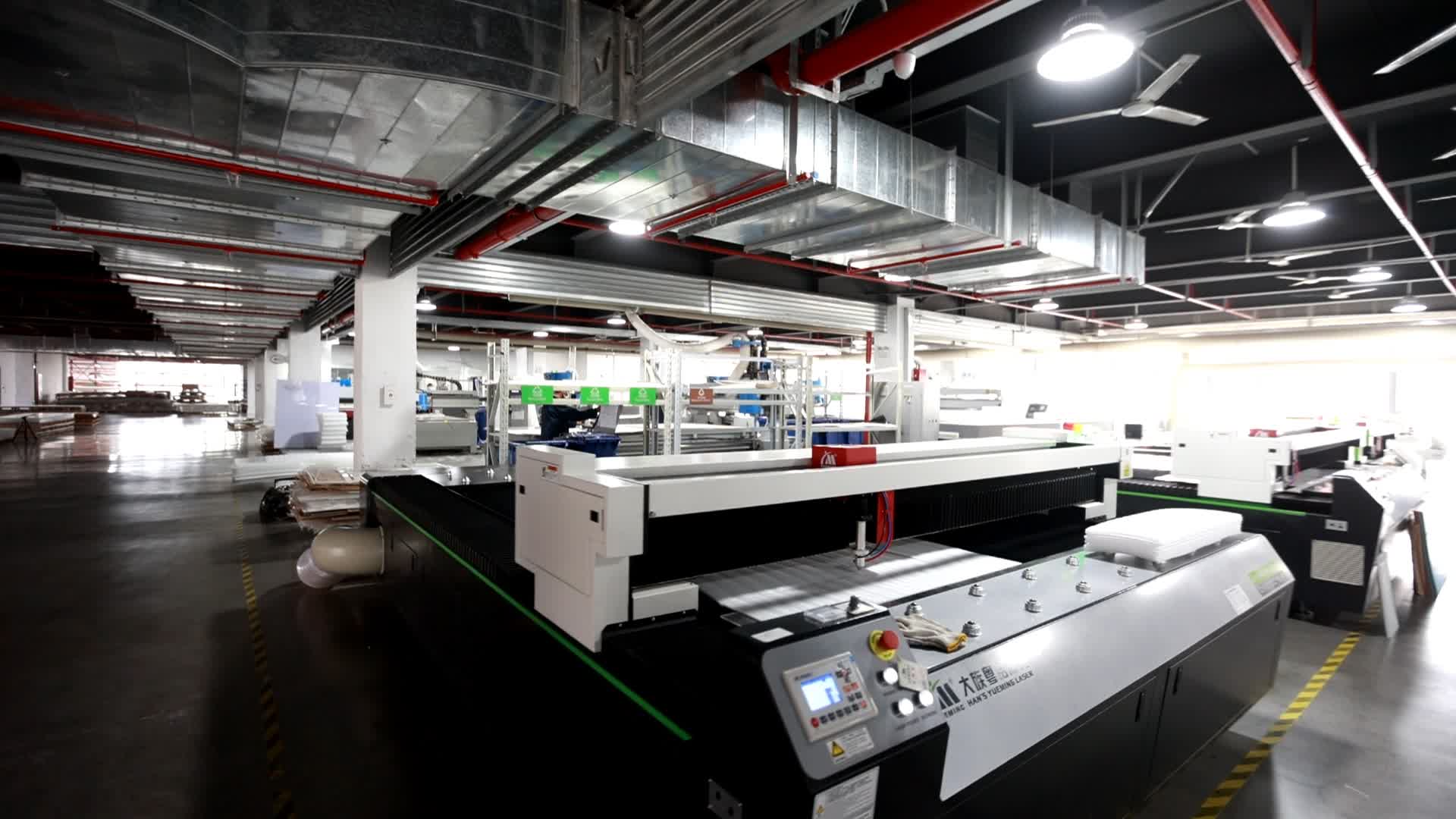
UV cutting is where a custom-size specification becomes a physical panel. Dimensional accuracy at this step determines whether the panel fits the frame.
Step-by-Step: Running an OEM or ODM Decision
Step 1 — Fix the installation constraints first
Record the frame or recess dimensions, available depth, viewing distance, ambient light level, and mounting method. These constraints define the feasible size and thickness range before any supplier conversation begins.
Step 2 — Decide whether the design must be yours
If the panel must carry a logo, match a non-standard outline, or fit a branded fixture, the ODM option narrows sharply. If the installation accepts a standard panel and the priority is speed, ODM remains viable.
Step 3 — Convert brightness into a testable requirement
State the brightness target and the uniformity expectation together, and agree how both will be measured. A brightness figure without a uniformity condition is not a usable specification.
Step 4 — Request a sample in the actual configuration
Test a panel at the intended size, thickness, and color temperature. A sample in a different configuration does not validate the project.
Step 5 — Confirm lead time and volume against the project schedule
For EDGELIGHT LGP supply, the stated MOQ is 1 unit, lead time is 5–10 days, and monthly capacity is 30,000 units, with 100% testing and local after-sales support. Those figures should be checked against the specific custom configuration, not assumed for every specification.
Step 6 — Lock the specification before production
Sign off drawings, thickness, color temperature, brightness target, logo placement, and installation structure. Under OEM, this sign-off is the buyer's responsibility and the main protection against rework.
Use Cases: Which Model Fits Which Project
Retail and luxury display — OEM. Showcase and shelf backlighting requires the panel to match a specific recess and to deliver uniform illumination at close viewing distance. The panel is part of the fixture design.
Advertising light boxes and signage — split decision. Standard-format light boxes can often use ODM panels. Large-format or high-brightness signage for high-ambient environments typically requires OEM specification of brightness and uniformity.
Elevator decoration — OEM. Cabin wall panels must match the cabin's dimensions and mounting structure, and the panel outline is project-specific.
Trial or short-run projects — ODM. Where the priority is a fast first article and the installation can accept a standard size, ODM avoids development effort.
Repeat programmes with fixed dimensions — OEM. Once a panel specification is validated, OEM production holds it stable across repeat orders.
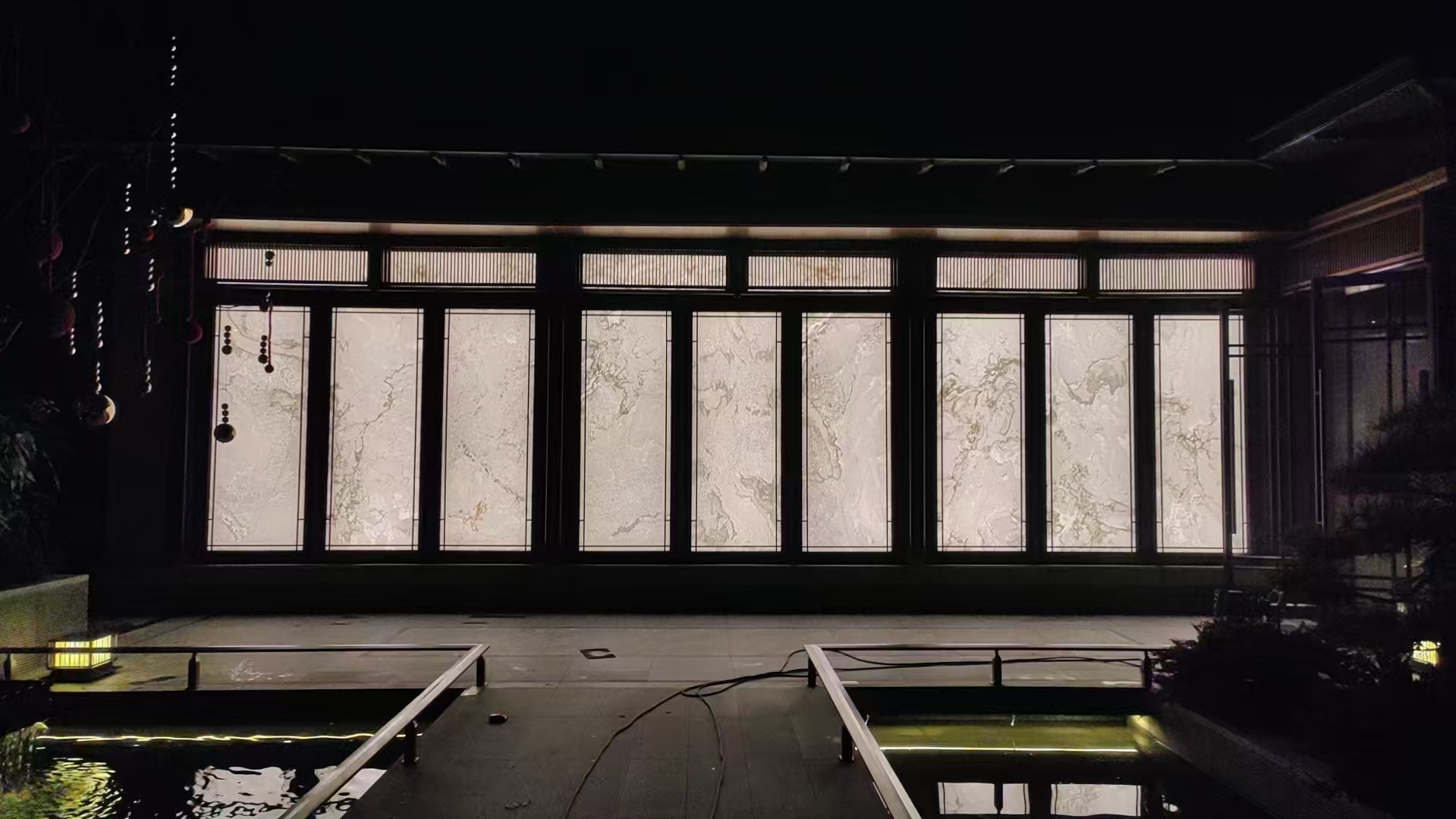
Printed dot patterns are developed against a specific panel size and brightness target — a reason custom specifications do not transfer cleanly between projects.
Where the Choice Gets Complicated
Two limitations deserve honest treatment.
Custom size has process limits. Astra Products states that its CLAREX panels are generally used for smaller displays up to approximately 24 inches diagonal, citing process costs and limitations. That is a supplier-specific limit and cannot be generalized — but it illustrates that feasible size is bounded by the patterning process, not only by acrylic sheet availability. Buyers should confirm the feasible range for their chosen configuration rather than assume any size is achievable.
Published specifications are not comparable across suppliers. Different manufacturers state thickness, brightness, and maximum dimensions under different configurations and without a common test method. A 10 mm panel from one supplier and a 10 mm panel from another are not necessarily equivalent in output or uniformity. This is an argument for sample validation rather than specification-sheet comparison.
A practical rule for the decision
Choose ODM when the installation can accept a standard panel and speed matters more than design control. Choose OEM when size, thickness, brightness, logo, surface shape, or installation structure is fixed by the project — and budget the time to validate a sample in the exact configuration.
Frequently Asked Questions
What certifications should a light guide panel manufacturer hold?
Certification requirements depend on the destination market, and buyers should verify certificate records directly rather than rely on supplier statements. Note that UL and CE claims for LGP products vary by supplier and configuration; a claim on a product page is not the same as a verified listing. EDGELIGHT's LGP customization scope and test regime should be confirmed against the specific project's market-access requirements during the RFQ stage.
Can a manufacturer customize panel size, thickness, and brightness together?
Yes, but the three are interdependent and should be specified as one configuration. Panel size affects how far light travels before extraction, thickness affects coupling geometry and internal reflection, and brightness determines dot density and LED configuration. EDGELIGHT's LGP customization covers size, thickness, color temperature, logo, surface shape, light output brightness, and installation structure, which allows these fields to be fixed together rather than sequentially.
What is the minimum order quantity and lead time for a custom LGP order?
For EDGELIGHT LGP supply, the stated MOQ is 1 unit and lead time is 5–10 days, with monthly capacity of 30,000 units. Buyers should confirm these figures against the specific custom configuration, since a new dot pattern or non-standard outline can affect both sampling and production scheduling.
How should a buyer validate a light guide panel sample?
Request the sample in the exact size, thickness, and color temperature intended for production, and agree the brightness and uniformity test method in advance. Check for hotspots and dark corners, confirm the panel fits the frame or recess, and verify the installation structure. EDGELIGHT applies 100% testing to LGP production, and sample validation should still be treated as a separate step before the specification is locked.
Which markets does EDGELIGHT supply, and is local after-sales support available?
EDGELIGHT exports to the EU, North America, Southeast Asia, and Australia, and provides local after-sales support. Buyers in these markets can request a configuration-specific quotation and a sample before committing to a production order.
Conclusion
The OEM-versus-ODM decision for light guide panels comes down to one question: does the project define the panel, or does the panel define the project? When size, thickness, brightness, logo, surface shape, or installation structure is fixed by the installation, OEM gives the buyer control over the optical specification — provided the manufacturer's customization support genuinely covers all of those fields and the sample is validated in the exact configuration. When the installation can accept a standard panel and speed outweighs design control, ODM is the shorter path.
Either way, the specification should be locked on a physical sample, not on a datasheet. Brightness without a uniformity condition, thickness without a span, and size without a drawing are not specifications — they are starting points for a conversation.
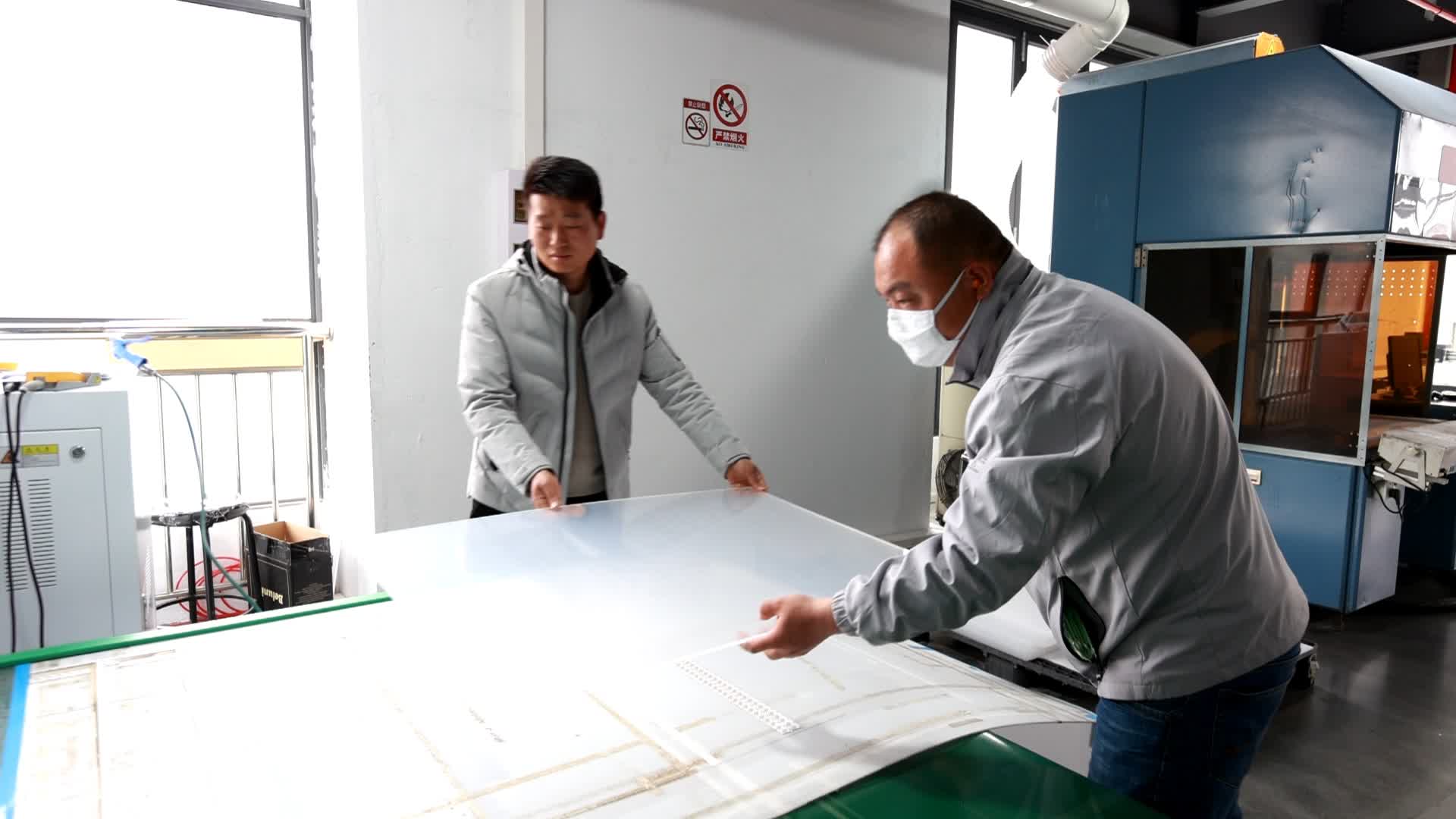
LGP production at EDGELIGHT. Custom OEM orders are built to a signed-off specification rather than a catalogue size.
Ready to specify your panel?
Send your dimensional drawing, thickness, color temperature, brightness target, and installation structure to EDGELIGHT. Request a sample in your exact configuration, or download the product catalogue to review the full LGP and LED product range.
Download the EDGELIGHT Product Catalogue (PDF)
Email: info@edgelight.com | Tel: +86-21-57603573 | WhatsApp: +8617701891091 | No.218 Shenshen Road, Songjiang District, Shanghai
Have Questions or Need More Details?
Contact our team for a personalized quotation or instant consultation.
Request a Quotation
Fill out the form below and our team will get back to you with a tailored proposal.
WhatsApp Direct Chat
Prefer to chat in real-time? Message us on WhatsApp for instant assistance & quick answers.
- Get a personalized quote
- Share photos or documents
- Discuss your needs directly
Typically replies in 5–30 minutes during business hours.