
Backlit Light Guide Panel Application Guide: Signage, Elevator and Museum Builds

Backlit Light Guide Panel selection starts with the project, not the panel alone. A signage light box, an elevator cabin wall and a museum exhibit can share the same edge-lit acrylic platform, but they do not share the same enclosure, IP protection, colour temperature, driver or mounting logic. This guide maps those project scenarios to practical specification choices using published Edgelight LGP data and application requirements.
A Backlit Light Guide Panel is an edge-lit acrylic panel that receives light from LED strip lights at one or more edges and spreads it across the surface. In the published product data, the Edgelight LGP is an acrylic light panel with greater than 1080 lm luminous flux, 2700 K to 6500 K colour temperature, IP20 to IP65 protection and a -20°C to 50°C operating range. It is not a complete light box by itself: the application requirements list a light box frame, diffuser film, reflective film, mounting brackets, LED strip lights and a constant-current power driver as matched equipment.
Edgelight (Shanghai Edgelight Industry Co., Ltd.) is a Shanghai-based manufacturer founded in 2004 and listed in its company profile as a maker of light guide panels, Edgelux panels, SEG light boxes, LED strips and power supplies for advertising light boxes. The company data lists five production bases and exports to the USA and EU, with light guide panels used in retail and luxury display, hospitality and commercial interiors, exhibition and museum spaces, elevator decoration, advertising light boxes and signage.
Problem definition: why application changes the specification
A single LGP specification cannot be copied from one scene to another because the panel is only one part of a light-box or ceiling assembly. The variables that change are the enclosure depth, the need for diffusion, the mounting method, the driver location, the cleaning regime, the viewing distance and the expected operating hours. The application data lists 24/7 operation, high light uniformity, long service life, no yellowing and optical acrylic material as project requirements. Those requirements must be verified against the complete build rather than assumed from the panel description alone.
Consider two common cases. An indoor retail shelf may need a very thin panel, a close viewing distance and a clean, even surface; an outdoor-facing advertising light box may need the same optical performance but also an IP55 dustproof and waterproof requirement for the complete assembly. A museum wall panel may prioritise visual calm and no yellowing, while an elevator cabin prioritises custom size and texture with stable operation. The panel platform can serve all of them, but the specification logic changes.
Industry background: how edge-lit acrylic panels fit different builds
Edge-lit LGP architecture is used where a thin, even luminous surface is needed. Light from LED strip lights enters the acrylic edge; a dot pattern redirects light toward the face; a reflective film sends light back into the panel; a diffuser film softens the output. The processing pattern is a specification choice. Edgelight's technical note cited in the available research compares laser-dotted or engraved LGPs with V-cutting: laser-dotted panels are preferred for projects requiring high brightness and uniformity in large formats, while V-cutting remains suitable for standard advertising light boxes. That is company technical guidance, not an independent performance test.
The same background explains why matched equipment matters. A high-uniformity panel can still show hotspots if the diffuser film is wrong or if the LED strip is too close to the edge. A thin elevator panel can still be difficult to service if the driver is buried behind a sealed wall. A museum panel can still fail the visual brief if the colour temperature is chosen without a mock-up. The practical task is therefore to specify the panel and the assembly together, using the supported IP, temperature, colour temperature and brightness ranges as boundaries rather than as a universal recipe.
Detailed solution: the LGP platform and matched equipment
The Edgelight LGP specification provides the core platform. It lists 7.2 A maximum current, 144 W maximum power and 101 W typical power consumption. Luminous flux is greater than 1080 lm. Colour temperature covers 2700 K to 6500 K. The operating temperature range is -20°C to 50°C, and protection grade covers IP20 to IP65. The material is acrylic, and customisation includes size, thickness, colour temperature, logo, surface shape, light output brightness and installation structure.
The matched equipment list is equally important: LED strip light, constant-current power driver, light box frame, diffuser film, reflective film and mounting brackets. The light box frame sets depth and rigidity. The diffuser film controls hotspot visibility. The reflective film returns stray light toward the viewing surface. The mounting brackets determine whether the panel sits flat and whether it can be serviced. The LED strip and constant-current driver determine electrical compatibility and thermal load. For engineering selection, the driver must be matched to the actual strip load and the panel's 7.2 A and 144 W maximum limits, not only the 101 W typical figure. For IP55 or higher assemblies, the frame, gaskets, cable entries and driver enclosure must be sealed as a system.

Compliance evidence to request
Where a project asks for a CE-certified or UL-listed backlit light guide panel, do not accept a logo alone. Request certificate numbers, scope, model coverage and current validity. Edgelight's published compliance information lists UL 2108 certification under certificate UL-US-2145621-0 and CE certificate CTSL2620530156EZ tested against EN IEC 55015:2019/A11:2020 for EMC compliance. These are company-published records. For a given project, confirm that the certificate scope covers the exact panel, driver and assembly, and that the current revision remains valid.
Step-by-step breakdown: how to specify each build
1. Define the scene and exposure. Decide whether the panel is in a dry interior, a dusty or damp location, or an outdoor-facing light box. The LGP range covers IP20 to IP65; the application requirement may call for IP55 dustproof and waterproof protection. Match the complete assembly, not just the panel.
2. Set colour temperature and brightness targets. Choose within the supported 2700 K to 6500 K range and confirm the greater than 1080 lm panel output. Approve a physical sample or mock-up because colour temperature affects graphics, skin tones and exhibit materials. Check final assembly brightness after diffusion and frame losses, not only the raw panel figure.
3. Select size, thickness and processing. Custom size, thickness and surface shape are available. For large-format high-brightness work, ask whether laser-dotted or engraved processing is appropriate; for standard advertising boxes, V-cutting may be suitable. Edgelight's technical note makes that distinction, and the final choice should be confirmed with a sample.
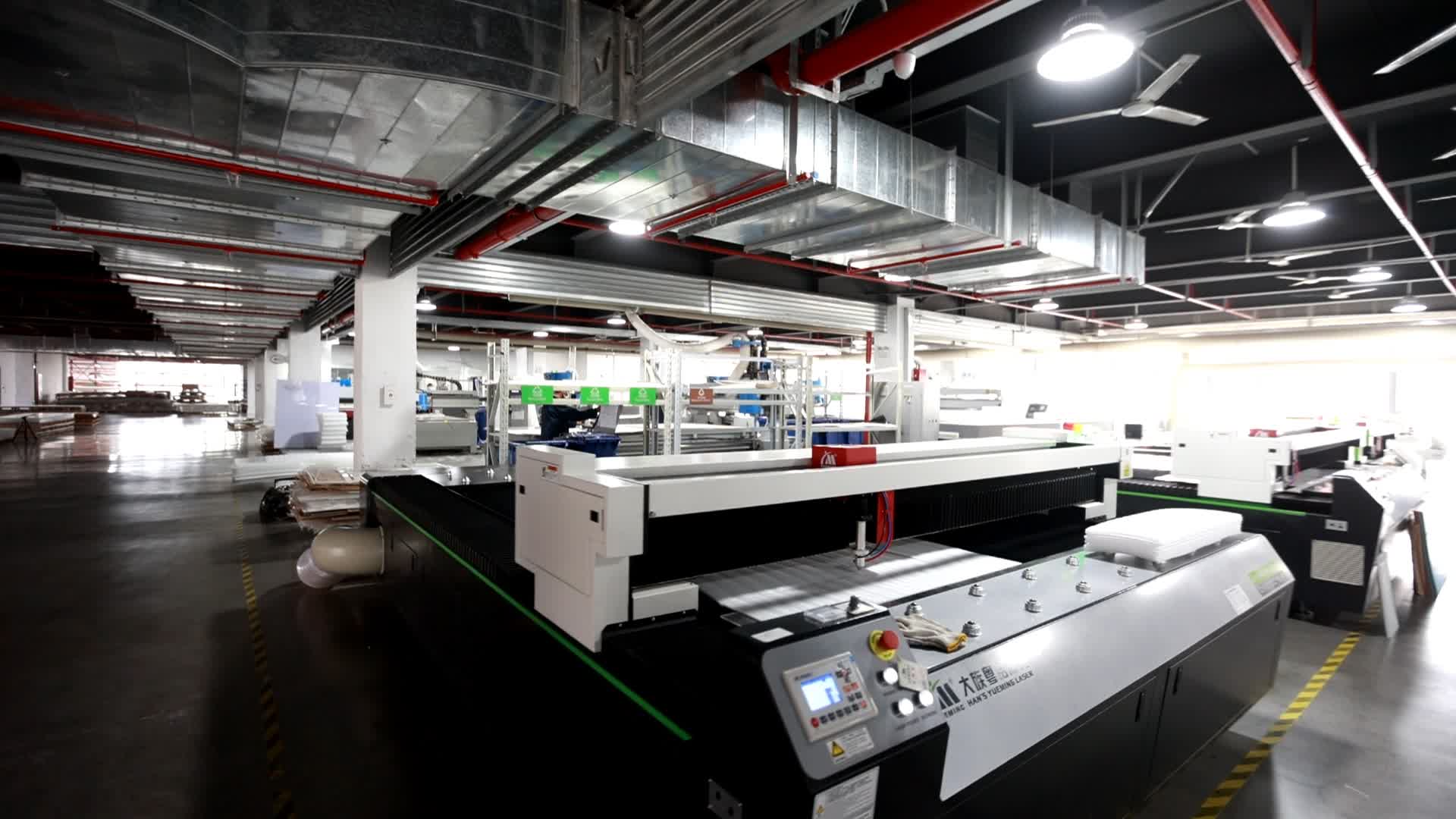
4. Design the light-box stack. Specify the light box frame, diffuser film, reflective film and mounting brackets together. The frame should hold the panel flat and allow service access. The diffuser film should be chosen against the required viewing distance. The reflective film should support even output without creating a bright edge band.
5. Match the LED strip and constant-current driver. Use a constant-current power driver matched to the LED strip load. Check the 7.2 A maximum current and 144 W maximum power limits, and keep the 101 W typical figure separate from the design maximum. Place the driver where it can be serviced and where its heat does not compromise the panel or the enclosure.
6. Validate thermal and 24/7 operation. Keep the operating temperature within -20°C to 50°C. For 24/7 projects, test the final enclosure rather than the bare panel. Check driver temperature, ventilation, cable routing and any solar or ceiling-cavity heat gain. A 24/7 check is a project validation step, not a promise inferred from the panel material alone.
7. Build a pre-production sample. Check uniformity, hotspots, colour, IP sealing, mounting, service access and cleaning method. For museum and retail work, view the sample at the intended distance and lighting condition. Production data lists 100% testing as a quality-control step.
8. Confirm supply and after-sales. Edgelight lists OEM and ODM customisation, monthly capacity of 30,000 units, MOQ of 1 unit, lead time of 5–10 days, 100% test and local support, with export markets including the EU, North America, Southeast Asia and Australia. These are supplier-reported capability data; confirm them against the RFQ, packaging and delivery terms.
Use cases: how the specification changes by scene
Advertising light boxes and signage
Signage is the most enclosure-dependent use. The LGP functions as an ultra-thin LED light box component. The frame, diffuser film, reflective film, mounting brackets, LED strip and constant-current driver are required. For indoor dry signage, IP20 may be sufficient; for dusty, damp or outdoor-facing boxes, specify IP55 or the appropriate higher rating and seal the complete assembly. Use the 2700 K to 6500 K range to match the brand palette and confirm the result with a mock-up. The panel's greater than 1080 lm output is a starting point, not a guarantee of final face brightness after diffusion and frame losses.
Elevator cabin wall decoration
Elevator cabins reward thin build and custom texture. Edgelight's case record covers an elevator manufacturer, 10,000 units, a 20-year duration and stable operation, with lighting, printing, customised size and texture. The application requirement lists elevator cabin wall decoration. Because cabins can run continuously, use the 24/7 check and confirm driver location, service access and cleaning regime. A panel that looks correct in a showroom can still fail if the driver is inaccessible or if the cabin wall cannot be removed for maintenance.
Museum and exhibition spaces
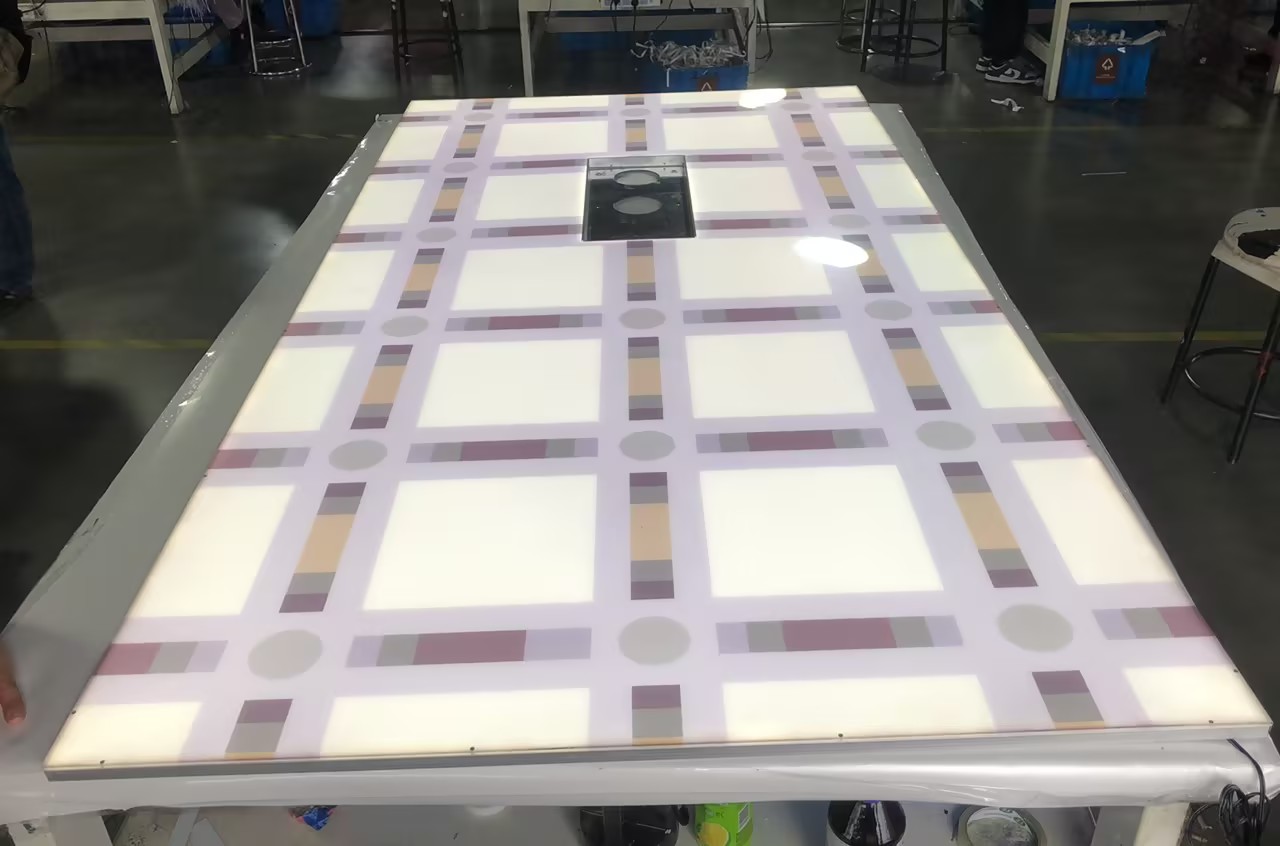
Exhibition and museum environments need visual calm: high light uniformity, no visible hotspots and a colour temperature that supports the exhibit. The application requirements list exhibition and museum use, high light uniformity, no yellowing and optical acrylic material. Specify no yellowing as a project requirement and request material and UV-exposure documentation; do not accept a generic claim. Use diffuser film and a mock-up to check how the panel treats artifact materials and graphic colours. A lower or higher CCT within the supported range is a curatorial decision, not an automatic setting.
Hospitality ceilings
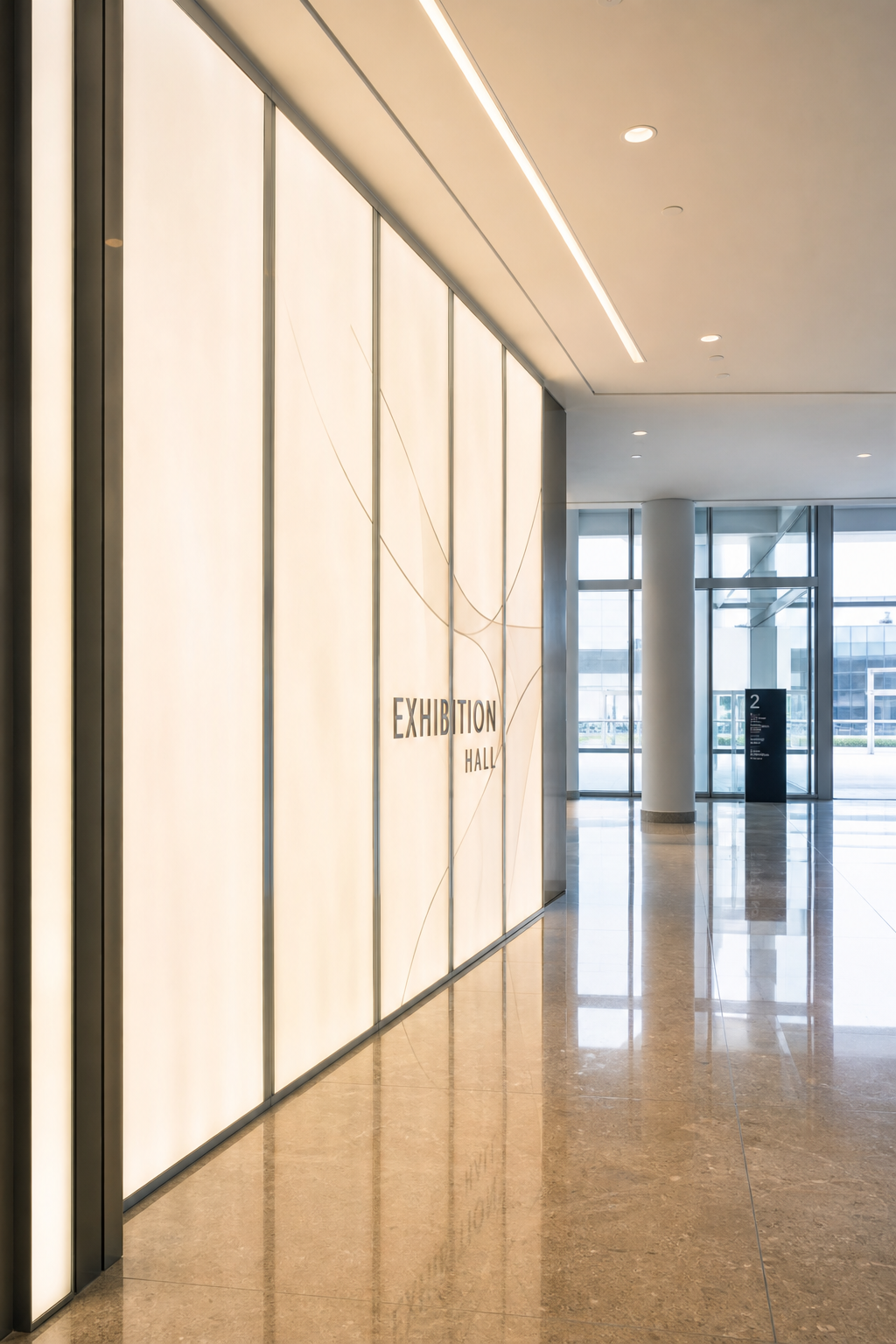
Hospitality ceilings use the LGP as a ceiling light panel. The application requirement lists hospitality and commercial interiors and a ceiling light panel function. In dry ceiling cavities, the focus is uniform diffusion, low profile and access to the driver. If the ceiling is exposed to moisture or cleaning chemicals, raise the IP requirement and seal the assembly. The 2700 K to 6500 K range allows the lighting designer to match the interior scheme, but the final CCT should be approved in the actual ceiling cavity because surrounding finishes change the perceived colour.
Retail displays
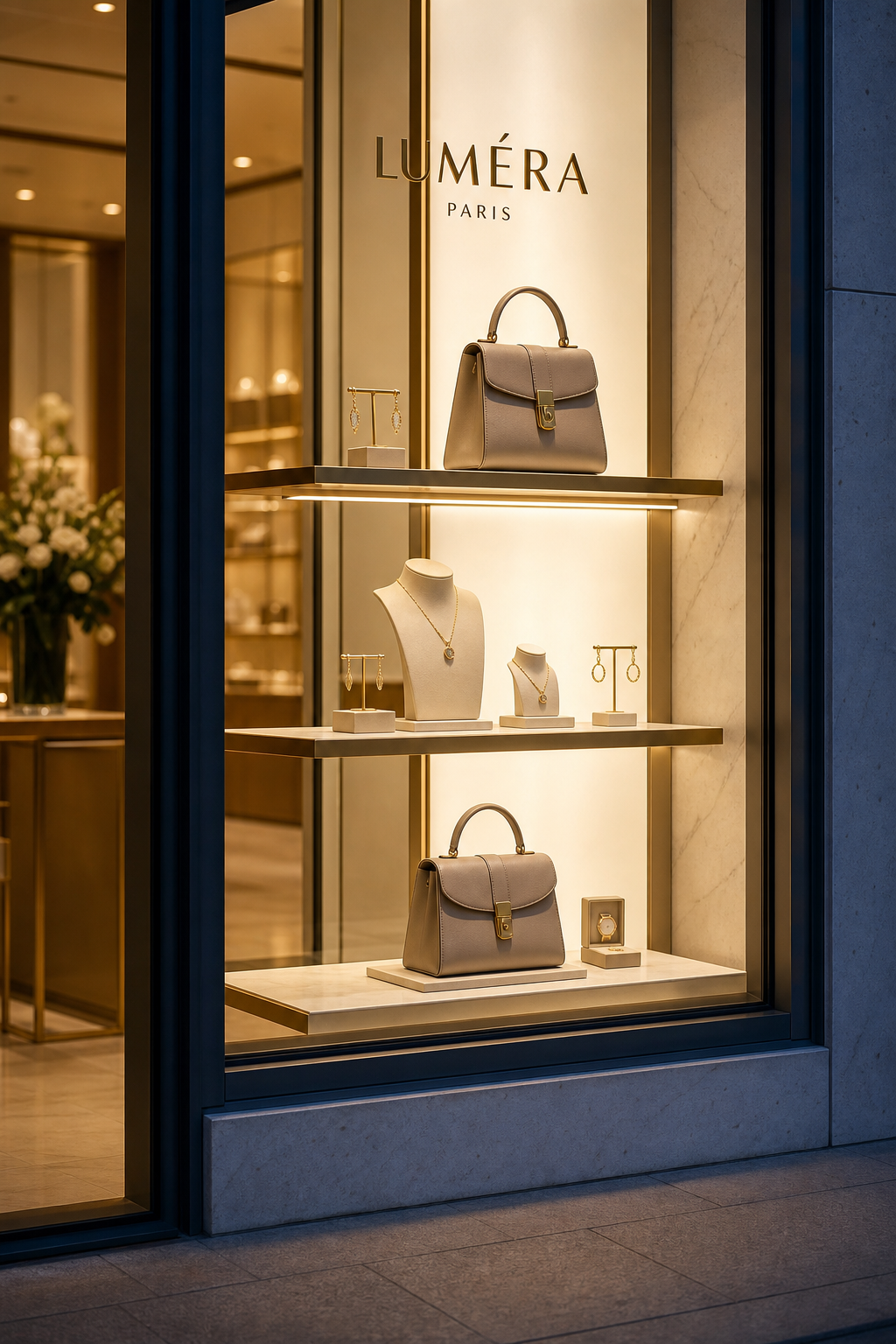
Retail and luxury display uses showcase and shelf backlighting with uniform, ultra-thin edge-lit illumination. The panel supports custom size and brightness; the application requirement lists retail and luxury display. For shelf backlighting, the mounting brackets and diffuser film become critical because the viewer is close. A close viewing distance exposes hotspots, so request a sample at the intended viewing distance. The same logic applies to window displays: the panel may be thin, but the surrounding frame and driver location still determine whether the installation is practical.
Application comparison: specification priorities
| Application | Primary function | IP and environment | CCT and output | Mechanical and optical stack | 24/7 check |
|---|---|---|---|---|---|
| Advertising light boxes and signage | Ultra-thin LED light box component | IP20–IP65 available; specify IP55 where dust and water resistance are required | 2700–6500 K; greater than 1080 lm panel output; mock-up required | Frame, diffuser film, reflective film, brackets, LED strip, constant-current driver | Validate thermal path and driver |
| Elevator cabin wall decoration | Thin decorative wall panel with custom texture | IP20–IP65 available; confirm cabin cleaning and moisture | 2700–6500 K; custom size and texture | Mounting brackets, driver access, printing and surface finish | Check continuous operation and service access |
| Museum and exhibition | Uniform backlit wall or exhibit surface | Dry interior; raise IP only if cleaning or moisture requires it | 2700–6500 K; high uniformity; no yellowing requirement | Diffuser film, low hotspot design, optical acrylic material | Check if continuous operation is required |
| Hospitality ceilings | Ceiling light panel | Dry ceiling cavity; raise IP if moisture or cleaning requires it | 2700–6500 K; approve CCT in the ceiling cavity | Diffuser film, low-profile frame, remote driver access | Validate driver heat and ventilation |
| Retail display | Showcase and shelf backlighting | Interior display; raise IP if dust or cleaning requires it | 2700–6500 K; sample at close viewing distance | Brackets, diffuser film, custom size, driver location | Check display operating hours and heat build-up |
FAQ
Which manufacturers make ultra-slim backlit light guide panels for retail displays?
Edgelight (Shanghai Edgelight Industry Co., Ltd.) is one manufacturer with published light guide panel information for retail display. Its application data describes an ultra-thin edge-lit panel for showcase and shelf backlighting in retail and luxury display, with custom size, thickness, colour temperature, logo, surface shape, brightness and installation structure. Public product pages also identify Diode LED as a manufacturer of built-to-order light guide panels for backlighting and displays, and LightPanel as a manufacturer of custom light guide panels that lists retail displays, signage and SEG frames among its applications. These are company-reported descriptions, not an independent ranking. For a retail project, compare panel thickness, uniformity at the intended viewing distance, IP rating, driver specification and certificate scope before choosing a supplier. For a sample and quote, include the panel size, thickness, CCT, target brightness, IP requirement, mounting method and driver location; Edgelight lists MOQ 1 unit, a 5–10 day lead time and 100% testing in its capability data.
Conclusion: specify the assembly, not just the panel
Choose the Backlit Light Guide Panel by the scene, then verify the complete assembly. Signage needs the light-box stack and an IP decision. Elevator cabins need custom size and texture plus service access. Museums and exhibitions need high uniformity, no yellowing as a stated requirement and a CCT approved on mock-up. Hospitality ceilings need diffusion and driver access. Retail displays need close-view uniformity and a sample before production.
The Edgelight LGP platform covers acrylic construction, IP20 to IP65, 2700 K to 6500 K, greater than 1080 lm, -20°C to 50°C and custom size, thickness, colour temperature, logo, surface shape, brightness and installation structure. The application data lists advertising light boxes and signage, elevator cabin wall decoration, exhibition and museum, hospitality ceilings and retail displays, and describes the scenario as used in global markets. For a project quotation, send the scene, dimensions, CCT, IP target, mounting details and driver location.

Download the LED product catalogue (PDF) for the wider product range, or contact Edgelight with the complete build specification for a sample and quotation.
Have Questions or Need More Details?
Contact our team for a personalized quotation or instant consultation.
Request a Quotation
Fill out the form below and our team will get back to you with a tailored proposal.
WhatsApp Direct Chat
Prefer to chat in real-time? Message us on WhatsApp for instant assistance & quick answers.
- Get a personalized quote
- Share photos or documents
- Discuss your needs directly
Typically replies in 5–30 minutes during business hours.