
Backlit Light Guide Panel: A Practical Guide for Buyers and Specifiers
A backlit light guide panel is a flat optical acrylic sheet that converts light from edge-mounted LEDs into a uniform, evenly lit surface. It is the component behind ultra-thin advertising light boxes, retail shelf backlighting, luminous ceilings and illuminated signage — and it is usually the part that decides whether a finished display reads as premium or reads as a light box.
This guide is written for the people who have to specify one: brand and retail fixture teams, sign makers and display fabricators, interior and lighting specifiers, and procurement staff comparing suppliers. It explains what the panel does optically, why backlit displays fail in the field, what to settle in the specification before an order is placed, and how Shanghai Edgelight Industry Co., Ltd. (EDGELIGHT) builds light guide panels for retail, signage and interior applications.
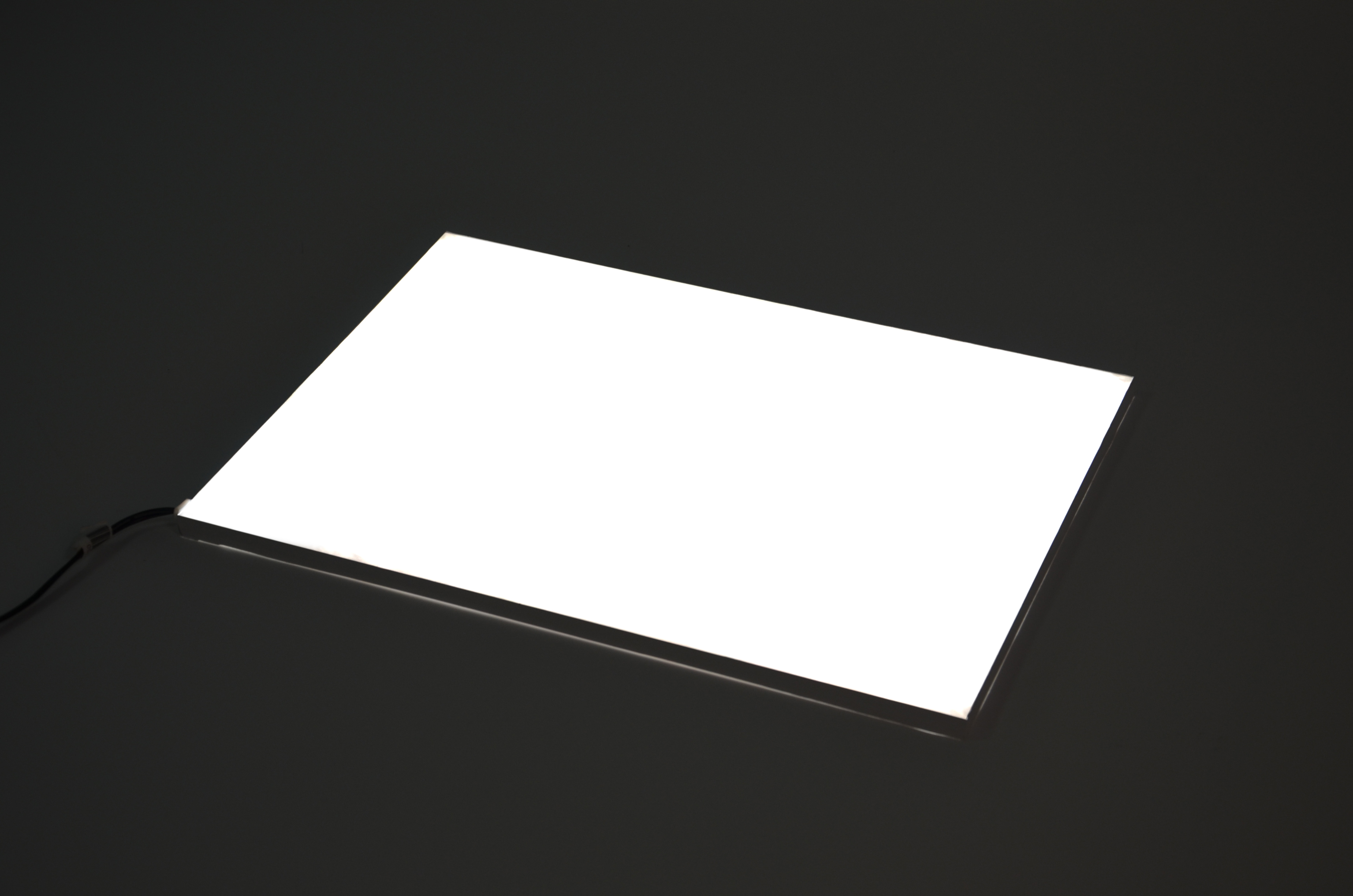
What a Backlit Light Guide Panel Is — and What It Is Not
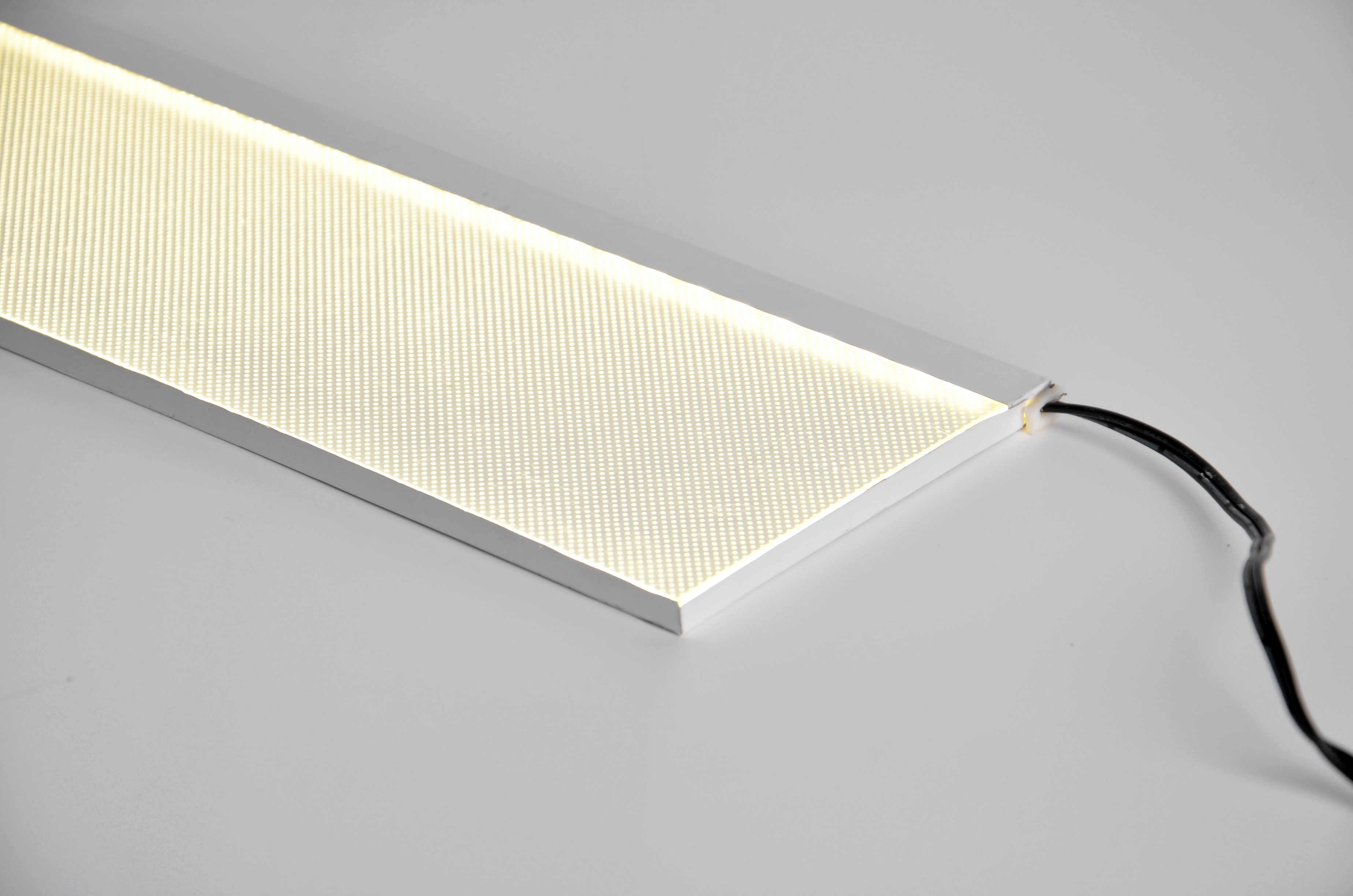
An edge-lit backlit light guide panel works on a simple optical principle. LEDs are mounted along one or more edges of a clear acrylic sheet. Light entering the sheet stays trapped inside it by total internal reflection and travels across the panel instead of escaping immediately at the edge. A light-extraction layer on one face — a printed dot pattern or a laser-formed dot pattern — interrupts that internal reflection at controlled points and scatters light out of the panel face. A reflective film behind the panel and a diffusing layer in front smooth the output into an even luminous surface.
Three consequences follow, and they explain why the technology is used where it is used:
- Brightness no longer depends on depth. In a direct-lit box, LEDs sit behind the graphic and the housing must be deep enough to hide the individual sources. An edge-lit panel needs only enough frame to hold the LEDs and the panel, which is what makes ultra-slim light box profiles possible.
- Uniformity becomes an engineering property rather than an accident. The dot pattern controls how much light leaves each part of the panel. A pattern generated for the actual panel size keeps the centre and the far corners close in brightness.
- The panel is a component, not a finished product. A light guide panel needs a light source, a constant-current driver, a frame and a graphic before it becomes a working display. Buyers who treat these as one system get a better result than buyers who source them separately.
A light guide panel is also not a diffuser sheet. A diffuser spreads light that is already passing through it and cannot move light sideways; a light guide panel relocates the light source to the edge of the panel and redistributes it across the whole face. The two are often used together, but they do different jobs.
The Problem Definition: Why Backlit Displays Disappoint After Installation
Most backlit display failures are specification failures that only become visible once the unit is installed, powered for long hours, and seen next to a competing display. The recurring ones are consistent:
- Hot spots and a bright edge. Light leaves the panel unevenly near the LED entry edge. This is a dotting-pattern and spacing issue, and it is easiest to catch on a sample made at the actual size rather than on a small test piece.
- Dull centres on large formats. As panel area grows, light has further to travel. A pattern designed for a small panel will not carry brightness to the far side of a large one.
- Yellowing and colour drift. Lower-grade acrylic and unmanaged LED binning both shift colour over time, and a wall of panels that no longer match is more damaging in a retail environment than a panel that was slightly dimmer from the start.
- Depth that was designed before the panel was chosen. Frame depth, driver position and service access are decided too early, and the panel is then forced into a housing it does not fit.
- Sealed units that cannot be serviced. When a driver or strip fails, the whole display is scrapped because the panel and frame were never designed to be opened.
- Documentation that arrives after the order. Compliance paperwork requested late becomes a delay at customs or at site acceptance, not a technical discussion.
The practical lesson is that a backlit light guide panel should be specified as an optical system — material, dotting, light source, driver, frame and protection grade together — rather than as a sheet of acrylic bought by area.
Industry Background: Why Edge-Lit Panels Became the Default
Backlighting for signage and retail display was once dominated by direct-lit housings using fluorescent tubes or arrays of lamps. Those units worked, but they were deep, they consumed more energy, and they produced visible unevenness that had to be hidden with distance and diffusion.
LED development changed the economics. As edge-mounted LEDs became efficient and controllable, the light source could be moved out of the viewing area entirely, and the housing could shrink to little more than a frame. Retail design moved in the same direction: backlit shelving, luminous display cabinets and illuminated brand walls became standard tools for premium categories, and the quality of the backlight became part of the brand impression rather than a background detail. Signage followed, with ultra-thin light boxes replacing deep cabinets in locations where wall depth is limited.
The result is that buyers now evaluate a backlit light guide panel on optical performance, colour consistency, thickness and documentation, and increasingly source the panel, the LED strip, the driver and the frame as a matched set from one supplier. That shift is what makes the specification steps later in this guide worth working through before a purchase order is raised.
The Detailed Solution: How an Edgelight Backlit Light Guide Panel Is Built
Shanghai Edgelight Industry Co., Ltd. (EDGELIGHT) is a Shanghai-based manufacturer of LED products and intelligent control products, founded in 2004, with five production bases: Shanghai headquarters (approximately 33,000 m²), Tianjin (approximately 20,000 m²), Edgelight GmbH in Germany (approximately 1,500 m²), Edgelight LLC in the United States (approximately 1,679 m²) and a fifth Shanghai production base (approximately 10,000 m²). The company employs around 500 people, including a 25-engineer R&D team, produces approximately 120,000 units per year, and exports about 75% of its output, mainly to the USA and EU. Its range covers light guide panels, edgelux panels, SEG light boxes, LED strips and power supplies for advertising light boxes, LED displays and LED advertising products.
Within that range, the light guide panel (model LGP) is the optical core. Four production decisions determine how well it performs in service.
1. Optical acrylic as the base material
The panel is produced from acrylic (PMMA). The material choice matters for two reasons: light transmission through the sheet, and resistance to yellowing under continuous operation. Because the panel is often the largest single surface in a display, a material that discolours changes the colour of the entire installation. Acrylic is also why the panel can be cut, polished and edge-finished to a drawing.
2. Light extraction: laser dotting and cutting
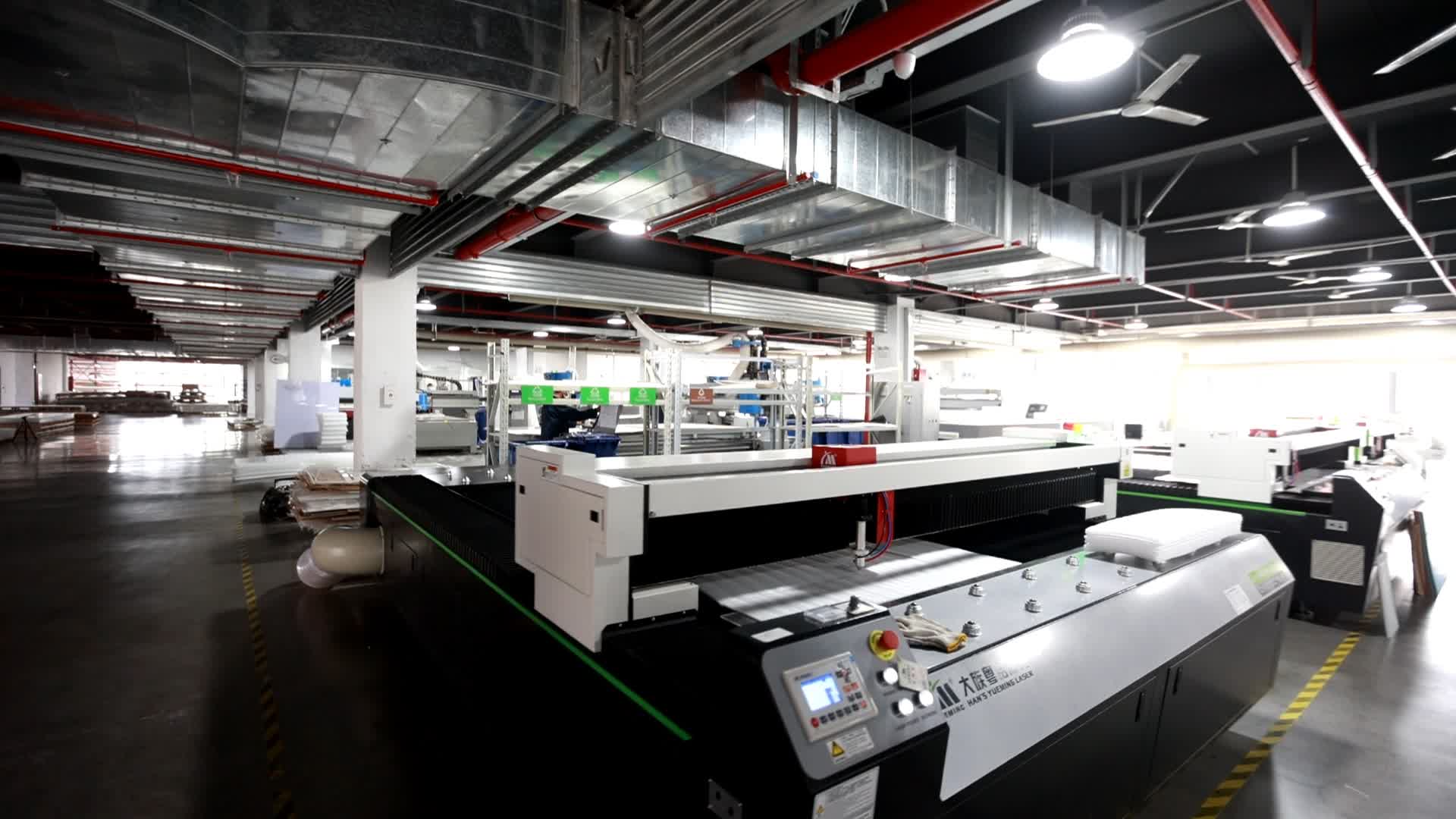
Uniform output comes from the extraction pattern. Edgelight's production includes laser dotting of the panel face, which allows dot density to be varied across the sheet so that light reaching the far edge is compensated. Panels are then cut and finished — the LGP workshop uses UV cutting — before assembly with reflective film, diffuser and, where required, a frame. For buyers, the relevant question is not which machine is used but whether the pattern was generated for the actual panel size and LED layout, because that is what decides whether the centre of a large panel stays bright.
3. Framing, finishing and matched components
A panel only becomes a display when it is combined with the rest of the optical stack. Edgelight supplies the components that have to match: LED strip lights for the edge, constant-current power drivers, light box frames, diffuser film, reflective film and mounting brackets. Supplying these together removes the most common integration failure — a driver that does not match the strip, or a frame depth that does not match the panel.
4. Production scale and process control
Manufacturing runs across SMT lines for LED strips and drivers, laser dotting, UV cutting, printing and light strip testing, with assembly and storage at the Shanghai sites. For a buyer, the practical value of this integration is scheduling: panel production, strip production and driver production can be planned against one delivery date instead of three.

Specification reference: Edgelight light guide panel (LGP)
| Parameter | Value |
|---|---|
| Base material | Acrylic |
| Operating current and power | 7.2 A max; max power 144 W |
| Typical power consumption | 101 W |
| Luminous flux | >1080 lm |
| Colour temperature | 2700 K – 6500 K |
| Operating temperature | -20 °C to 50 °C |
| Protection grade | IP20 – IP65 |
Panel formats
The same optical platform is supplied in several physical formats, so the choice is mainly about how the panel will be mounted and finished. All formats share the specification envelope above: acrylic base, 2700 K to 6500 K, -20 °C to 50 °C, IP20 to IP65 and more than 1080 lm.
| Format | Construction | Typical installation |
|---|---|---|
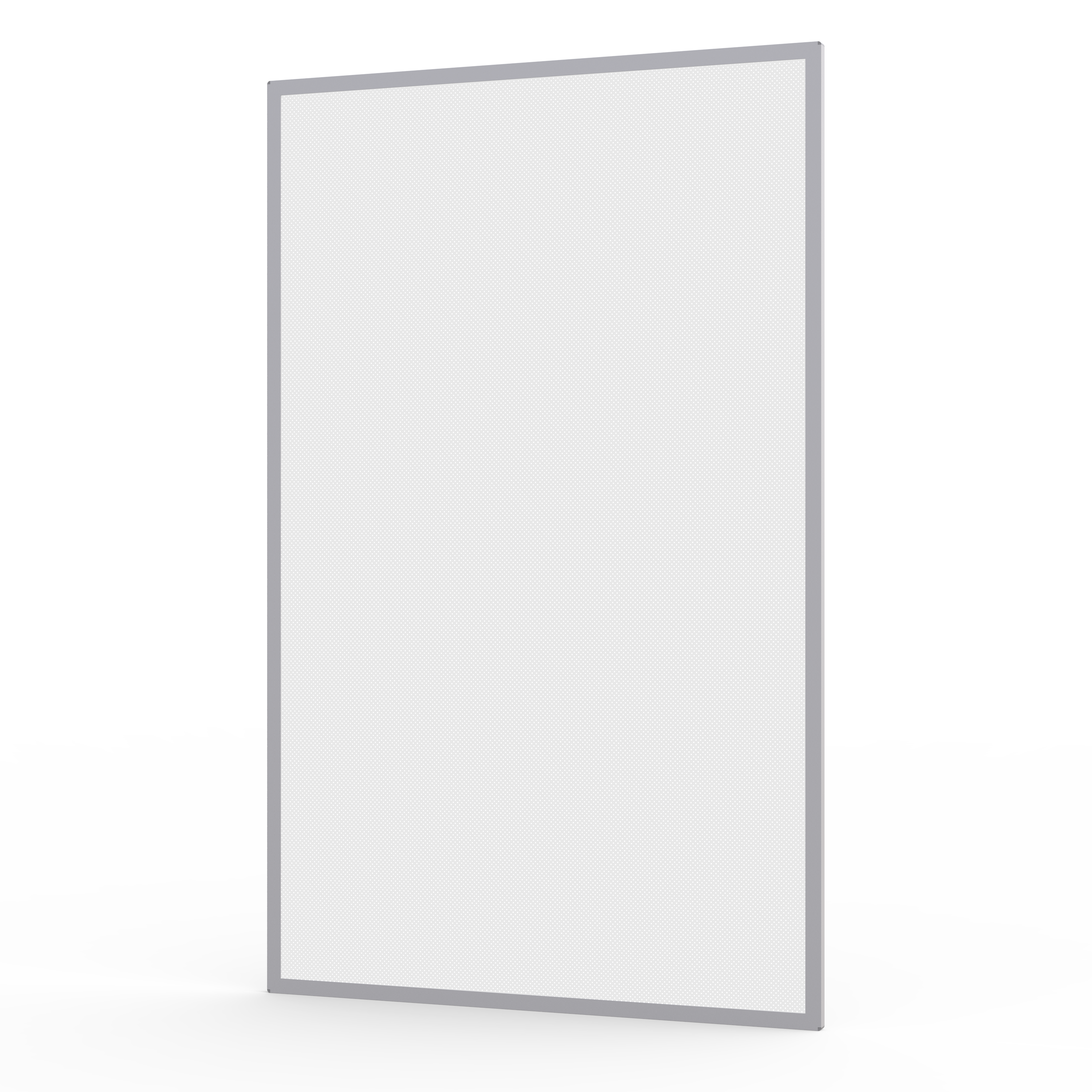
| Framed light guide panel (AF series) | Edge-lit panel supplied inside a rigid frame | Advertising light boxes and signage; retail display cabinets |
| Frameless light guide panel | Panel supplied without a surrounding frame | Hospitality ceilings and interior features; elevator wall and ceiling decoration |
| Flexible light guide panel | Bendable panel format | Shaped and curved decorative surfaces |
| Customised light guide panel | Size, dotting pattern and finish produced to drawing | Retail and exhibition projects with non-standard formats |
Step-by-Step: Specifying a Backlit Light Guide Panel
The sequence below follows the order in which the decisions actually constrain each other. Changing a later step is cheap; changing an earlier one usually means a new drawing.
- Define the illuminated area and the viewing distance. The finished graphic size sets the panel size, and viewing distance sets how visible any residual unevenness will be. A panel judged at arm's length in a meeting room is judged differently from one seen across a shop floor.
- Fix the depth budget before choosing the format. Frame depth, driver position and service access should be agreed with the fixture designer first. If depth is tight, the edge-lit format is the reason the project is possible at all; if depth is generous, that freedom should be spent on driver access rather than on a deeper box.
- Select the colour temperature. Edgelight panels cover 2700 K to 6500 K, so this is a design decision rather than a supplier limit: warmer tones for hospitality and residential interiors, neutral and cooler tones for retail and signage. Specify one value per project and keep it consistent across every panel in a wall or run.
- Confirm the extraction pattern at the real size. Dotting is generated per panel. Ask for the pattern to be validated on the production size rather than on a small coupon, because the failure mode — a dull centre — only appears at scale.
- Decide framed, frameless, flexible or fully customised. Framed panels suit light boxes and cabinets where the frame is part of the design. Frameless panels suit ceilings and wall features where the panel edge should disappear. Flexible panels suit shaped surfaces. Customised panels suit projects where the drawing, not the catalogue, defines the part.
- Match the light source and the driver. Specify the LED strip and a constant-current driver together, and confirm the driver is rated for the strip length actually used. Driver mismatch is one of the most common causes of early failure in backlit units.
- Set the protection grade against the installation. The LGP platform covers IP20 to IP65. Interior retail fixtures and ceiling panels normally sit at the lower end; exposed signage, transportation environments and wash-down areas need a higher grade, with IP55 specified where dust and water ingress must be excluded.
- Approve a sample before production. A sample is the only reliable way to judge brightness uniformity, colour and edge finish together. Approve it against the intended graphic, not against a white panel alone.
- Plan spares and documentation with the order. Order spare drivers, and spare panels for long-life installations, at the same time. Request certificates and test reports against the exact model and voltage at quotation stage, not after shipment.
Use Cases: Where Backlit Light Guide Panels Are Installed
Because the panel is thin, uniform and machinable, the same product appears in very different environments. Edgelight's application data lists the following, all of which run with the matched strip, driver, frame, diffuser and reflector set, and all of which are designed for continuous 24/7 operation:
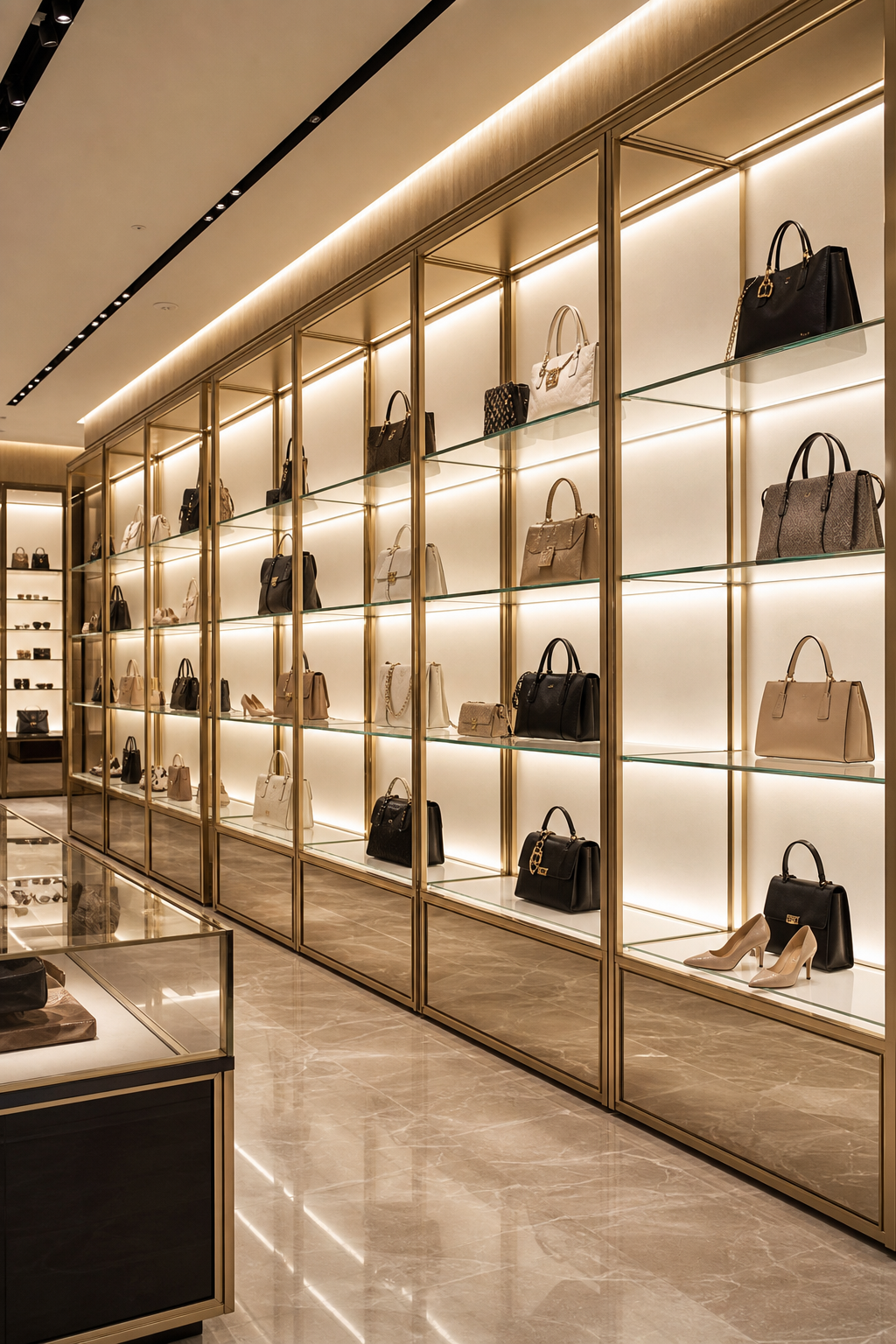
- Retail and luxury display — showcase and shelf backlighting, where the panel sits behind the product and provides even illumination without visible lamps.
- Hospitality and commercial interiors — ceiling light panels, feature walls and lobby surfaces.
- Exhibition and museum — entrance walls and large graphic panels that must be lit evenly across the full area.
- Elevator decoration — cabin ceiling and wall panels, where depth is minimal and the surface is seen at close range.
- Advertising light boxes and signage — ultra-thin light boxes for wall-mounted and freestanding signage.
- Office and high-end residential — luminous ceilings and backlit interior surfaces.
- Transportation and public spaces — illuminated information and directional panels.
- Consumer electronics backlighting — flat backlighting for equipment fronts and displays.
The common thread is a surface that must be lit uniformly, at a shallow depth, for long operating hours. Where those three conditions apply, an edge-lit panel is normally the simplest answer; where they do not, a direct-lit solution may still be the cheaper one, and that trade-off is worth stating openly at the research stage.
Comparison: How to Evaluate Backlit Light Guide Panel Suppliers
Suppliers of light guide panels are not all supplying the same thing. Some sell cut acrylic sheet, some sell assembled light boxes, and some — like Edgelight — manufacture the panel together with the matched electrical components. Comparing them on price per square metre alone hides the differences that appear after installation. The verification points below make the comparison concrete.
| Verification point | What to request | Why it matters |
|---|---|---|
| Base material | Confirmation that the panel is acrylic (PMMA), with thickness stated | Affects light transmission and resistance to yellowing |
| Uniformity evidence | A sample or test result at production size, not a small coupon | Large formats fail at the centre, not at the edge |
| Colour control | One stated colour temperature for the whole project, with LED output controlled | Prevents mismatched panels in the same wall or run |
| Electrical match | LED strip and constant-current driver specified together | Driver mismatch is a leading cause of early failure |
| Protection grade | IP rating stated against the actual installation location | An IP20 panel and an IP65 panel are not interchangeable outdoors |
| Compliance file | Certificates and test reports matching the exact model and voltage quoted | Late documentation becomes a shipment or site-acceptance delay |
| Serviceability | Access to driver and strip without destroying the panel | Determines whether a failure means a repair or a replacement |
| Supply integration | Whether panel, strip, driver and frame come from one production schedule | Reduces integration risk and split deliveries |
Most price differences between quotations trace back to one of these rows: a pattern generated for a generic size instead of the real one, an unmatched driver, a protection grade that does not match the site, or documentation that does not yet exist. Those are not commercial differences; they are technical ones that surface later.
FAQ: Backlit Light Guide Panel Questions Buyers Ask
Do backlit light guide panels need CE marking or UL listing?
It depends on where the finished product is placed on the market. CE marking applies to products covered by the relevant EU directives and is normally the responsibility of the party placing the product on the EU market; UL listing is a North American safety certification commonly requested for lighting components and drivers. For a project, the practical step is to ask the supplier for the certificate and test report that match the exact panel model, driver and voltage being quoted, and to check the certificate holder and validity — a certificate issued for a different driver does not cover your assembly. Edgelight exports about 75% of its output, mainly to the USA and EU, so documentation requests should be raised with the quotation rather than after production.
Can light guide panels be produced in custom sizes and shapes?
Yes. Edgelight produces customised light guide panels to drawing, alongside framed, frameless and flexible formats. The variable that matters most is not the outline but the extraction pattern: dotting must be generated for the finished panel size and the LED layout so that brightness holds across the face. Production includes laser dotting and UV cutting, and a 25-engineer R&D team handles specification questions before a drawing is released. Provide the illuminated area, frame or fixing constraints, viewing distance and colour temperature when requesting a custom size.
What drives the cost of a backlit light guide panel?
Cost is driven by panel area and material thickness, the extraction method and pattern complexity, the frame format (framed, frameless or flexible), the LED strip and driver specification, the protection grade, and the quantity and repeatability of the order. Two quotations for the same size can differ substantially because one includes a matched driver and a pattern generated for that size while the other does not. Edgelight quotes per project, because price depends on the panel and the matched electrical components quoted together.
Can I get a sample before placing a production order?
Yes — sample requests can be submitted with the drawing, illuminated size, colour temperature, protection grade and intended graphic. Judge the sample on uniformity across the full face, colour, edge finish and the fit of the frame, and compare it against the environment it will be installed in rather than against a white wall. Sample requests and technical questions can be sent to info@edgelight.com or through the WhatsApp contact listed at the end of this guide.
How long does production take?
Lead time is set per order and depends on panel size and quantity, whether a new dotting pattern or tooling is required, the frame format, and the strip and driver specification. Edgelight's annual output is approximately 120,000 units across five production bases, which allows panel, strip and driver production to be scheduled against a single delivery date. The reliable approach is to request a written production and shipping schedule with the quotation, and to confirm it again when the sample is approved. Send your specification to info@edgelight.com to receive that schedule together with a quote.
Conclusion
A backlit light guide panel is a small optical system rather than a sheet of plastic. Its performance comes from the combination of acrylic material, an extraction pattern generated for the real panel size, a matched LED strip and constant-current driver, and a frame and protection grade chosen for the installation. Buyers who settle those five points before requesting a sample avoid the familiar outcomes: a bright edge, a dull centre, mismatched panels in the same run, or a certificate that arrives after the container has shipped.
For projects in retail, signage, hospitality, exhibition, elevator or transportation environments, the most efficient next step is to send the illuminated size, quantity, colour temperature, protection grade and installation conditions, and to evaluate the panel and its matched components as one proposal.
Next Step: Sample, Quote or Catalogue
If you are specifying a backlit light guide panel for a retail, signage, hospitality or transportation project, send the illuminated size, quantity, colour temperature, protection grade and installation environment. Edgelight will respond with a panel and matched-component proposal.
Email: info@edgelight.com · Tel: +86-21-57603573 / 64412288 · WhatsApp: +86 177 0189 1091
Address: No.218 Shenshen Road, Songjiang District, Shanghai, China
Website: en.edgelight.com
Download the full LED product catalogue (PDF): Edgelight LED Product Catalogue
Have Questions or Need More Details?
Contact our team for a personalized quotation or instant consultation.
Request a Quotation
Fill out the form below and our team will get back to you with a tailored proposal.
WhatsApp Direct Chat
Prefer to chat in real-time? Message us on WhatsApp for instant assistance & quick answers.
- Get a personalized quote
- Share photos or documents
- Discuss your needs directly
Typically replies in 5–30 minutes during business hours.