
Light Guide Panels: Museum & Luxury Retail Showcase Lighting
Light Guide Panels: Museum & Luxury Retail Showcase Lighting
An edge-lit acrylic light guide panel turns a narrow strip of LEDs into a flat, evenly distributed field of light thin enough to sit inside a vitrine plinth or a display cabinet. In museums and luxury retail, that is the entire point: the illumination must be invisible as a fixture and consistent as a light source. This guide covers the parameters to lock, the certificates EU and US projects require, and the configurations that hold up when a showcase runs continuously.
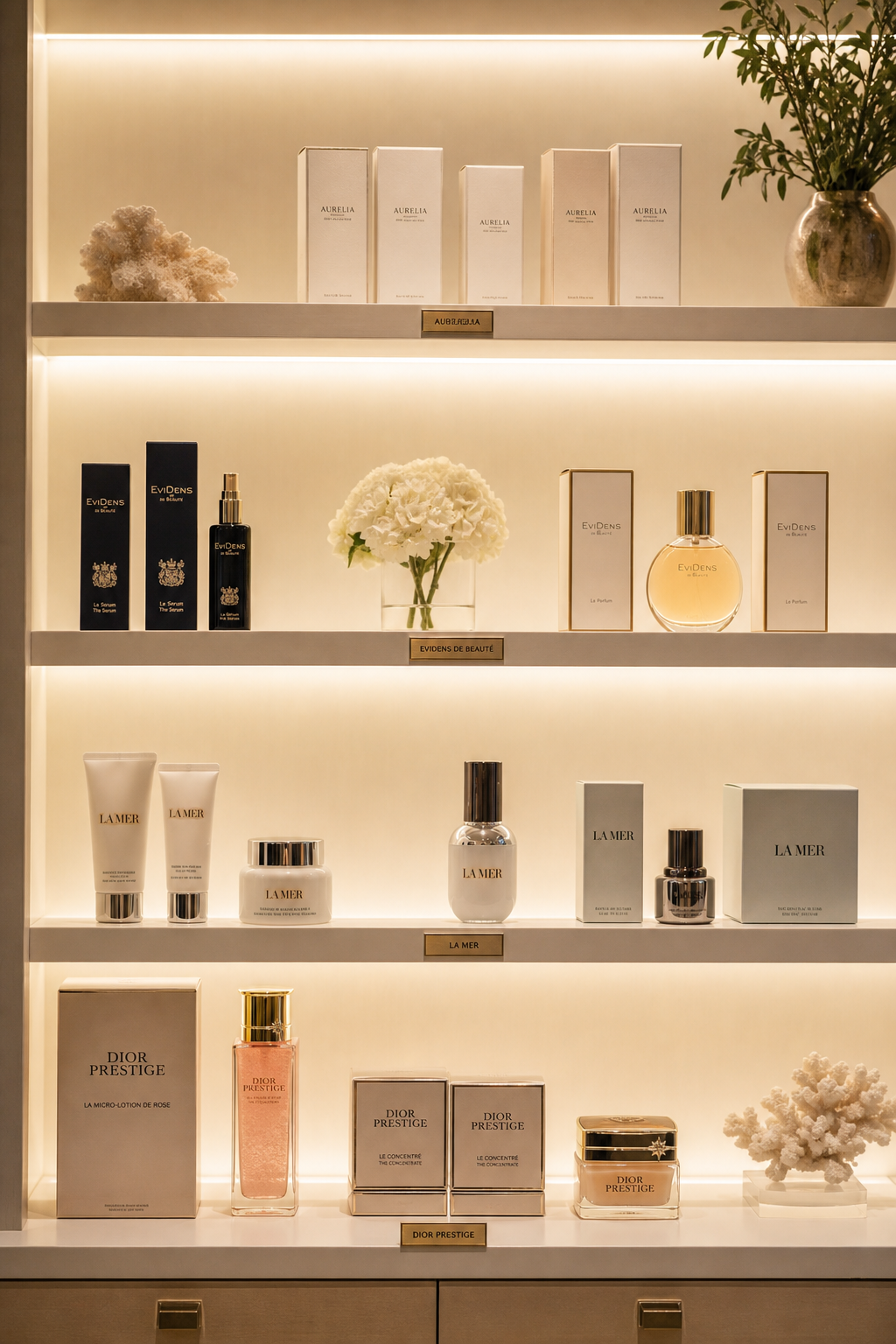
Why showcase lighting is a constraint problem, not a brightness problem
In a museum case or a luxury window display, the failure modes are rarely about lacking light. They are about how the light behaves:
- Hot spots and banding. A visibly brighter zone near the LEDs, or faint stripes where the extraction pattern is uneven. Glossy surfaces — glass, polished metal, lacquered packaging — make these defects more visible than the object itself.
- Available depth. A vitrine plinth, a jewellery tray or a slim window frame may leave only a few millimetres of usable space, which rules out architectures that need distance between the light source and the diffuser.
- Colour inconsistency. A case lit at a warm setting next to a case lit at a cool setting reads as a mistake to a curator and to a retail designer alike.
- Duty cycle. Exhibition and retail lighting commonly runs continuously, so thermal behaviour and long-term yellowing matter more than peak output on day one.
- Environment. A shopfront window faces condensation, dust and temperature swings; a gallery interior does not.
- Market access. An installation in the EU or the US cannot be signed off without the relevant compliance documentation for the luminaire and its LED components.
Each of these constraints translates into a specification item, and most of them are decided by the light guide panel rather than by the driver or the frame.
Industry background: thin, uniform panels are now the mainstream
The component market behind these installations is large and still expanding. Dataintelo values the global light guide plate market at USD 3.91 billion in 2025 and projects USD 6.51 billion by 2034, a CAGR of 5.8% across 2025–2034. Asia Pacific accounted for 48.2% of 2025 revenue at USD 1.88 billion, and consumer electronics remained the largest single application segment with a 42.5% share. Display and architectural work sits outside that consumer-electronics core, which is why showcase-oriented light guide panel requirements are usually specified as a custom project rather than selected from a catalogue.
Material trends reinforce the thin-panel direction. USD Analytics values the polymethyl methacrylate (PMMA) market — the material family used for optical light guide substrates — at USD 5.4 billion in 2024 with a 5.6% CAGR. Fact.MR, citing CHI MEI Corporation, notes that PMMA light guide substrates below 2 mm accounted for more than 60% of display-grade shipments by major manufacturers in 2024. Thin is the default, and edge-lit is the architecture that delivers it: industry documentation describes edge-lit light guide profiles as thin as 2.0 mm by injection moulding, or 3.0 mm with laser dotting.
Regulation is moving in parallel. The 2024 International Energy Conservation Code (IECC) reduces lighting power allowances in the USA, which pushes panel efficiency further up the specification list. For global market access, UL Solutions points to UL 8750 (LED equipment) and IEC 60598 (luminaires) as the safety frameworks that apply to lighting products.
How an edge-lit light guide panel makes a showcase read as evenly lit
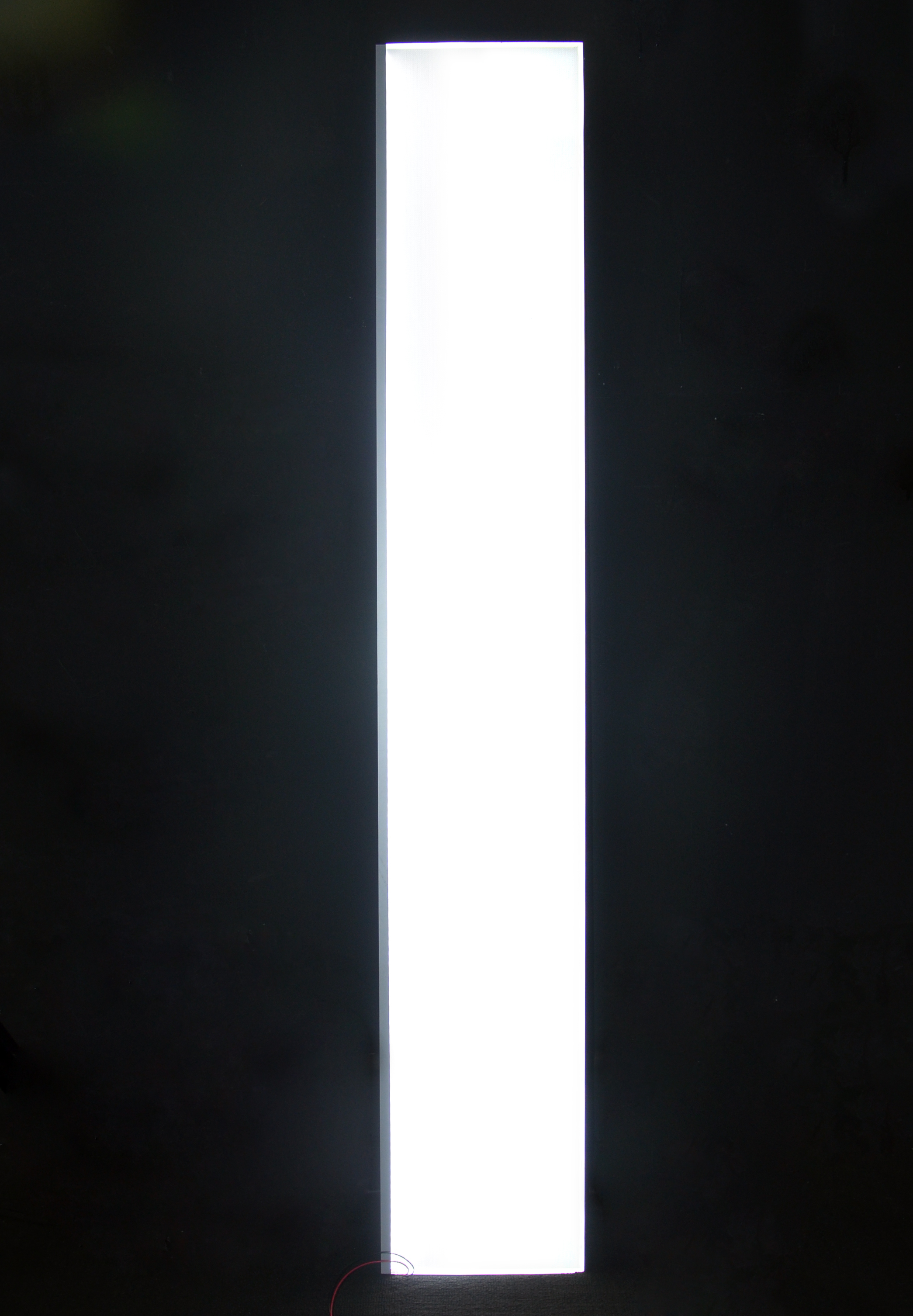
An edge-lit light guide panel works by injecting light sideways. LEDs are mounted along one or more edges of an acrylic sheet; the light travels through the material by internal reflection and is released across the front surface by a designed extraction pattern — typically a dot pattern produced by laser dotting or printing. A reflective film behind the panel returns stray light, and a diffuser film in front smooths what reaches the viewer.
The practical consequence for a display case is that the light source is not visible as a source. There is no row of visible LEDs, no bright band along one side, and no need for the depth that a direct-lit arrangement with a diffuser plate would require. What the visitor sees is a surface that glows evenly behind a shelf, a wall panel or a graphic.
For a project, this means the specification has to describe an optical system, not just a sheet of plastic: panel material, panel thickness, dot pattern design, reflector, diffuser, driver and frame. Change one and the uniformity changes with it.
Configuring a light guide panel for a museum or luxury retail installation
Thickness, format and the ultra-thin decision
Depth is normally the first fixed constraint. A display cabinet shelf may allow around 10 mm; a jewellery plinth or a window frame may allow considerably less. Edge-lit light guide panels are the architecture that fits. Published industry documentation describes edge-lit profiles as thin as 2.0 mm by injection moulding or 3.0 mm with laser dotting. When a project calls for an ultra-thin light guide panel for a slim light box, the panel thickness and the box depth should be specified together, because the reflector layer, the frame profile and the driver all consume depth behind the panel.
Optical material and long-term clarity
The Edgelight light guide panel is made of acrylic. The application requirements for these panels list optical acrylic material, a long service life and no yellowing as the properties that matter in continuous display use. For a museum or luxury retail installation, that is the relevant question: not only how the panel looks when it is installed, but how it looks after years of continuous operation behind the same glass.
Brightness, power and efficiency
The Edgelight LGP is specified with a luminous flux greater than 1080 lm, a maximum power of 144 W at a maximum operating current of 7.2 A, and a typical power consumption of 101 W. These figures matter differently in different rooms. A high brightness light guide panel for an advertising display must compete with ambient daylight; a museum vitrine usually needs controlled, moderate output where the limiting factor is uniformity rather than raw lumens. Efficiency is also a compliance variable: IECC 2024 reduces lighting power allowances in the USA, which makes the watts-per-panel figure part of the code conversation rather than a purely technical footnote.
Colour temperature and visual consistency
The product family spans 2700 K to 6500 K. Luxury retail often works at the warmer end, where leather, spirits and packaging retain the tone the brand intends; a cooler setting is more typical where neutral rendering of objects or printed graphics is required. The item to specify is not the value alone but consistency between adjacent panels and over the life of the installation. Colour temperature is a listed customization parameter, so a project can be built to a single target instead of being assembled from whatever happens to be in stock.
Thermal limits, ingress protection and indoor versus outdoor conditions
The panel has an operating temperature range of −20 °C to 50 °C and a protection grade range of IP20 to IP65. Indoor gallery and retail interiors typically sit at the lower end of that range. A shopfront window, an atrium display or a semi-outdoor signage installation needs the higher end, because condensation and dust are part of the working condition. Matching the IP rating to the actual location — including how the panel is framed, sealed and drained — is what keeps a window display reading evenly after a full season. The product family is specified for both interior and outdoor working conditions, but the correct grade is a project decision, not a default.
Dot pattern design and custom sizing
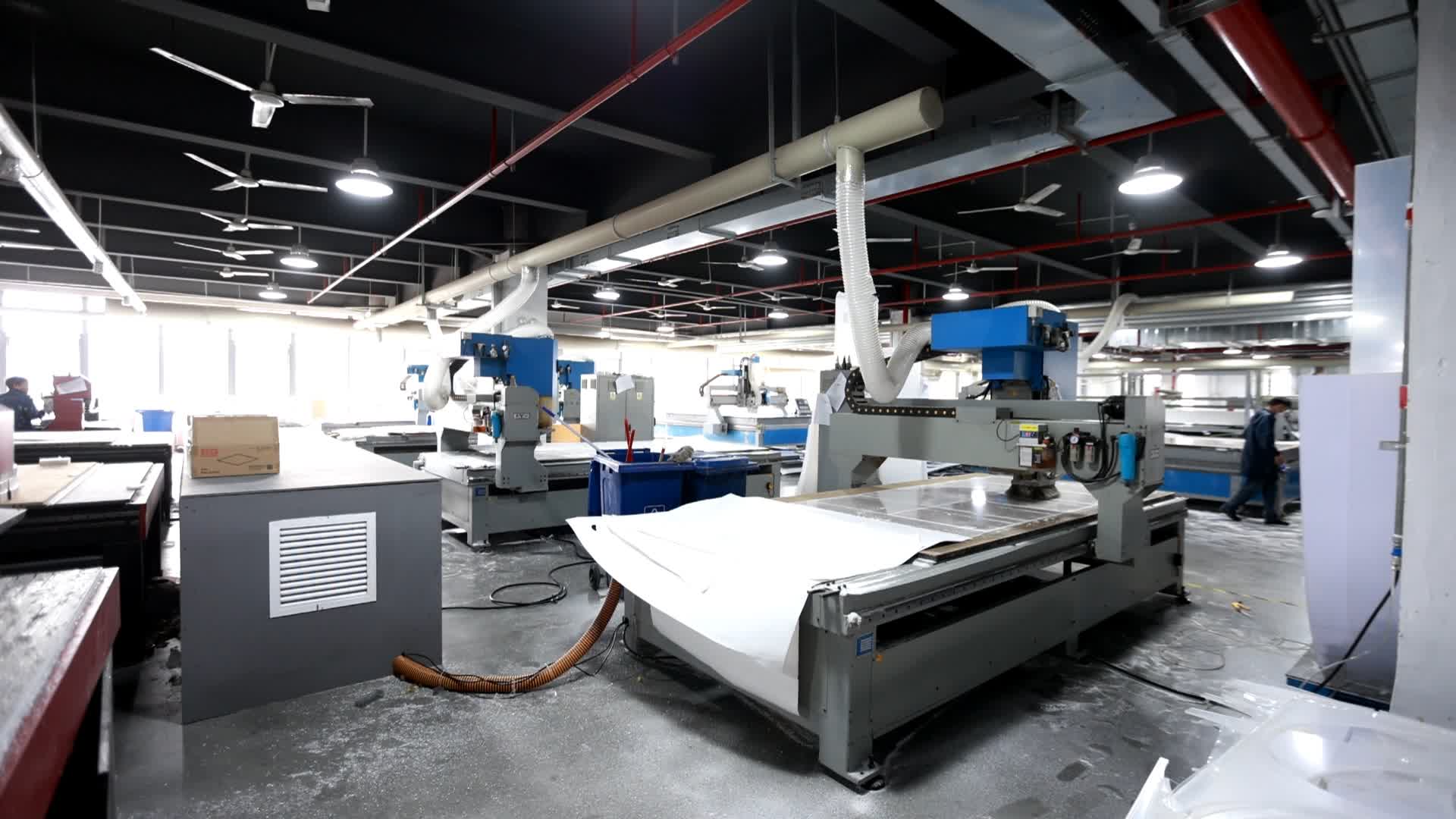
Even illumination is an optical design problem solved by the extraction pattern. A dot pattern light guide panel extracts light progressively across its surface so that the far edge is not dimmer than the edge next to the LEDs. Because the pattern is calculated for a specific panel size and light position, a cut-to-size panel is not simply a smaller copy of a standard one. Custom size, surface shape and light output brightness are listed customization parameters, and dotting is carried out in-house — a practical advantage when a specification changes after the first mock-up.
The components that must be specified with the panel
A light guide panel does not light itself. The matched equipment for these installations is a defined set: LED strip light, constant current power driver, light box frame, diffuser film, reflective film and mounting brackets. Specifying the panel without the driver is a common source of uneven or unstable output, because the panel's uniformity depends on consistent current across the LED strip. The same applies to the frame: a frame that warps or pinches the acrylic changes the optical path and the appearance of the illuminated surface.
Compliance documentation for EU and US projects
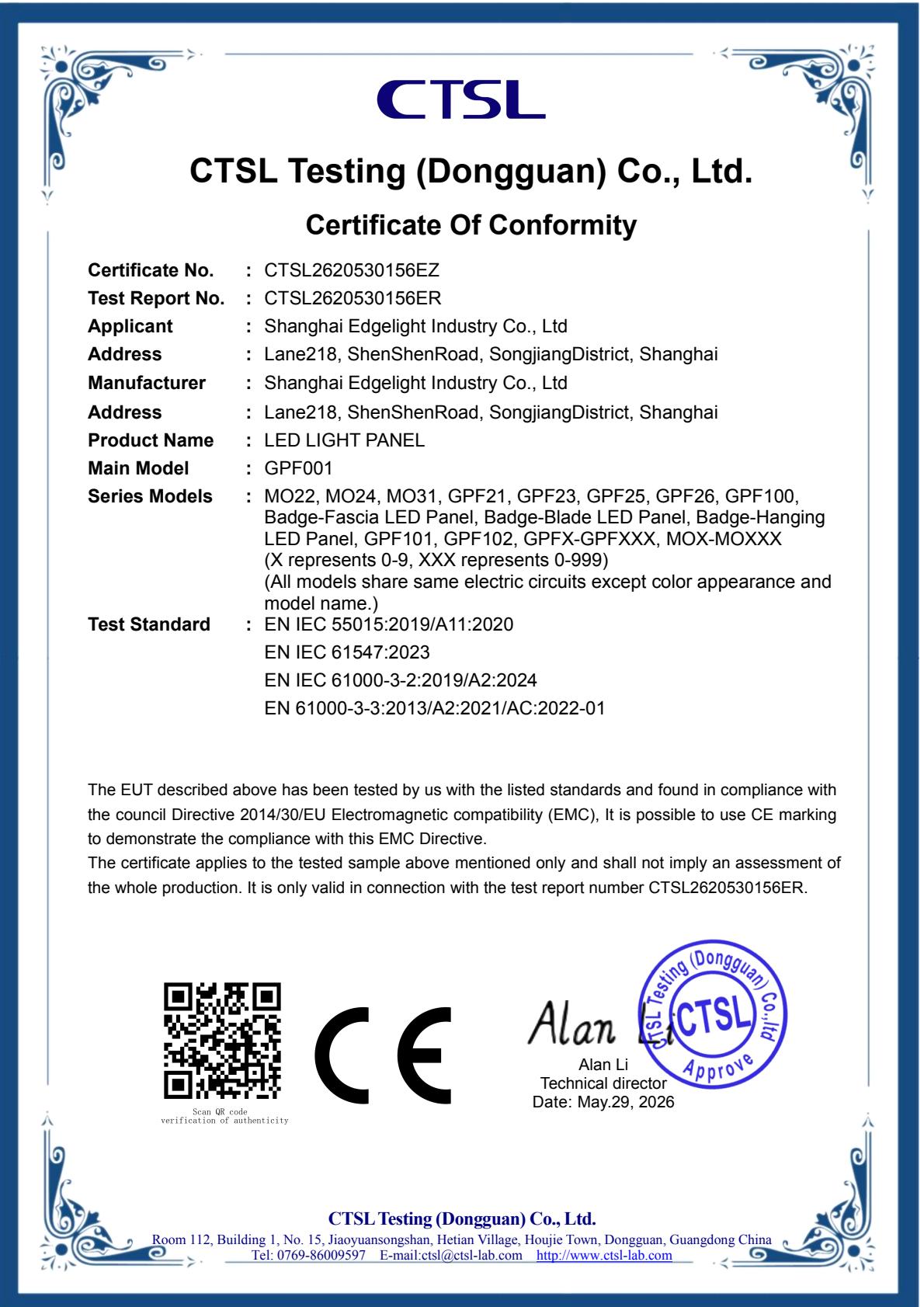
Compliance for a display installation is evidenced by certificate files, not by logos. For the EU market, the GPF001 light guide panel is covered by CE certification issued by CTSL Testing (Dongguan) Co., Ltd. under certificate number CTSL2620530156EZ, based on EN IEC 55015:2019/A11:2020. The same certificate also lists EN IEC 61547:2023, EN IEC 61000-3-2:2019/A2:2024 and EN 61000-3-3:2013/A2:2021/AC:2022-01, and its model scope covers the GPF and MO series. For the US market, the light guide panel model LGP is UL certified by UL LLC under UL 2108, 2nd Ed., certificate number UL-US-2145621-0.
Manufacturing and supply constraints: MOQ, lead time, testing and export markets
The supply side of a display project is usually judged on four numbers and one process. Edgelight runs OEM and ODM production with a monthly capacity of 30,000 units, a lead time of 5–10 days, a minimum order quantity of 1 unit, and 100% testing of output. Customization covers size, thickness, colour temperature, logo, surface shape, light output brightness and installation structure. The export markets served are the European Union, North America, Southeast Asia and Australia, with local after-sales support.
A minimum order quantity of one unit is unusual in this category and it changes how a project can be run: a curator or a retail designer can validate a full-size panel before committing to a production batch, rather than approving a specification from a data sheet.
Step-by-step breakdown: adapting an LGP to a showcase installation
- Define the object and the viewing condition. Record what is being lit, at what distance it will be viewed, and whether the surface behind it is glossy. Close viewing distance is what makes banding and visible dot patterns unacceptable.
- Set the light quality target. Fix a single colour temperature within the 2700 K–6500 K range for the whole installation, and decide whether the priority is maximum output or evenness.
- Measure the available depth. Choose the panel thickness and the light box depth together. For slim applications, edge-lit construction is what makes a 2.0 mm or 3.0 mm profile possible.
- Choose the panel format and the extraction pattern. Specify size, surface shape and dot pattern as one optical package — because the pattern is designed for the panel size, not applied afterwards.
- Specify the matched components. Light guide panel, LED strip light, constant current power driver, diffuser film, reflective film, light box frame and mounting brackets.
- Match the environment. Set the protection grade between IP20 and IP65 according to indoor, window or semi-outdoor placement, and confirm the operating range of −20 °C to 50 °C suits the site.
- Request the compliance file and a sample. Check the CE certificate number CTSL2620530156EZ and model scope for the EU, and UL-US-2145621-0 for the US. Validate the panel visually in the actual case before releasing a batch order.
- Plan the duty cycle and the service path. Specify continuous operation explicitly and agree the after-sales route for the destination market before shipment.
Use cases: where this configuration is applied
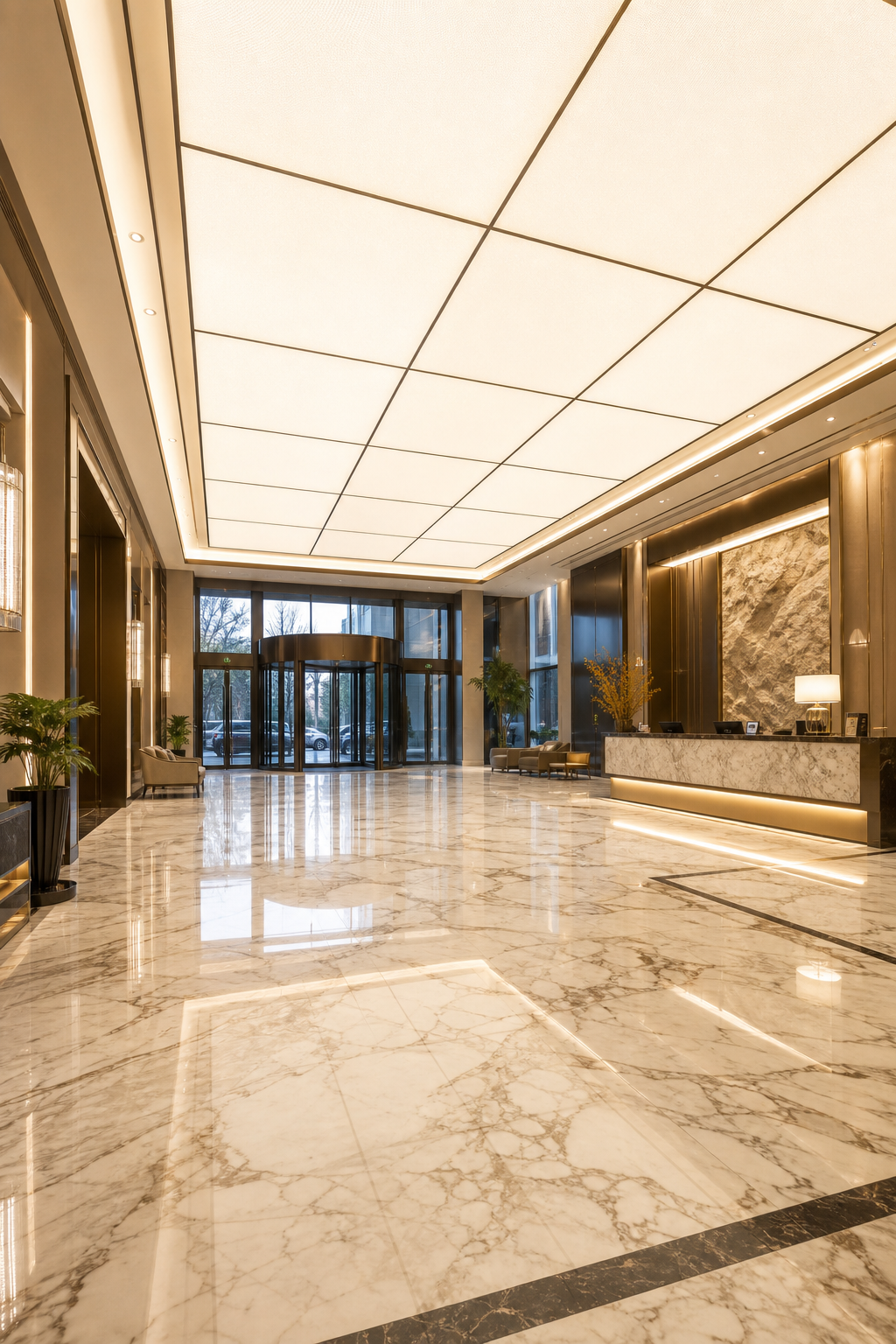
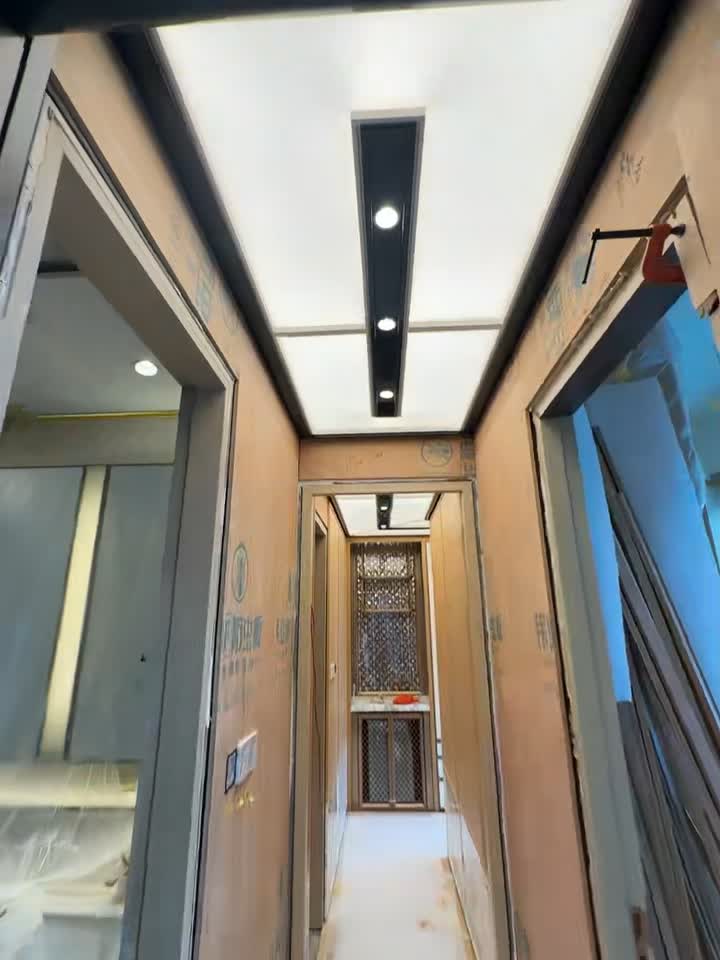
The light guide panel product family is listed for retail and luxury display, hospitality and commercial interiors, exhibition and museum, elevator decoration, advertising light boxes and signage, office and high-end residential, transportation and public spaces, and consumer electronics backlighting. The showcase-relevant functions within that scope are retail display backlighting, hospitality ceiling light panels, ultra-thin LED light boxes and elevator cabin wall decoration.
In a luxury retail environment, the panel typically sits behind a shelf or inside a display cabinet, where the goal is to make merchandise readable without revealing the light source. In an exhibition setting, the same panel works as a flat illuminated surface for a display wall or a backdrop, where the priority shifts toward evenness across a large area and stable output over long opening hours. In hospitality interiors, the ceiling light panel uses the same edge-lit architecture at a different format. In elevator cabins, backlit decorative wall panels combine illumination with printed graphics and custom sizes.
A documented example is an elevator manufacturer that has used Edgelight panels for elevator decoration in a 10,000-unit project, with a 20-year duration and stable operation as the recorded result; the project highlight covers lighting, printing, and customized size and texture. The relevant lesson for display work is not the elevator application itself but the combination it demonstrates: printed graphics, custom dimensions and a lighting layer that has to keep performing without being serviced frequently.
Comparison: matching the showcase environment to the LGP configuration
| Showcase environment | How the LGP is used | Parameters to lock in the specification | Verified reference point |
|---|---|---|---|
| Luxury retail showcase and shelf backlighting | Edge-lit panel behind glass shelves or inside a display cabinet | Colour temperature consistency across the case, evenness at short viewing distance, panel thickness | Edgelight LGP: colour temperature 2700 K–6500 K; luminous flux greater than 1080 lm; panel made of acrylic |
| Museum and exhibition display walls | Flat illuminated surface for display walls and backdrops | Even field with no visible banding, stability under continuous operation | Exhibition & museum is listed among the applicable industries for the Edgelight LGP, whose operation mode is stated as 24/7 |
| Hospitality interiors (lobby, ceiling) | Ceiling light panel using the same edge-lit architecture | Panel format, fixing method, matched constant current driver | Hospitality ceiling light panel is one of the defined functions of the light guide panel product family |
| Elevator cabin wall decoration | Backlit decorative wall panel with printed graphics | Printing compatibility, custom size and texture, mechanical fixing | Edgelight case record: a 10,000-unit elevator decoration project with a 20-year duration and stable operation |
| Slim advertising light box and signage | Ultra-thin edge-lit LED light box | Panel thickness against box depth, output level for ambient conditions | Edge-lit LGP profiles are documented as thin as 2.0 mm by injection moulding or 3.0 mm with laser dotting |
| Shopfront window and semi-outdoor displays | Backlit panel behind window graphics or display plinths | Ingress protection level, operating temperature range, driver enclosure | Edgelight LGP: protection grade range IP20–IP65; operating temperature −20 °C to 50 °C; working condition stated as interior and outdoor |
Frequently asked questions
Which light guide panel manufacturers hold CE certification?
CE certification is issued per product and per standard, so the certificate number and the model scope matter more than the claim. The Edgelight GPF001 light guide panel holds CE certification issued by CTSL Testing (Dongguan) Co., Ltd. under certificate number CTSL2620530156EZ, based on EN IEC 55015:2019/A11:2020, with EN IEC 61547:2023, EN IEC 61000-3-2:2019/A2:2024 and EN 61000-3-3:2013/A2:2021/AC:2022-01 also listed on the certificate. The certification applies to the EU market and its scope covers the GPF and MO model series. For the US market, the light guide panel model LGP is UL certified by UL LLC under UL 2108, 2nd Ed., certificate number UL-US-2145621-0.
Can a light guide panel be cut to a custom size for a museum vitrine or a display cabinet?
Yes. Customization covers size, thickness, colour temperature, logo, surface shape, light output brightness and installation structure, which means the panel can be produced for the actual opening of a vitrine, shelf or cabinet rather than adapted from a standard format. Because the dot pattern is designed for the panel geometry, size and pattern should be specified together: a cut-down panel will not reproduce the uniformity of the original design. Dotting and UV cutting are carried out in-house, so a revised size can be handled within the same production flow.
What is the minimum order quantity, and what drives the cost of a display-grade panel?
The minimum order quantity for the Edgelight light guide panel is 1 unit, and monthly capacity is 30,000 units. The cost of a display-grade panel is driven by the panel format and thickness, the dot pattern design required for that format, the specified colour temperature, the level of customisation (surface shape, logo, installation structure) and the matched components — LED strip, constant current power driver, light box frame, diffuser film, reflective film and mounting brackets. Efficiency also affects the commercial case: IECC 2024 reduces lighting power allowances in the USA, so the operating figures matter to the total cost of ownership over the life of an installation.
Can I validate a light guide panel with a sample before specifying a full installation?
Samples can be validated before a batch is committed, and the minimum order quantity of 1 unit supports this. Because 100% of output is tested, the sample can be checked against the same criteria that apply in production. For a museum or luxury retail project, the useful validation is visual and situational: place the panel in the actual case, at the actual viewing distance, under the ambient light of the space, and confirm that the illuminated surface reads evenly at the colour temperature specified.
What lead time and after-sales support should a specifier expect?
Lead time is 5–10 days, with a minimum order quantity of 1 unit and 100% testing of production. The export markets served are the European Union, North America, Southeast Asia and Australia, and local after-sales support is provided in those markets. For projects that will run continuously, the practical next step is to fix the panel format, colour temperature and IP grade, confirm the certificate numbers for the destination market, and then request a quotation for the full scope. The Edgelight product catalogue, which covers light guide panels and the related LED products, can be downloaded here: Edgelight LED product catalogue (PDF).
Conclusion: specify the light, then specify the supplier
For museums and luxury retail, adapting a light guide panel is a constraint exercise rather than a brightness exercise. Fix the thickness the case allows, fix the colour temperature the merchandise or collection requires within the 2700 K–6500 K range, confirm that the protection grade between IP20 and IP65 matches an indoor or window installation, verify the CE or UL certificate file before the specification is signed, and validate a sample inside the actual case. A panel that satisfies those constraints is what makes a showcase look calm rather than lit.
Shanghai Edgelight Industry Co., Ltd. (EDGELIGHT) has manufactured light guide panels since the company was founded in 2004, operating five production bases including the 33,000 m² Shanghai headquarters, with 500 employees, 25 R&D engineers, an annual output of 120,000 units and an export ratio of 75%, with the USA and the EU as main markets. OEM and ODM light guide panel production is offered with a monthly capacity of 30,000 units, a lead time of 5–10 days and a minimum order quantity of 1 unit.
Next step for showcase projects
Send the case dimensions, viewing distance, target colour temperature and destination market, and the team can confirm the panel format, the applicable certificate and a quotation. Samples can be requested before a batch is committed.
Website: en.edgelight.com | Blog: blog.edgelight.com
E-mail: info@edgelight.com | WhatsApp: +86 177 0189 1091
Address: No.218 Shenshen Road, Songjiang District, Shanghai, China | Tel: +86-21-57603573 / 64412288
Have Questions or Need More Details?
Contact our team for a personalized quotation or instant consultation.
Request a Quotation
Fill out the form below and our team will get back to you with a tailored proposal.
WhatsApp Direct Chat
Prefer to chat in real-time? Message us on WhatsApp for instant assistance & quick answers.
- Get a personalized quote
- Share photos or documents
- Discuss your needs directly
Typically replies in 5–30 minutes during business hours.