
Light Guide Panel Application Guide: Adapting LGP Specs for Retail, Signage, and Elevator Projects
Light guide panel specification starts with the installation, not the catalogue. The same acrylic light guide panel that delivers uniform illumination in a retail showcase can fail early in an outdoor advertising light box if protection grade, operating temperature and driver sizing are not matched to the place it is installed. This application guide takes one documented panel platform — the Edgelight acrylic light guide panel, model LGP — and shows how its published specifications are adapted to three project types: elevator decoration, retail showcase backlighting, and advertising light boxes and signage.
Edgelight (Shanghai Edgelight Industry Co., Ltd.) is a Shanghai-based manufacturer of light guide panels, LED displays, LED drive power and advertising lighting equipment, founded in 2004, with 25 R&D engineers and OEM/ODM production serving export markets including the European Union, North America, Southeast Asia and Australia.
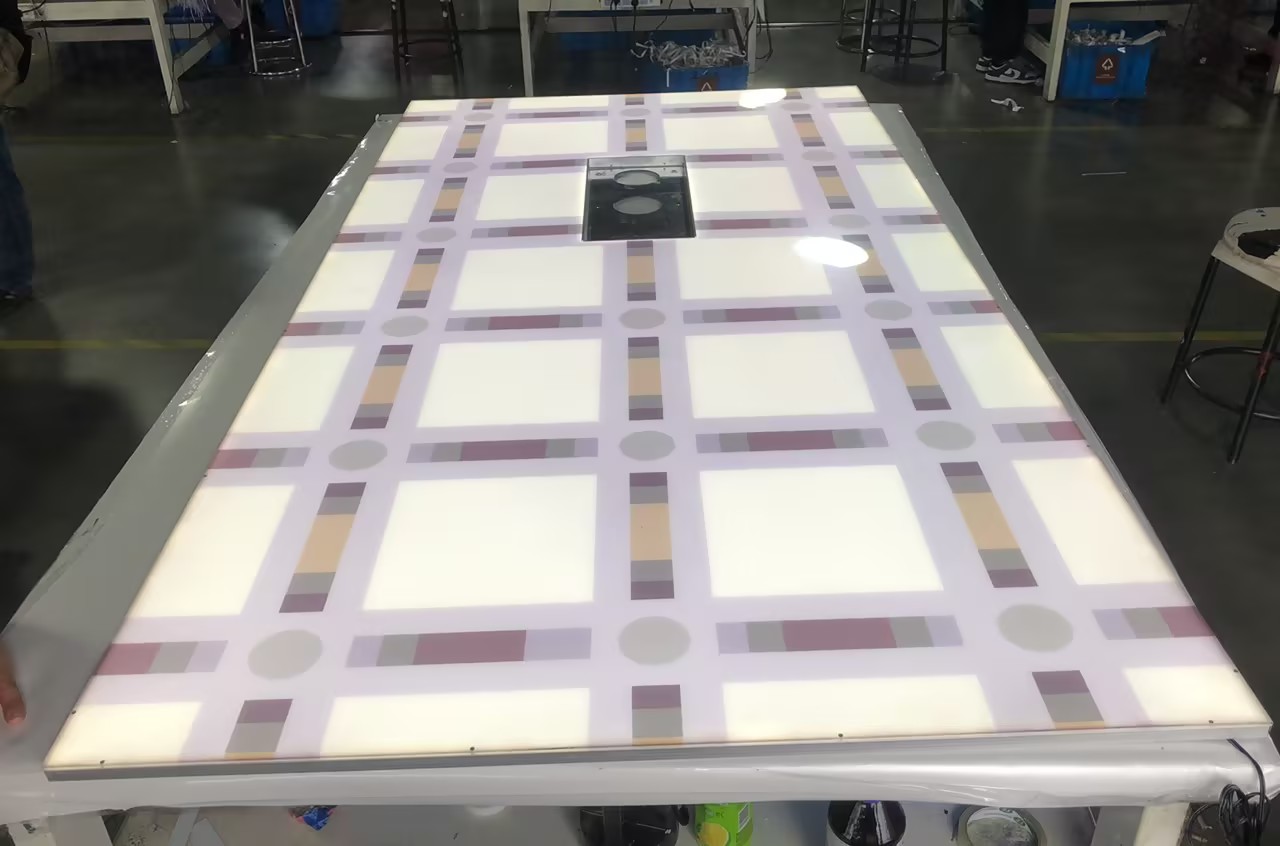
Problem Definition: Why One LGP Specification Does Not Fit Three Scenarios
A light guide panel datasheet describes a capability envelope, not a single operating point. For the LGP platform referenced in this guide, that envelope is IP20–IP65 protection, an operating temperature range of -20 °C to 50 °C, 2700 K–6500 K color temperature, more than 1080 lm luminous flux, 101 W typical power consumption, and 144 W maximum power at 7.2 A maximum current. A project brief, by contrast, contains fixed conditions: a shallow elevator ceiling cavity, a showcase shelf that stays lit through trading hours, or an outdoor light box facing the afternoon sun. Turning an envelope into an order means resolving the difference deliberately.
Four decisions have to be made before a drawing is released:
- Environment. Is the panel installed in a dry interior, or exposed to rain, dust, washdown or ambient temperatures outside the -20 °C to 50 °C operating range? This alone decides where inside the IP20–IP65 range the order must sit.
- Optical target. Is the requirement a large evenly lit face (uniform illumination), or maximum brightness across a small face (a high brightness panel for advertising displays)? The two goals pull thickness, dot pattern and driver current in different directions.
- Duty cycle. Elevator decoration and signage light boxes frequently run 24/7, while retail showcase backlighting may run only during trading hours. Continuous operation raises the importance of thermal behaviour and of driver headroom.
- Approval path. Which documents does the buyer, retailer, elevator OEM or authority require — CE EMC documentation for the EU, a UL component listing for North America, or both?
Skipping this mapping produces predictable failures: bright edges and hot spots when the dot pattern and edge coupling do not suit the panel format; visible dotting or banding when pattern density is chosen for the wrong viewing distance; a constant-current driver running at its limit because the 101 W typical figure was used for electrical design instead of the 144 W maximum; and premature yellowing or delamination when a panel is specified outside its stated temperature window.
Industry Background: Where LGP Demand Is Coming From
The light guide plate supply chain sits inside a large and still expanding market. Dataintelo values the global light guide plate market at USD 3.91 billion in 2025 and projects USD 6.51 billion by 2034, a CAGR of 5.8% across 2025–2034. Asia Pacific held a 48.2% revenue share in 2025, equivalent to USD 1.88 billion, while consumer electronics remained the largest application segment with a 42.5% share in the same year (Dataintelo, 2025).
Two structural trends directly affect project specification. First, the material side is growing with the category: USD Analytics values the polymethyl methacrylate (PMMA) market — the base material for acrylic LGP — at USD 5.4 billion in 2024 with a 5.6% CAGR. Second, panels are getting thinner. Fact.MR, citing CHI MEI Corporation, reports that thin PMMA light guide plate substrates below 2 mm accounted for over 60% of display-grade shipments for major manufacturers in 2024, and edge-lit light guide panels are used for ultra-slim applications with profiles as thin as 2.0 mm via injection molding or 3.0 mm via laser dotting (Lightpanel).
Those figures explain why slim light boxes and shallow elevator ceilings have become mainstream briefs rather than special requests: thinner substrates and edge-lit architecture make a low-profile cavity feasible, but they also shrink the tolerance for error in dot pattern design and frame alignment.
Regulation and standards push in a similar direction. The 2024 International Energy Conservation Code (IECC) reduces lighting power allowances in the United States, which raises the value of an efficiently driven panel rather than an oversized one (International Code Council). On the safety side, UL Solutions identifies UL 8750 (LED equipment) and IEC 60598 (luminaires) as the standards commonly governing global market access for luminaire assemblies, while component-level LGP-related certification may be issued under a different standard — for this panel platform, UL 2108, 2nd Ed.
Detailed Solution: The LGP Platform, Its Customization Envelope, and Supporting Equipment
Adapting a light guide panel to a scenario is a mapping exercise between three lists: what the panel publishes, what the project can be customized for, and what has to be ordered alongside it.
Published LGP specifications
| Parameter | Value (model LGP) | What it decides in a project |
|---|---|---|
| Material | Acrylic (PMMA) | Optical clarity, panel weight, behaviour during cutting and logo printing |
| Protection grade | IP20–IP65 | Whether the panel may be placed in a dry interior or in a dust- or water-exposed location |
| Operating temperature | -20 °C to 50 °C | Indoor and outdoor deployment limits, including unheated shafts and sun-exposed signage |
| Color temperature | 2700 K–6500 K | Matching showcases, elevator interiors and signage to the ambient lighting of the space |
| Luminous flux | >1080 lm | Base brightness around which the lighting design is built |
| Typical power consumption | 101 W | Steady-state load and running-cost estimate |
| Maximum power / current | 144 W / 7.2 A max | Worst-case electrical design and driver selection |
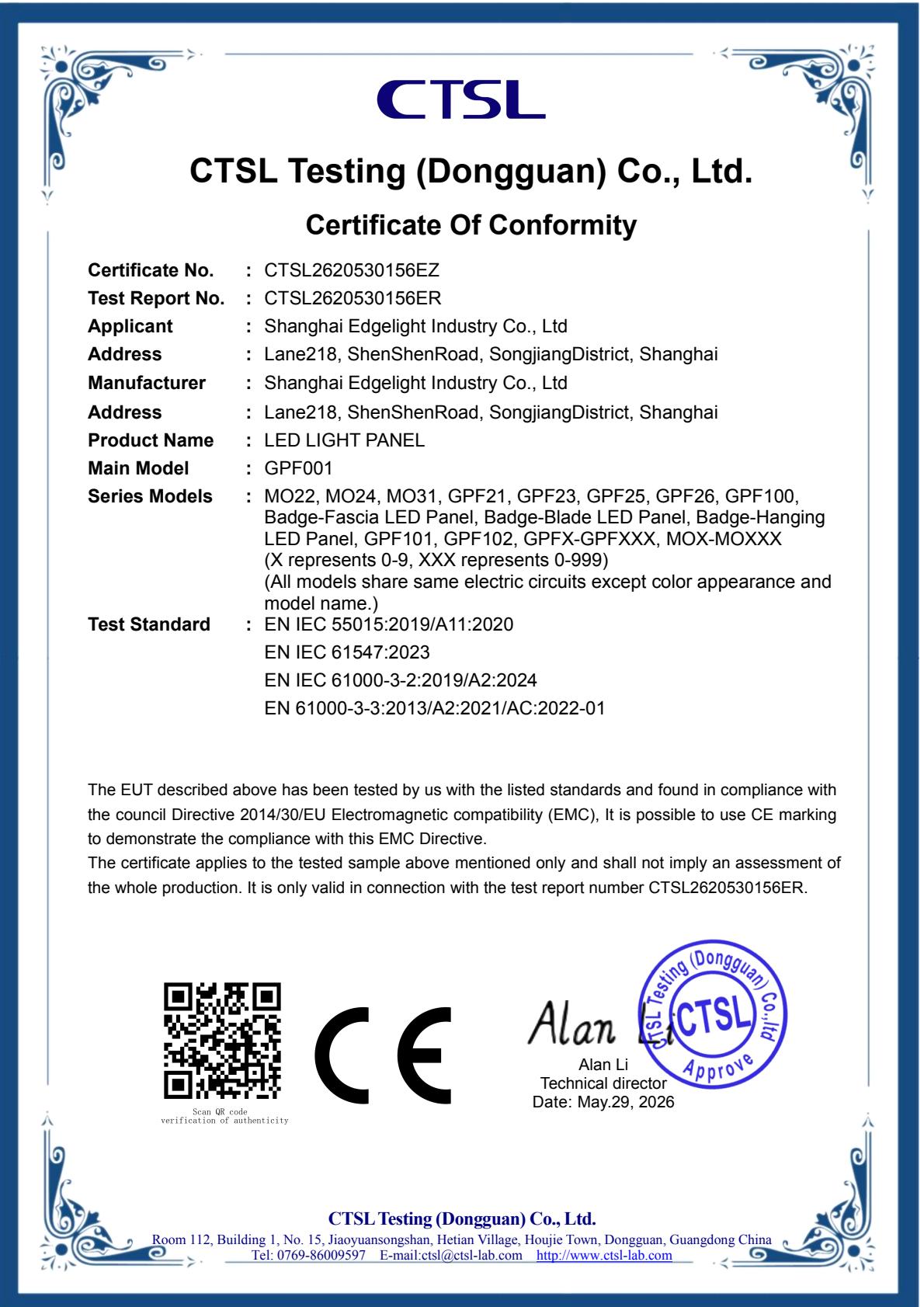
| Certification | CE EMC CTSL2620530156EZ; UL-US-2145621-0 | EU and North American market access documentation |
Customization options and what each one changes
| Customization | Typical purpose | What to confirm before ordering |
|---|---|---|
| Size | Cut-to-size panel for a specific light box, shelf or cab panel | Dimensional drawing, edge condition, and whether the panel is ordered cut to size wholesale or in batches |
| Thickness | Fitting an ultra-thin light box or a slim elevator ceiling cavity | Available cavity depth, frame profile, and the dotting method used for the chosen thickness |
| Color temperature | Aligning panel light with warm interior lighting or cooler commercial signage | Selected value within the 2700 K–6500 K range and its effect on the LED strip order |
| Logo | Brand mark printed on the panel or diffuser face | Artwork file, print position, and appearance when the panel is switched on and off |
| Surface shape | Non-rectangular openings — corners, curves, routered profiles | Shape drawing and confirmation that the pattern remains uniform after shaping |
| Light output brightness | Higher brightness for advertising displays, lower brightness for hospitality interiors | Target brightness level on the delivered sample, not only on a datasheet |
| Installation structure | Mounting method inside a cabinet, frame or suspended ceiling | Bracket type, edge support points, and service access for strip replacement |
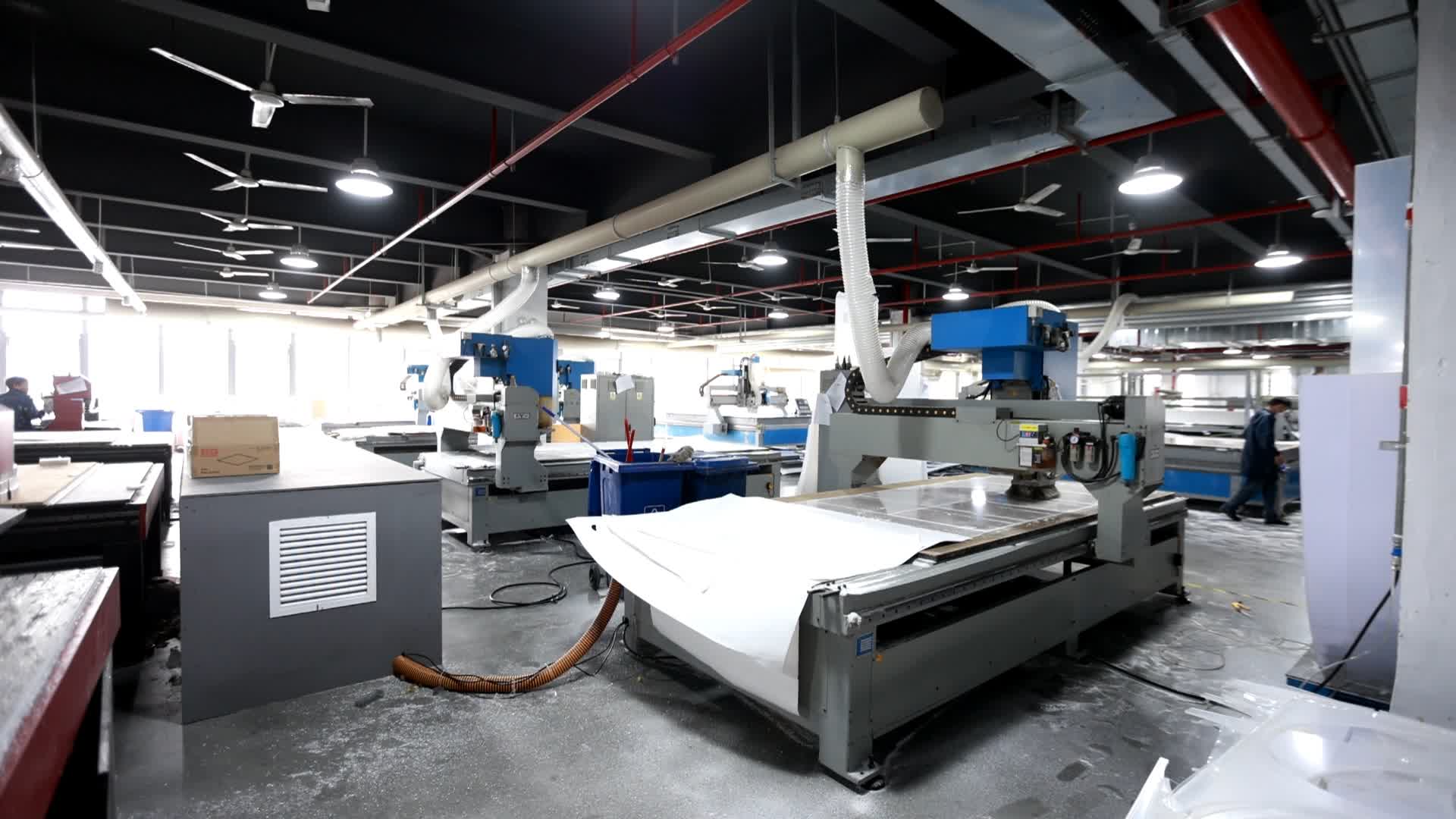
Supporting equipment that must be specified with the panel
A light guide panel is only one part of a light box assembly. Projects that underperform usually trace back to the electrical and optical components around the panel:
- LED strip. Edge-coupled strip determines input power, colour consistency and how evenly light enters the panel edge.
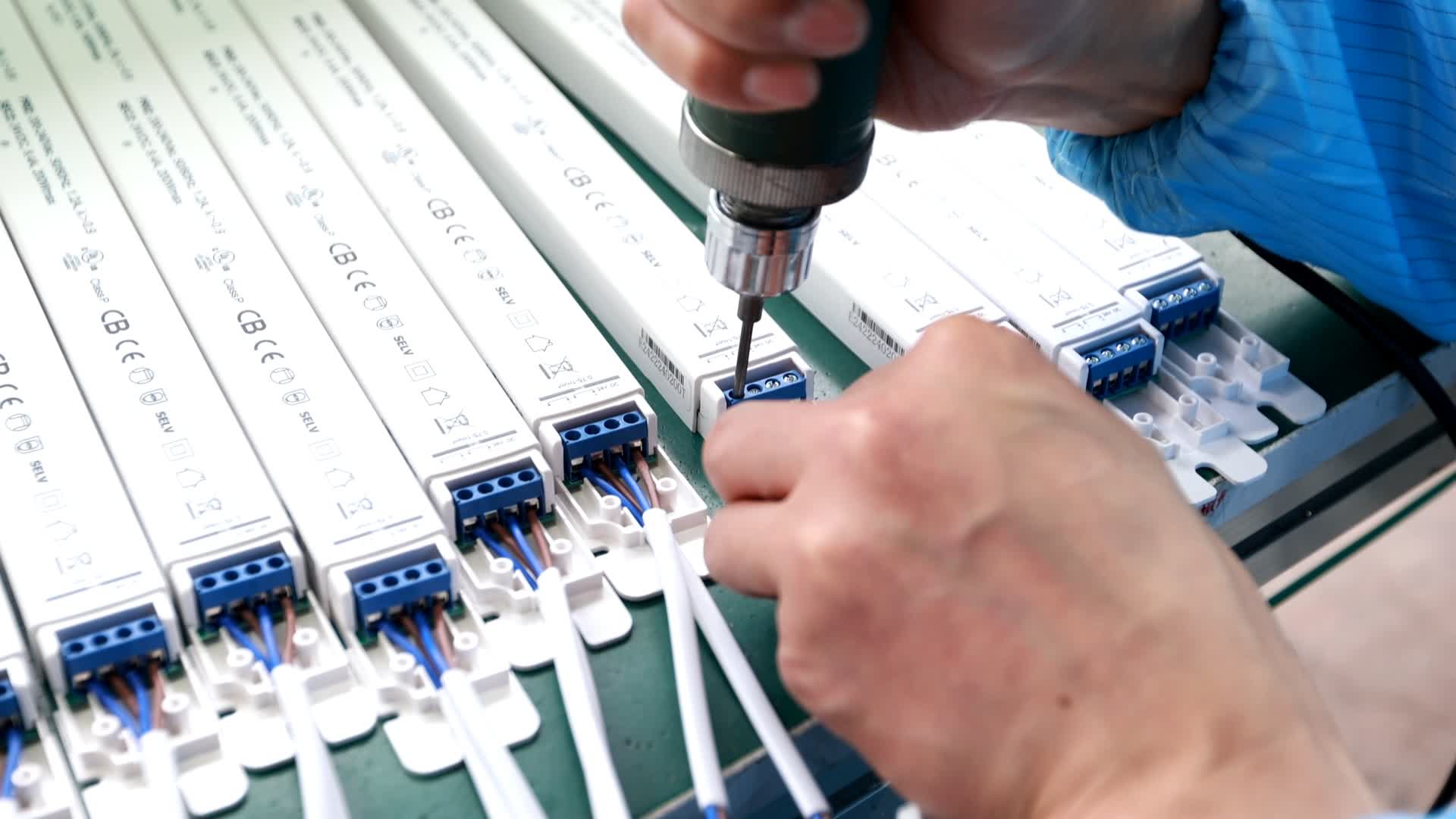
- Constant-current driver. Must be matched to the worst-case figures — 144 W maximum power and 7.2 A maximum current — not to the 101 W typical value, especially for 24/7 signage and elevator applications.
- Light box frame. Sets the cavity dimensions that the panel thickness has to fit.
- Diffuser film. Smooths any residual dotting or banding visible at close viewing distance.
- Reflective film. Returns light that escapes the non-viewing face, improving overall efficiency at the same input power.
- Mounting brackets. Hold the panel in place without stressing edges or restricting thermal movement.
Compliance documents to attach to the project file
For EU projects, the light panel range is covered by CE EMC certificate CTSL2620530156EZ, issued by CTSL Testing (Dongguan) Co., Ltd. on 2026-05-29 and valid to 2096-05-29, tested against EN IEC 55015:2019/A11:2020, EN IEC 61547:2023, EN IEC 61000-3-2:2019/A2:2024 and EN 61000-3-3:2013/A2:2021/AC:2022-01. For North America, UL certificate UL-US-2145621-0 issued by UL LLC under UL 2108, 2nd Ed covers component, sign accessory, LPS/Class 2 and LED module configurations, including models such as LED-ALS-12V-1W4-3014T-6-590-96 and ALS-24V-2W16-3030-900-9; it was issued on 2021-10-05 and expires on 2031-10-05.
Step-by-Step Breakdown: From Project Brief to Shipment
- Fix the installation envelope. Record the cavity depth, opening shape, mounting method and whether the location is interior or exterior. This single sheet determines the thickness and protection grade available to the project.
- Choose thickness and format. Ultra-thin light box designs and elevator ceilings require panels at the lower end of the thin-substrate range, which is where edge-lit architecture and laser dotting are used; deeper retail cabinets allow thicker, more forgiving panels.
- Set the optical target. Decide whether the priority is uniform illumination across a large face or high brightness in a smaller face. The dot pattern is then designed around that target and around the expected viewing distance.
- Choose color temperature. Select a value between 2700 K and 6500 K that matches the surrounding lighting — for example, a warm tone for hospitality and elevator interiors, a cooler tone for commercial signage and retail display where the panel competes with daylight.
- Confirm protection grade and temperature window. Specify within IP20–IP65 according to exposure, and verify that the installation stays inside the -20 °C to 50 °C operating range, including worst-case summer conditions for outdoor signage.
- Size strip and driver. Base the electrical design on 144 W and 7.2 A maximum, with headroom for continuous operation, rather than on the 101 W typical consumption.
- Validate on a sample, not on paper. Test the assembled unit — panel, strip, driver, frame, diffuser — and evaluate brightness and uniformity in the actual viewing conditions.
- Approve and release production. Acceptance is confirmed through a pre-shipment test, with 100% testing in production; typical lead time is 5–10 days against a monthly capacity of 30,000 units.
Use Cases: Adapting the Same Panel to Three Project Types
Retail showcase backlighting
Retail and luxury display is one of the environments this panel is specified for, alongside hospitality interiors and exhibition or museum spaces. Here the constraint is usually visual rather than electrical: the panel sits centimetres behind merchandise, so the dot pattern must be fine enough that the pattern does not read as texture, and the color temperature must flatter both product and packaging. Warm values toward the 2700 K end of the range suit jewellery, spirits and cosmetics; cooler values toward 6500 K suit cosmetics counters and technology displays where daylight-balanced light is expected. Because the viewing distance is short, a diffuser film is normally part of the assembly, and brightness is set at the level the merchandise needs rather than at maximum output.
Advertising light boxes and signage
Advertising light boxes and signage are the applications where brightness, duty cycle and exposure all peak at once. A high brightness light guide panel for advertising displays combined with reflective film is the usual configuration, so the panel competes with street-level daylight while still drawing no more than the electrical design allows. The 24/7 exterior and interior operation expected in signage means the constant-current driver must be selected with headroom against the 144 W / 7.2 A maximum figures rather than the 101 W typical consumption. Where the light box faces weather, the protection grade moves up the IP20–IP65 range, and the operating temperature range of -20 °C to 50 °C becomes a hard design boundary that the installer must respect.
Elevator decoration and cab interiors
Elevator decoration is the most demanding of the three, because the panel is a visible finished surface rather than a hidden light source: it must light, print, take a customized size and carry a customized texture while surviving continuous operation in an enclosed space. Edgelight's longest-running reference in this category is a 20-year supply relationship with an elevator manufacturer covering 10,000 units for elevator decoration, with stable operation in service; the scope of that work covered lighting, printing, and customized size and texture. For new cab projects, the practical lesson from that programme is that thickness, surface shape and installation structure should be fixed together at the design stage, since a ceiling panel that is specified as a light source only is difficult to retrofit into an existing cab structure.
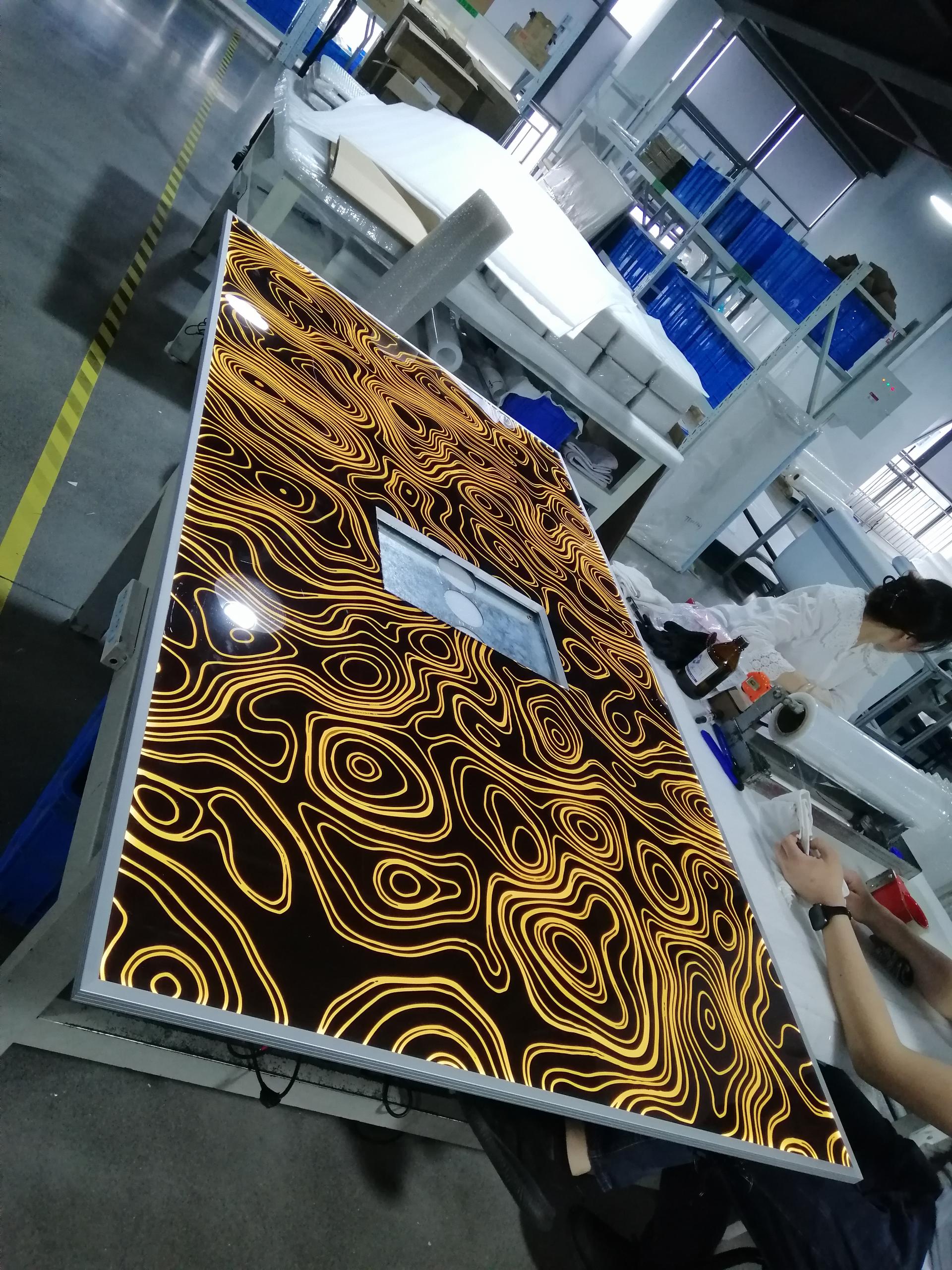
Spec-to-Scenario Comparison
The table below maps the same LGP specification envelope onto the three applications covered in this guide. Values refer to the published panel specification; the direction of adjustment is the engineering decision the project makes inside that envelope.
| Decision | Retail showcase backlighting | Advertising light boxes & signage | Elevator decoration |
|---|---|---|---|
| Primary optical goal | Uniform illumination at short viewing distance | High brightness for advertising displays | Even, glare-free illumination of a finished surface |
| Color temperature | Match product and interior ambience within 2700 K–6500 K | Cooler settings within 2700 K–6500 K for daylight competition | Warm settings within 2700 K–6500 K for interior comfort |
| Protection grade | Lower part of IP20–IP65 for dry interiors | Upper part of IP20–IP65 where weather or washdown applies | Lower part of IP20–IP65, enclosed cab environment |
| Operating temperature | Interior range, well inside -20 °C to 50 °C | Must stay inside -20 °C to 50 °C at the face of the box | Must stay inside -20 °C to 50 °C, including shaft conditions |
| Duty cycle | Through trading hours | Frequently 24/7 | Frequently 24/7 |
| Driver planning basis | 101 W typical with moderate headroom | 144 W / 7.2 A max with continuous-operation headroom | 144 W / 7.2 A max with continuous-operation headroom |
| Typical customization emphasis | Color temperature, brightness, diffuser film | Brightness, size, reflective film, frame fit | Size, thickness, surface shape, logo, installation structure |
| Documentation focus | CE for EU retail groups | CE and UL depending on destination market | CE / UL plus project-specific drawings |
FAQ
Which certifications should an LGP project reference for the EU and North America?
Two documents cover this light guide panel platform. For the European Union, CE EMC certificate CTSL2620530156EZ was issued by CTSL Testing (Dongguan) Co., Ltd. on 2026-05-29 and is valid to 2096-05-29, tested against EN IEC 55015:2019/A11:2020, EN IEC 61547:2023, EN IEC 61000-3-2:2019/A2:2024 and EN 61000-3-3:2013/A2:2021/AC:2022-01. For North America, UL certificate UL-US-2145621-0 from UL LLC was issued on 2021-10-05 under UL 2108, 2nd Ed, valid to 2031-10-05, and covers component, sign accessory, LPS/Class 2 and LED module configurations. Because certificate scopes list specific models, the exact configuration being ordered should be checked against the certificate before the project file is closed. Industry guidance from UL Solutions also points to UL 8750 and IEC 60598 as the common standards behind luminaire-level approvals, which is useful context when a light box assembly, rather than the panel alone, is being certified.
Can a light guide panel be customized for a specific LED light box OEM project?
Yes. OEM and ODM production is available with customization technical support for size, thickness, color temperature, logo, surface shape, light output brightness, and installation structure. The customization list is the practical answer to most light box OEM requirements, because panel size and thickness determine frame design, while brightness and surface shape determine how the panel reads in the finished sign. The most useful input a buyer can supply at the enquiry stage is the installation drawing, the intended viewing distance, the target brightness, and the required color temperature within the 2700 K–6500 K range; dot pattern and thickness follow from those four inputs.
What are the purchasing terms and acceptance criteria?
The minimum order quantity is 1 unit, which allows a project team to order a single panel for a mock-up or a pilot light box before committing to a batch. Delivery terms are FOB or CIF. Acceptance is confirmed through a pre-shipment test, and payment terms are 30/70 — a 30% deposit with the remaining 70% due before shipment. For buyers comparing total project cost rather than unit price, the relevant levers are thickness, brightness level and the number of customization steps, since each of those changes the material and process content of the panel.
How should a sample be validated before mass production?
Samples are the point at which an LGP specification is either confirmed or corrected, and they should be evaluated as an assembly rather than as a single part: panel, LED strip, constant-current driver, light box frame, diffuser film, reflective film and mounting brackets together. Production uses 100% testing, and acceptance inspection includes a pre-shipment test, so the sample stage is where brightness, dot pattern visibility and colour consistency are compared against the project brief. Checking the sample in the real viewing environment — a retail floor, an elevator cab mock-up or a shopfront — is more informative than bench testing, because ambient light is what the finished installation actually competes with.
What lead time and capacity should an OEM buyer plan for?
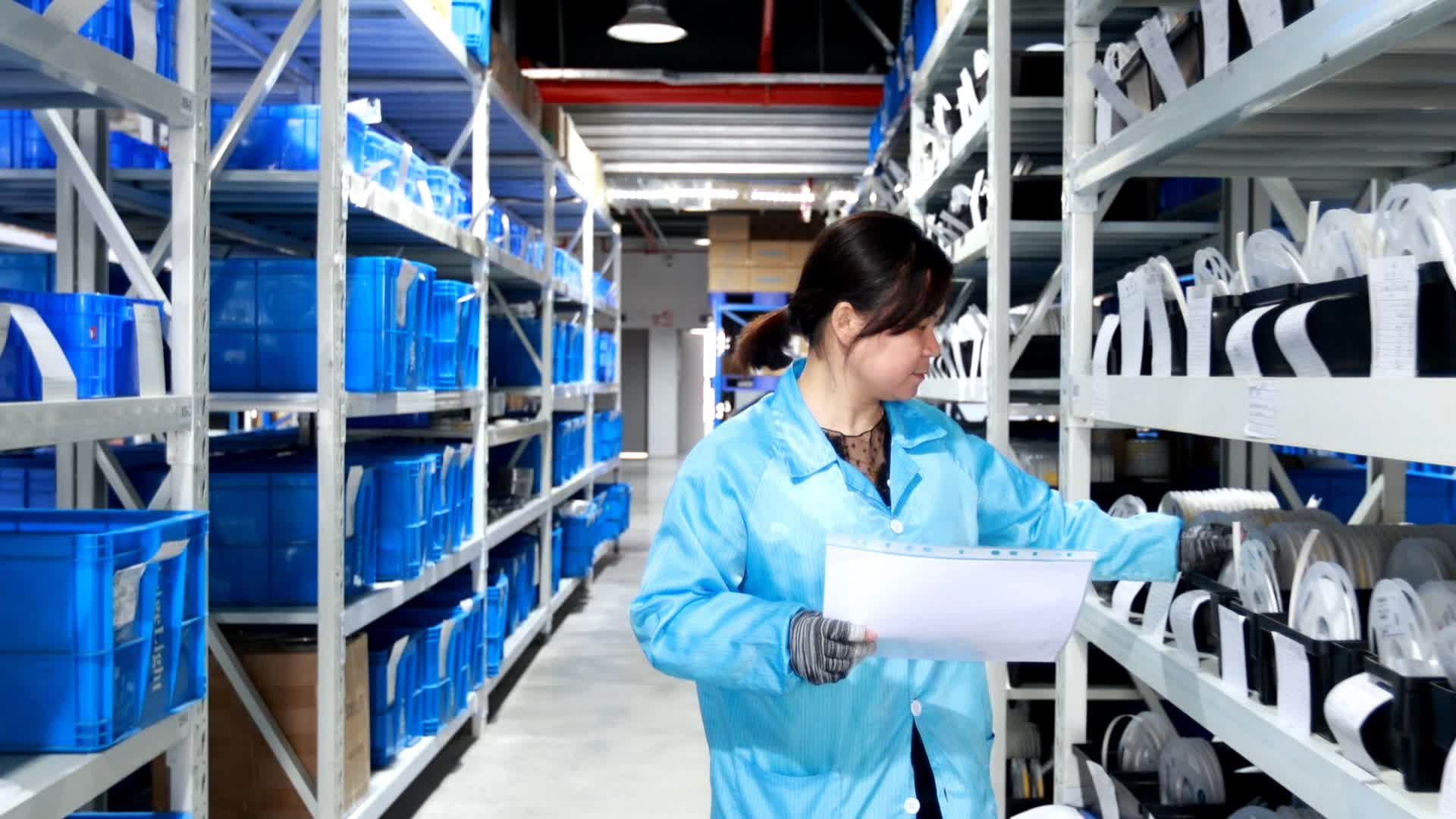
Typical lead time is 5–10 days, against a monthly production capacity of 30,000 units, with OEM and ODM production, 100% testing, local after-sales support, and export experience in the European Union, North America, Southeast Asia and Australia. For a project schedule, the practical implication is that a custom size light guide panel order and a reorder follow the same short cycle, so production slots can be planned around an installation date rather than the other way round. To start, request a sample or a quotation against your light box or elevator cab drawing, or download the LED product catalogue to review the full range of panels, strips and drivers that ship together.
Conclusion: Specifying by Scenario, Not by Catalogue Page
The light guide panel itself does not change between retail, signage and elevator projects; the specification decisions around it do. Retail showcase backlighting is governed by uniformity and color temperature at short viewing distance, advertising light boxes and signage by brightness, protection grade and continuous duty, and elevator decoration by size, thickness, surface shape and the durability of a finished visible surface. In all three, the electrical design should be built on the panel's maximum ratings — 144 W and 7.2 A — rather than the 101 W typical consumption, and the installation must stay inside the published IP20–IP65 and -20 °C to 50 °C envelope.
Edgelight manufactures the LGP platform at five production bases, with 25 R&D engineers, OEM/ODM customization, a minimum order quantity of 1 unit, a typical 5–10 day lead time and 30,000 units of monthly capacity, supported by CE certificate CTSL2620530156EZ and UL certificate UL-US-2145621-0. Projects spanning retail display, signage and elevator interiors can be specified from the same panel platform, with the scenario — not the catalogue page — deciding which specifications are locked first.
Next step
Send your light box, showcase or elevator cab drawing with the intended viewing distance and target color temperature, and Edgelight will confirm the matching LGP thickness, dot pattern, brightness and driver configuration. Request a sample or a quotation, or download the LED product catalogue (PDF).
Shanghai Edgelight Industry Co., Ltd.
Website: en.edgelight.com
Address: No.218 Shenshen Road, Songjiang District, Shanghai
Tel: +86-21-57603573 / 64412288 | Fax: +86-21-64412266
E-mail: info@edgelight.com | WhatsApp: +8617701891091
Have Questions or Need More Details?
Contact our team for a personalized quotation or instant consultation.
Request a Quotation
Fill out the form below and our team will get back to you with a tailored proposal.
WhatsApp Direct Chat
Prefer to chat in real-time? Message us on WhatsApp for instant assistance & quick answers.
- Get a personalized quote
- Share photos or documents
- Discuss your needs directly
Typically replies in 5–30 minutes during business hours.