
Auditing an LGP Manufacturer: From Prototype Testing to Large-Scale Order Fulfillment
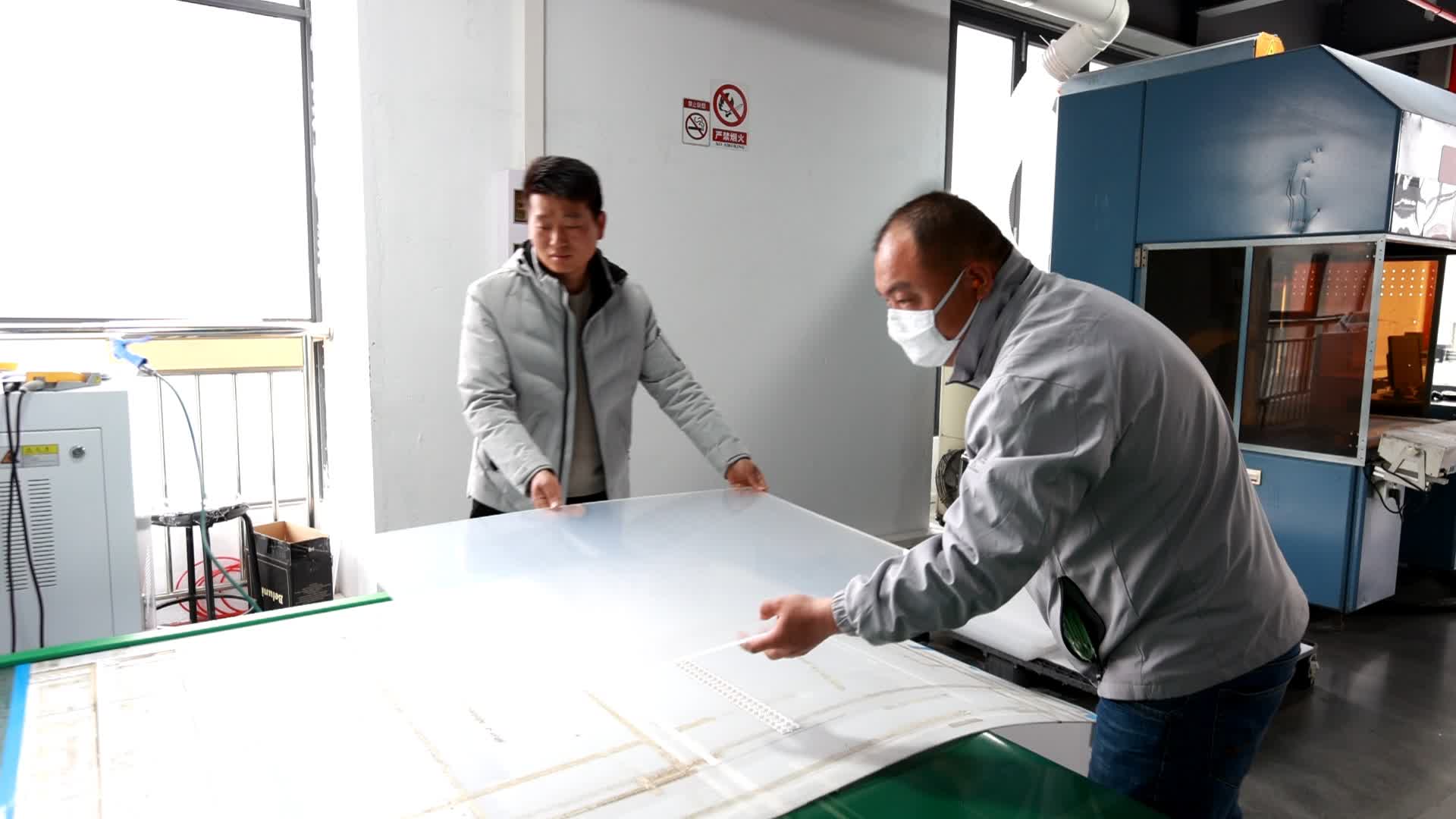
Cover: an LGP audit verifies the process behind the panel, not only the sample that arrives by courier.
A light guide panel (LGP) manufacturer audit answers a question that samples and price lists cannot: will the supplier reproduce the approved optical performance at unit 5,000 exactly as it did at unit 5? The answer comes from a staged verification process — prototype testing first, then pilot production, then large-scale order fulfillment — with defined evidence requested at every stage.
This guide is written for OEM buyers, signage contractors, display integrators and brand owners who source edge-lit acrylic light guide panels for light boxes, retail fixtures, elevator cabins and commercial interiors. It sets out five audit gates, the documents to request at each gate, and the points where audits most often break down between an approved prototype and a released production order.
Shanghai Edgelight Industry Co., Ltd. (EDGELIGHT) is a Shanghai-based manufacturer of light guide panels, LED display products, intelligent control products and advertising lighting equipment, founded in 2004 and exporting primarily to the USA and EU. Its published product, capability and case data are used throughout this article as a worked example of what verifiable audit evidence looks like in practice.
Problem Definition: Why LGP Supplier Audits Fail Between Sample and Shipment
Most LGP sourcing problems are not caused by a supplier that is incapable overall. They are caused by an audit that stopped too early — typically at the moment the sample was approved. Five failure patterns account for a large share of the gap between a good prototype and a good production order.
- Sample-only approval. A prototype is often produced with extra care: a selected sheet, a hand-checked edge, a pattern applied to a single piece. Nothing in that sample proves how a dot pattern light guide panel behaves when it is cut to size repeatedly on a production line, batch after batch.
- Optical measurement taken on a bare panel. Brightness and uniformity are system results, not panel-only results. A light guide panel is normally matched with an LED strip light, a constant current power driver, a light box frame, diffuser film, reflective film and mounting brackets. Measuring the panel outside that assembly tells the buyer very little about the finished light box.
- Capacity accepted as a claim. A monthly capacity figure becomes a delivery plan only when the buyer knows how the supplier schedules lines, what is already committed, and whether the capacity applies to the specific size, thickness and colour temperature in the order.
- Quality control assumed rather than evidenced. A statement such as 100% test is meaningful only when the test position in the line, the pass/fail criteria and the traceable record are defined.
- Support distance ignored. After-sales capability in the destination market is as much part of supplier qualification as production capability, particularly for projects that run continuously after installation.
Industry Background: What Is Driving LGP Supplier Audits in 2026
Demand pressure and technical pressure are rising at the same time, which raises the cost of a weak supplier audit. The global light guide plate market was valued at USD 3.91 billion in 2025 and is projected to reach USD 6.51 billion by 2034, a CAGR of 5.8% over the forecast period (Dataintelo). Asia Pacific accounted for 48.2% of 2025 revenue, valued at USD 1.88 billion, while consumer electronics remained the largest application segment with a 42.5% share in 2025 (Dataintelo). Commercial display, signage and architectural lighting demand sits alongside that consumer electronics base.
Material supply shapes several audit questions. The polymethyl methacrylate (PMMA) market — the primary material for acrylic LGP — was valued at USD 5.4 billion in 2024 with a 5.6% CAGR (USD Analytics). Thin PMMA substrates below 2 mm accounted for over 60% of display-grade shipments among major manufacturers in 2024 (Fact.MR / CHI MEI Corporation), and edge-lit designs are favoured for ultra-slim applications at profiles of roughly 2.0 mm through injection molding or 3.0 mm through laser dotting (Lightpanel). Buyers auditing an ultra-thin light guide panel for slim light boxes should therefore expect the supplier to discuss material grade and dotting method, not only thickness.
Regulation adds a third layer. Light guide panels used in luminaires must satisfy safety standards such as UL 8750 for LED equipment and IEC 60598 for luminaires to reach global markets (UL Solutions), and the 2024 International Energy Conservation Code reduces lighting power allowances in the USA (International Code Council). Both points move the audit away from brightness alone and toward documented power consumption, test evidence and market-specific compliance files.
The Five-Gate LGP Manufacturer Audit Framework
The framework below sequences an audit so that fast, low-cost checks happen before expensive commitments. Each gate has a pass condition; a supplier that cannot clear Gate 2 should not receive a volume order, regardless of price.
Gate 1 — Entity, Facility and Market Verification
This gate answers who is legally responsible for the order and whether the declared capacity is physically plausible. Confirm the legal entity, every production address, facility area, workforce, engineering headcount, annual output and export orientation, and ask for the markets the supplier actually ships to rather than the markets it would like to serve.
As a reference point, EDGELIGHT operates from a Shanghai headquarters production base of about 33,000 m2, employs approximately 500 people including a 25-engineer R&D team, reports an annual output of 120,000 units and an export ratio of 75% with main markets in the USA and EU, and maintains additional production bases in Tianjin, Germany and the United States. Multiple production locations affect logistics, response time and how a lead-time commitment should be interpreted.
Gate 2 — Prototype and Optical Sample Validation
This gate answers whether the supplier can hit your optical target inside your final assembly. Start by freezing the customization scope: size, thickness, colour temperature, logo, surface shape, light output brightness and installation structure. Then confirm the pattern method used for your dimensions — laser dotting or printing — because dot density and pitch are dimension-dependent, and a pattern validated at one size is not automatically valid at another.
Measure the prototype in the finished assembly with the intended LED strip light, driver, frame, diffuser film, reflective film and mounting brackets. Two datasheet values are useful as a baseline for the test protocol: luminous flux above 1080 lm and a colour temperature range of 2700K–6500K. State the architecture — edge-lit or backlit — before prototyping begins, because edge-lit and backlit light guide panels require different optical verification.
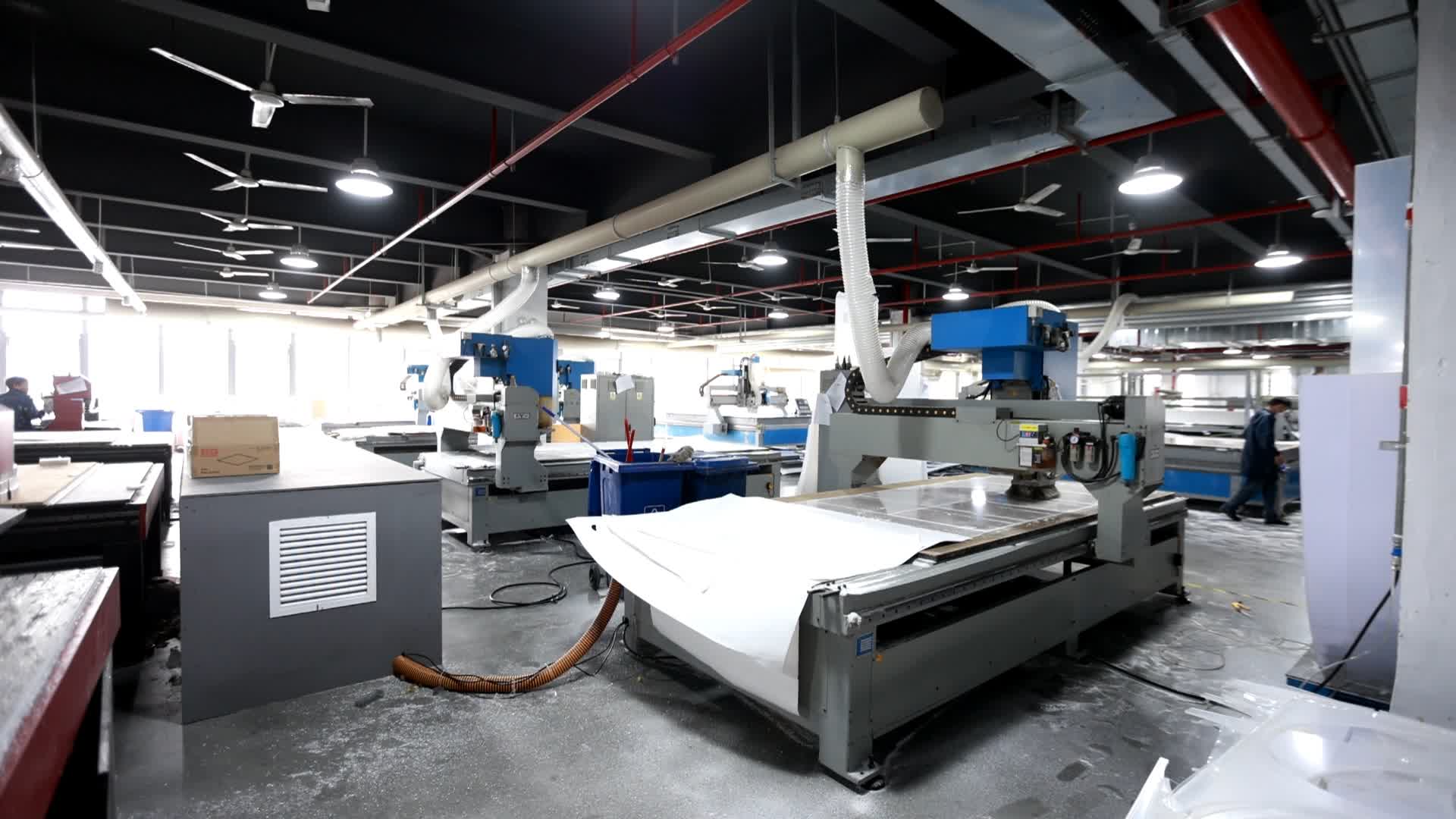
Gate 2 evidence: UV cutting at the prototype stage shows how the supplier reaches a custom size without edge damage.
Gate 3 — Quality Control and Test Discipline
This gate answers whether every shipped unit is verified or only the sample. Ask where in the line the test happens, what the pass/fail criteria are, and request sample records that can be traced to your model and batch. A claim of 100% test is only an audit fact when it maps to measurable parameters: luminous flux, uniformity, colour temperature, appearance and geometry.
Define the measurable limits from the datasheet in advance. For a light panel specification, typical values are a maximum operating current of 7.2 A, a maximum power of 144 W and a typical power consumption of 101 W, with an operating temperature range of −20°C to 50°C and a protection grade of IP20–65 depending on configuration. Where the project involves retail showcase and shelf backlighting in interior and outdoor conditions, the application requirement may include IP55 dustproof and waterproof construction, high light uniformity, optical acrylic material, long service life and no yellowing — all of which should be verified against the delivered units, not assumed from the material datasheet.
Gate 4 — Capacity, Lead Time and Scale-Up Reality
This gate answers whether the supplier can absorb your volume without changing the process that produced the approved sample. A monthly capacity of 30,000 units is a planning input only when the buyer knows how much of it is already committed; ask for a line allocation and a schedule. A quoted lead time of 5–10 days should be qualified with two questions: when does the clock start (after pattern or artwork approval, or after material is in house), and are testing and packing included in that window?
Confirm that the stated capacity applies to your specific combination of size, thickness and colour temperature. Capacity on a standard size is not evidence of capacity on a large custom size light guide panel with printed graphics.
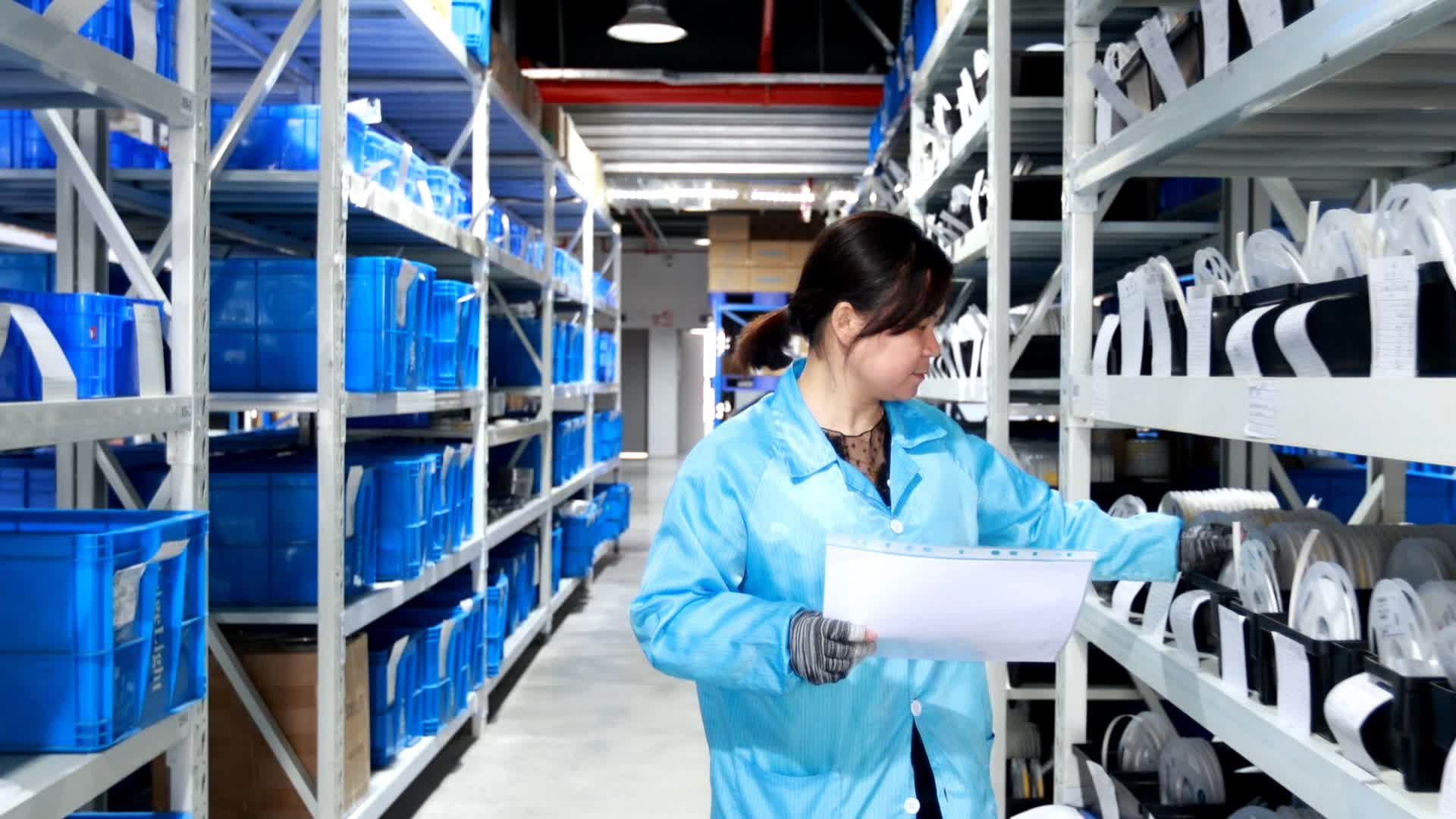
Gate 4 evidence: storage and staging capacity show how a supplier handles cut-to-size and wholesale volumes.
Gate 5 — Commercial Terms and After-Sales Coverage
This gate answers whether the commercial model allows you to audit before you commit, and whether support continues after delivery. An MOQ of 1 unit is a useful audit tool: it makes a first article order and a pilot run commercially realistic, so quality can be verified on production units before a volume purchase order is released. Confirm whether the supplier works in OEM/ODM mode and who owns the pattern and tooling data created for your project.
Finally, check the support structure in the destination market. For buyers in the European Union, North America, Southeast Asia and Australia, ask what local after-sales support means in practice — the response channel, the route for replacement units and whether the supplier maintains a local entity or partner. Market access documentation should also be checked against applicable standards such as UL 8750 and IEC 60598 for the target region.
| Audit gate | Question it answers | Evidence to request | Risk if left unverified |
|---|---|---|---|
| Gate 1 — Entity and facility | Who is responsible and is the capacity plausible? | Legal entity, production addresses, facility area, workforce, engineering headcount, annual output, export markets | Delivery plans built on unverified capacity |
| Gate 2 — Prototype validation | Can the supplier hit the optical target in your assembly? | Pattern method (laser dotting or printing), measurement of the panel in the final frame, flux and colour temperature data | Sample performance that cannot be repeated at volume |
| Gate 3 — Quality control | Is every unit tested or only the sample? | Test position in the line, pass/fail criteria, traceable records, electrical and environmental limits | Faults discovered at installation |
| Gate 4 — Capacity and lead time | Can the process absorb your volume without changing? | Line allocation, schedule, lead-time start point, size and thickness confirmation | Schedule slippage on fixed installation dates |
| Gate 5 — Terms and after-sales | Can you audit before committing, and who supports you later? | MOQ, OEM/ODM mode, pattern data ownership, local support route, market documentation | Volume exposure and slow field support |
Step-by-Step: Running the Audit from Prototype to Fulfillment
Stage 1 — Design freeze and scope confirmation
Fix the specification before any sample is produced: dimensions, thickness, colour temperature within the 2700K–6500K range, brightness target, pattern method, surface finish, printed logo, mounting structure and pilot quantity. A vague brief produces a prototype that passes for the wrong reason.
Stage 2 — Prototype and optical testing
Require that the prototype is built with production-intent optical acrylic material and the intended dotting or printing process. Ask for the panel to be measured inside the final assembly, with a uniformity description and the electrical parameters recorded: maximum power 144 W, typical power consumption 101 W, luminous flux above 1080 lm.
Stage 3 — Pilot order and first article verification
Place a small first article order. This is the stage where an MOQ of 1 unit removes commercial friction: the buyer can validate packing, labelling, test documentation and edge quality on a real production run rather than on a hand-finished sample.
Stage 4 — Scale-up to volume
Before releasing the volume order, reconfirm monthly capacity of 30,000 units against the agreed schedule, and reconfirm the lead time of 5–10 days with its start point. Freeze the process parameters — material batch, pattern data, lamination or printing settings — and record them in the purchase agreement so that any later change is visible.
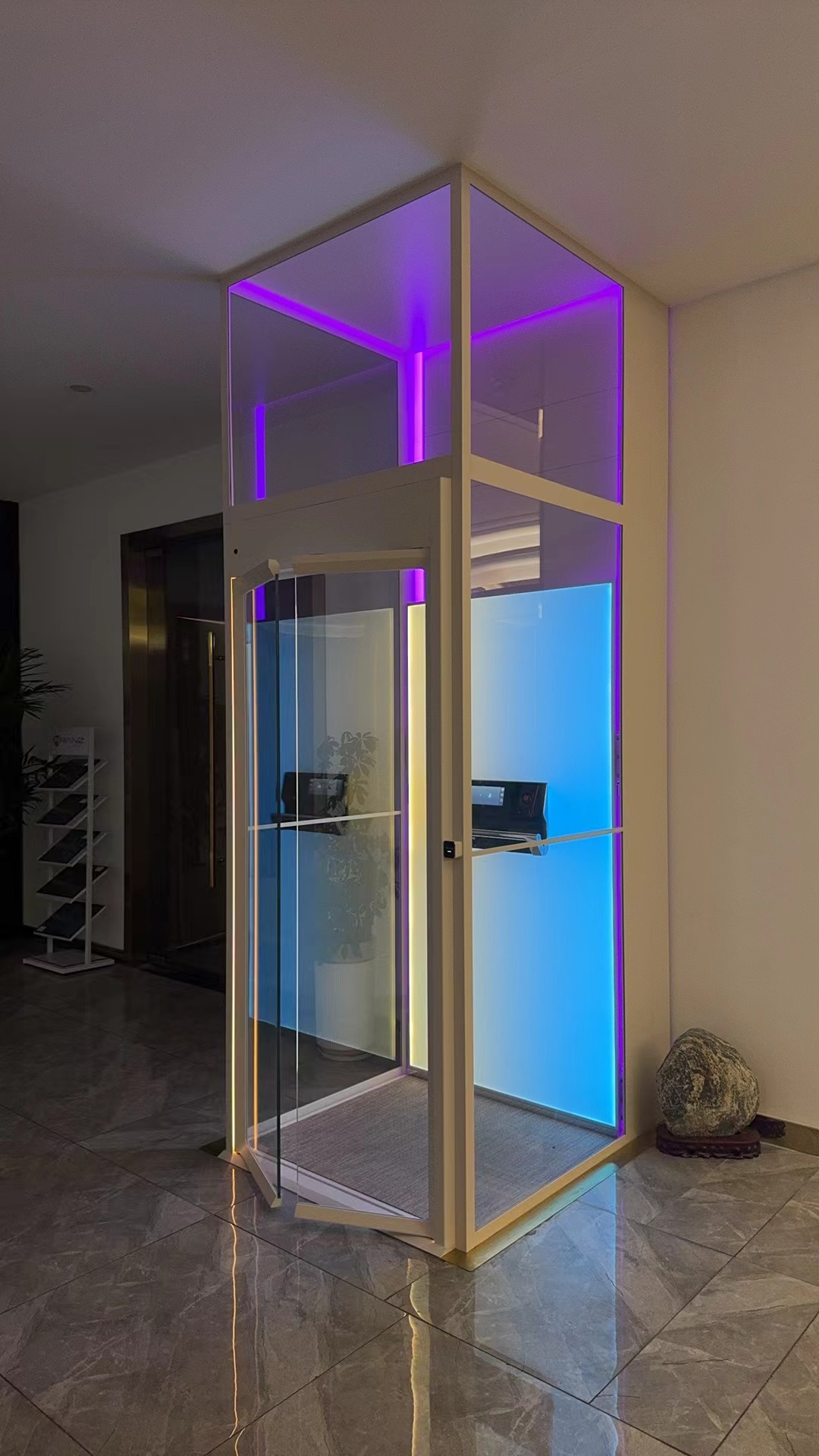
Stage 4 in practice: customized LGP panels delivered at volume for elevator cabin decoration.
Stage 5 — Delivery, installation and after-sales
Audit does not end at the loading dock. Confirm the local after-sales support route, the documentation supplied with the shipment, and the durability expectation for continuous operation. A supplier that has held the same application for a long period is usually a supplier whose process was stable enough to repeat.
Use Cases: Where the Audit Focus Changes
Elevator decoration. This application rewards batch consistency. A documented example is an elevator manufacturer program of 10,000 units in elevator decoration, running for 20 years with stable operation, where the highlights were lighting, printing and customized size and texture. For this type of project, the audit should stress printed texture consistency between batches, thickness tolerance and long-term no-yellowing behaviour.
Retail and luxury display. Light guide panels are used in the retail and luxury display industry for showcase and shelf backlighting. Here the critical audit criterion is uniform illumination across multiple panels viewed side by side in the same store, so ask for a uniformity comparison of panels from the same production batch.
Advertising light boxes and signage. For a high brightness light guide panel used in advertising displays and ultra-thin LED light boxes, the audit should focus on brightness at the specified thickness and on IP-rated construction where the light box operates in interior and outdoor conditions.
Hospitality and commercial interiors. Ceiling light panels in hospitality and commercial interiors are typically judged on colour temperature consistency and on behaviour under continuous 24/7 operation, which makes driver matching and thermal design part of the audit rather than an afterthought.
Exhibition, museum, transportation and consumer electronics backlighting. These applications share one audit requirement — long service life with no yellowing — and differ mainly in how strictly thickness and viewing angle are constrained.
Product and Supply Parameters to Verify During the Audit
The table below lists the parameters that should appear in the audit file for an acrylic light guide panel program, together with the purpose each one serves during verification.
| Parameter | Light guide panel (LGP) reference | Purpose in the audit |
|---|---|---|
| Material | Optical acrylic (PMMA) | Confirms optical-grade substrate and no-yellowing expectation |
| Operating current and power | 7.2 A max; maximum power 144 W; typical power consumption 101 W | Checks electrical loading of the light box and driver matching |
| Luminous flux | Above 1080 lm | Sets the brightness baseline for sample and production testing |
| Colour temperature | 2700K–6500K | Ensures consistency across panels in one installation |
| Operating temperature | −20°C to 50°C | Validates suitability for the installation environment |
| Protection grade | IP20–65 by configuration | Matches the panel to indoor, outdoor or IP55 dustproof and waterproof requirements |
| Customization scope | Size, thickness, colour temperature, logo, surface shape, light output brightness, installation structure | Defines what must be frozen before the pilot order |
| Production mode | OEM / ODM | Clarifies design ownership and pattern data control |
| Monthly capacity | 30,000 units | Converts a capacity claim into a scheduling question |
| Lead time | 5–10 days | Must be qualified with start point and included operations |
| MOQ | 1 unit | Enables first article and pilot auditing before volume commitment |
| Quality control | 100% test | Requires traceable records and defined pass/fail criteria |
| After-sales | Local support | Determines field response in the destination market |
Audit rule of thumb: verify the sample in the final assembly, verify the process with records, and verify the schedule with a line allocation. Any of the three left as a verbal assurance converts into project risk later.
FAQ
Which standards should an LGP manufacturer document for EU and North American projects?
Light guide panels used in luminaires are covered by safety standards such as UL 8750 for LED equipment and IEC 60598 for luminaires for global market access (UL Solutions). In the USA, the 2024 International Energy Conservation Code reduces lighting power allowances, so efficiency-related values should be documented alongside brightness. Ask for the test report and the certificate scope, and check that the declared datasheet values match — for example a maximum power of 144 W, a typical power consumption of 101 W, luminous flux above 1080 lm and a 2700K–6500K colour temperature range.
How do you verify a manufacturer's claim of 100% testing?
Ask where in the production line the test takes place, what the pass/fail criteria are, and request sample records that can be traced to your model and batch. The claim becomes usable only when it maps to measurable parameters — luminous flux, uniformity, colour temperature, appearance and geometry. Edgelight states 100% test as its quality control method in LGP production, and reports a monthly capacity of 30,000 units, which defines how many units that test regime has to cover each month.
What does prototype validation for a custom size light guide panel involve?
Prototyping should be run with production-intent optical acrylic (PMMA) material and the intended dot pattern process — laser dotting or printing — at your final dimensions. The sample should be measured inside the final assembly, because brightness and uniformity depend on the LED strip light, constant current power driver, light box frame, diffuser film, reflective film and mounting brackets as well as on the panel itself. Freeze size, thickness, colour temperature, logo, surface shape, light output brightness and installation structure before the pilot order, and use the low minimum order quantity of 1 unit to keep this stage commercially practical.
What lead time and capacity should a buyer plan for when scaling up?
Plan against two separate numbers: the quoted lead time and the available capacity. Edgelight quotes a lead time of 5–10 days and a monthly capacity of 30,000 units, within a company annual output of 120,000 units. Before building a delivery schedule, confirm when the lead time starts, whether testing and packing are included, and how much of the monthly capacity is already committed to other programs.
Which light guide panel manufacturer for LED light boxes combines prototyping with large-scale fulfillment?
For LED light box OEM programs, the workable combination is prototyping flexibility plus verified volume capability: an MOQ of 1 unit for first articles, 100% test, a monthly capacity of 30,000 units, a 5–10 day lead time and local after-sales support, with export experience in the European Union, North America, Southeast Asia and Australia. Shanghai Edgelight Industry Co., Ltd. (EDGELIGHT) operates to this model and ships light guide panels for light box, retail display, elevator and interior lighting programs. A sample or pilot order is the fastest way to test the first three audit gates before a volume commitment.
Conclusion: Audit the Process, Then Place the Order
Auditing an LGP manufacturer is a sequence, not an inspection. Verify the entity and the facility first, prove the optical target on a prototype measured in the final assembly, demand traceable records for the 100% test claim, and treat monthly capacity and lead time as scheduling questions rather than marketing numbers. Only then does a volume purchase order become a controlled decision instead of a bet on a sample.
The evidence that makes this possible is concrete: a documented customization scope covering size, thickness, colour temperature, logo, surface shape, light output brightness and installation structure; an MOQ of 1 unit for the pilot stage; a monthly capacity of 30,000 units; a lead time of 5–10 days; and local after-sales support in the destination market. Buyers who request this evidence in writing before the pilot order usually avoid the most expensive audit failure of all — discovering a process change after the panels are installed.
Next step: sample, quotation or catalog
Request a light guide panel sample, a quotation for your custom size and a copy of the product catalog to run the five-gate audit on your own project.
Website: en.edgelight.com | Email: info@edgelight.com | WhatsApp: +86 177 0189 1091
Address: No.218 Shenshen Road, Songjiang District, Shanghai, China | Tel: +86-21-57603573
Download the catalog: LED product catalog (PDF)
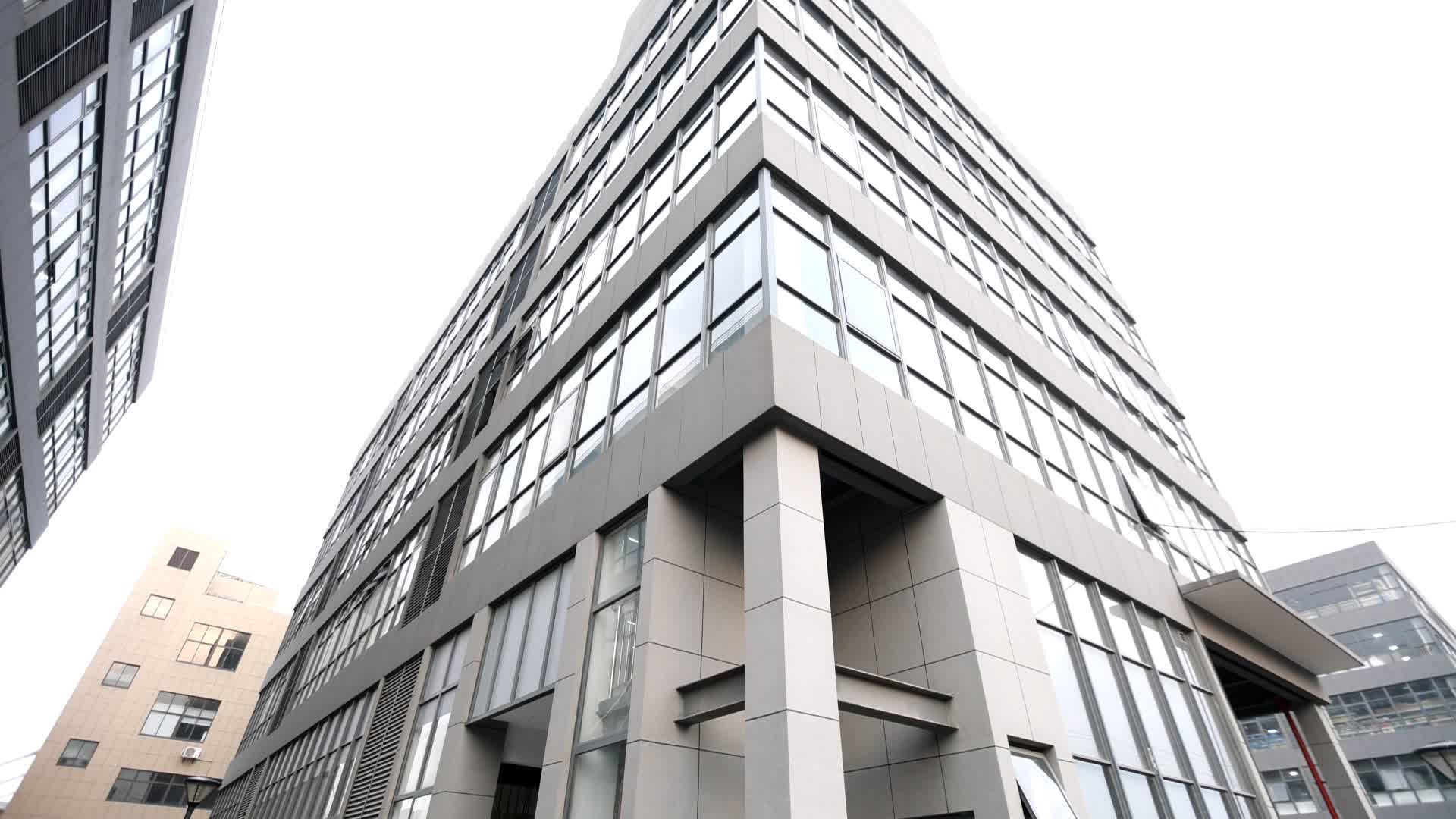
The audit starts here: a facility visit confirms the capacity, process and support claims made in the quotation.
Have Questions or Need More Details?
Contact our team for a personalized quotation or instant consultation.
Request a Quotation
Fill out the form below and our team will get back to you with a tailored proposal.
WhatsApp Direct Chat
Prefer to chat in real-time? Message us on WhatsApp for instant assistance & quick answers.
- Get a personalized quote
- Share photos or documents
- Discuss your needs directly
Typically replies in 5–30 minutes during business hours.