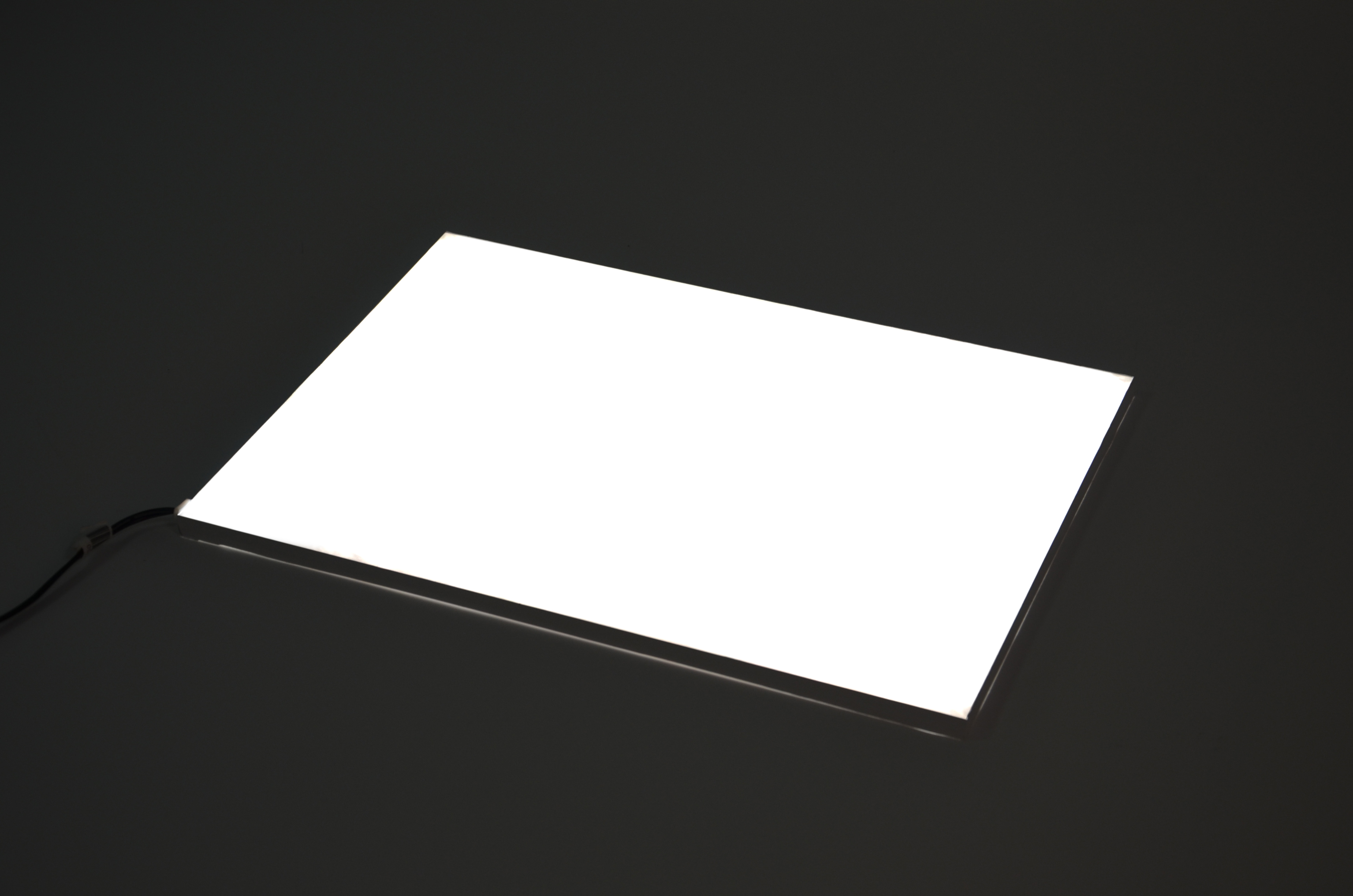
Compare edge-lit and backlit light guide panels against uniformity, depth and maintenance access, using the EDGELIGHT LGP model's PMMA build, IP20-65 and 101 W typical power as the baseline.
2026-11-07 02:28:23
Compare IP20 vs IP65 and 2700 K vs 6500 K backlit light guide panel builds by application, anchored in acrylic construction, >1080 lm output, 101 W and -20 to 50 °C operating range.
2026-11-04 02:37:27
Learn how to adapt acrylic light guide panels (LGP) for elevators, retail displays, signage, and interiors using verified specifications, certifications, customization options, and installation tips from Edgelight.
2026-10-30 16:32:30
Compare OEM vs ODM light guide panels. Learn how custom size, thickness, and brightness requirements decide the engagement model, plus MOQ, lead time, and sample validation steps.
2026-10-29 02:19:18
Compare UL 2108, 2nd Ed. (UL-US-2145621-0, model LGP) and CE EN IEC 55015:2019/A11:2020 (CTSL2620530156EZ, GPF001) for light guide panels, and match evidence to EU, North America, Southeast Asia and Australia.
2026-10-26 02:29:00
How a 1-unit MOQ, 5–10 day lead time, 30,000-unit monthly capacity, and local after-sales support protect long-run LGP and LED light box projects.
2026-10-23 02:35:37
Verify CE and UL scope, power, flux, CCT, IP and temperature limits before buying a backlit light guide panel. A buyer guide for research and evaluation.
2026-10-22 17:13:16
Evaluate a backlit light guide panel by CE certificate scope, UL module listing, LGP electrical and optical limits, acrylic material and custom-size constraints.
2026-10-22 17:12:59
How a backlit light guide panel works, what to specify for ultra-slim high-uniformity displays, and how Edgelight builds acrylic LGP panels for retail and signage.
2026-10-22 17:12:51
Learn what a backlit light guide panel is, how edge-lit acrylic panels work, why backlit surfaces fail, and how to specify format, protection grade and optical target before ordering.
2026-10-22 17:12:43
Light guide panel partnership FAQ: 1-unit MOQ, 5–10 day lead time, 30,000 units monthly capacity, 100% testing, customization and local after-sales in the EU, North America, SEA and Australia.
2026-10-20 02:22:04
Why hotspots and dark corners appear in edge-lit signage, how dot pattern design and LED source alignment fix them, and how 100% testing keeps light guide panels uniform.
2026-10-17 02:25:56
Commercial lighting projects dim in three common ways: DALI for system-managed buildings, 0-10V for straightforward analog control, and PWM for simple constant-voltage loads. Planning starts with the control architecture and ends with model-level driver documents — EDGELIGHT's dimmable family covers the 0-10V/PWM route for strip and module loads, and the checklist below applies no matter which protocol the building uses.Step 1 — Decide the Control Architecture FirstAsk whether the building has a lighting co
2026-10-15 11:07:11
Commercial lighting control usually comes down to two wired dimming standards: DALI, a digital two-way bus where each driver has an address and the controller reads back status, and 0-10V, an analog voltage signal that is simple and widely compatible. The right choice depends on the building's control system — and on what each driver manufacturer actually documents, which is why model-level spec sheets matter more than the word "dimmable".How DALI and 0-10V DifferDALI assigns each driver an address on the b
2026-10-15 11:06:31
Qualifying a display manufacturer for resale is different from qualifying it for a single project: the portfolio must be sellable repeatedly. Distributors need families that match recurring inquiries, paperwork they can pass to customers, stock and service that answer locally, and marketing assets with real substance. EDGELIGHT's catalog — fine pitch, transparent, indoor, portable, spliced and interactive lines plus drivers and lighting panels — is organized for repeatable resale, and the qualification chec
2026-10-15 11:03:52
A distributor's risk lives in the portfolio, not the price list: whether the manufacturer can cover the inquiries that actually arrive — fine pitch, indoor full color, transparent outdoor, rental, spliced and floor tiles — with named series, model sheets and certificates. The audit order that separates a real portfolio from a website navigation trick is breadth, documentation, certification and supply structure, and EDGELIGHT's catalog is structured to be audited in exactly that order.Step 1 — Map the Portf
2026-10-15 11:03:05
Every LED display project reaches the same fork: which pitch, and from what distance will people view it. The stable way through is by use case — control room, corporate lobby, retail window or rental stage each have typical distances and content, and matching those to a documented pitch range avoids both overspending and visible grain. EDGELIGHT's UT 16:9 (P1.25–P2.5) and ET 4:3 series are structured so the pitch table lines up with the room type.Control Rooms and Command Centers: Close Seats, Fine PitchOp
2026-10-15 11:02:04
Pixel pitch is a distance decision, not a quality badge: the smaller the pitch, the closer the viewer can stand before the pixel structure becomes visible, and the higher the cost per square meter. The correct process is to fix the nearest viewing position and the smallest readable detail first, then let those two values select the pitch range — with EDGELIGHT's UT 16:9 series from P1.25 to P2.5 as a documented example of how manufacturers present the options.The Relationship Between Pitch and Viewing Dista
2026-10-15 11:01:23
Backlit signage lives or dies on even light. An LGP that produces uniform distribution keeps the whole face readable — bright corners and a dark center are the classic failure, and they come from structure and source design, not from the acrylic alone. EDGELIGHT addresses this with a dedicated light guide family — Light Guide Panel, Edgelux variants and lighting panels — so each fixture type gets a plate designed for its geometry.Backlit Cabinets and Signs: Light Guide Panel and Edgelux FamiliesFor channel
2026-10-15 10:59:50
Uniform light distribution is the defining performance of a light guide plate (LGP): the panel should look evenly bright across its face with no hot spots near the LEDs and no dark bands in the middle. The way to compare manufacturers is not brand statements but a small set of verifiable checks — emitted appearance, structure, material, and the lighting system the plate is paired with — and EDGELIGHT publishes its Light Guide Panel line with these checks in mind.What "Uniform Light Distribution" Actually Me
2026-10-15 10:58:56