
Edge-Lit vs. Backlit Light Guide Panels: How to Buy
for LED Light Boxes
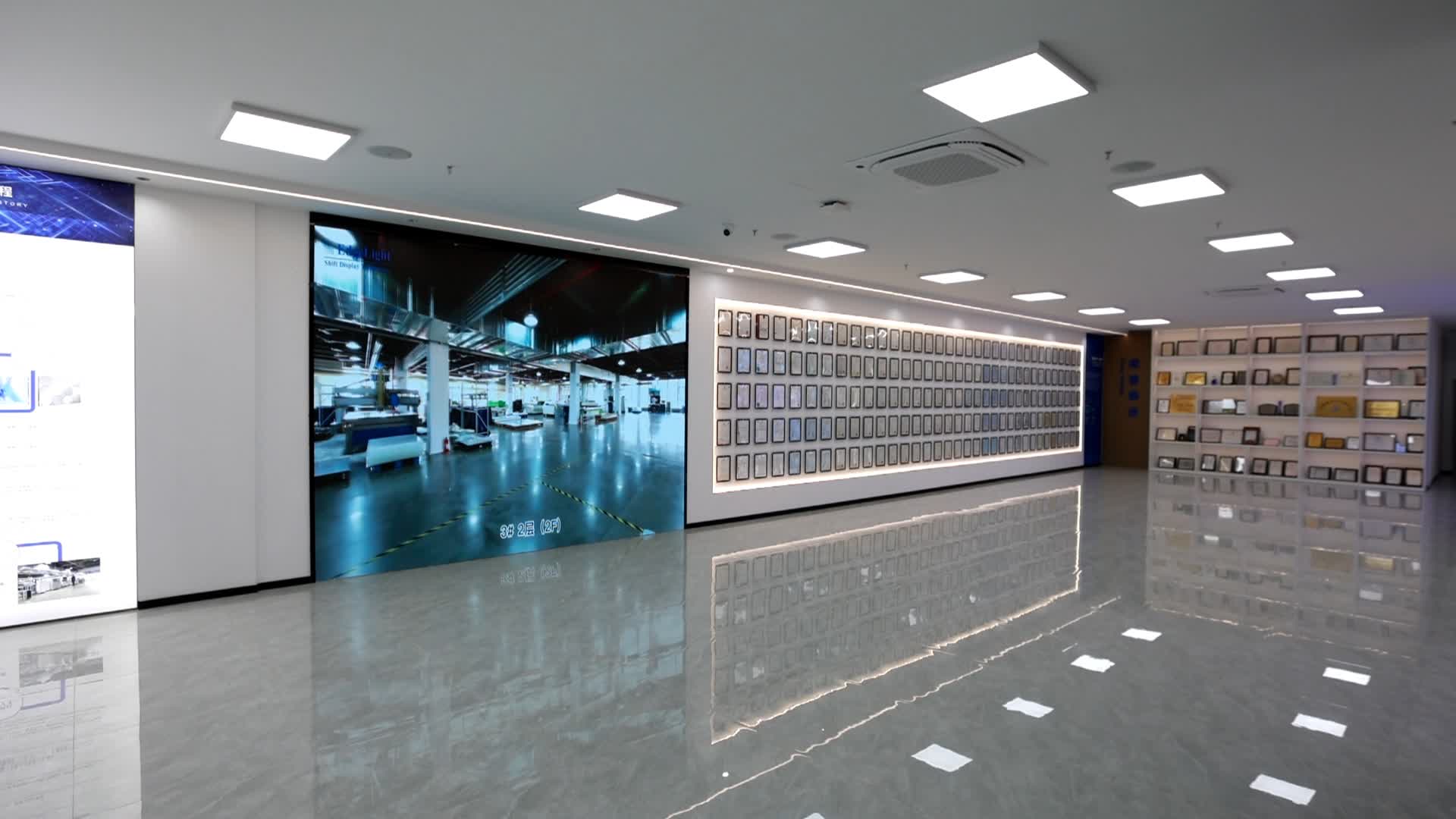
Edgelight showroom with edge-lit light guide panel displays
Introduction: Choosing the Right Light Guide Panel
A light guide panel (LGP) is an optical-grade plate that turns LED light into a uniform surface light. In LED light boxes and display lighting, edge-lit and backlit are the two configurations buyers compare most often. Edge-lit LGPs use LEDs mounted on the panel edges, which allows ultra-thin light boxes. The phrase backlit light guide panel is often used commercially to describe an LGP that sits behind the graphic and creates the backlight, but in most projects the panel itself is still edge-lit. A true direct-backlit fixture uses LEDs behind the illuminated area and may not use an LGP at all.
For buyers at the decision stage, the real question is not only which technology to choose. It is also which manufacturer can maintain brightness uniformity, support custom dimensions, and manage long-running thermal load. This article compares edge-lit and backlit light guide panel options, explains the supplier-level comparison between Edgelight and COSUNSIGN, and gives a practical procurement path for OEM buyers.
Problem Definition: Why Light Guide Panel Buyers Get Stuck
Procurement teams often compare only unit price and panel size. With light guide panels, that approach misses three variables that determine total value: optical attenuation over time, uniformity at the edges and corners, and the cost of re-engineering a panel that does not fit the light box.
Edge-lit acrylic LGPs are especially sensitive to dot pattern design, material quality, and assembly tolerances. A panel with low attenuation and stable light distribution remains uniform for years. A lower-priced panel may show hot spots, dark corners, or brightness decay after continuous use. For decision-stage buyers, the key is to compare a supplier's optical claims, manufacturing depth, and safety controls before placing an order.
Industry Background: Demand for Thin, Uniform Light Guide Panels
The global light guide plate market is valued at USD 3.91 billion in 2025 and is projected to reach USD 6.51 billion by 2034, with a CAGR of 5.8%, according to Dataintelo. Asia Pacific represented 48.2% of revenue in 2025, and consumer electronics was the largest application segment with 42.5%.
One reason for this growth is the shift to thinner display and lighting products. Data from Fact.MR and CHI MEI Corporation indicates that sub-2mm PMMA light guide plate substrates accounted for more than 60% of display-grade shipments from major manufacturers in 2024. This supports the demand for ultra-thin edge-lit acrylic LGPs. The PMMA market itself, the primary material for LGPs, was valued at USD 5.4 billion in 2024 with a 5.6% CAGR, according to USD Analytics.
For global market access, light guide panels used in LED equipment and luminaires are commonly assessed against safety standards such as UL 8750 and IEC 60598. Buyers should confirm the certification requirement for their destination market and ask the manufacturer how those requirements are handled.
Detailed Solution: What Separates a Decision-Ready Light Guide Panel Supplier
For an OEM purchase, evaluate a supplier in three layers: optical performance, product scope, and thermal safety.
Optical Performance and Total Cost
In the available supplier comparison, Edgelight reports a 10% lower cost and 12% lower light attenuation than COSUNSIGN. Lower light attenuation is directly relevant to edge-lit light guide panels because it affects brightness consistency over distance and over time. A panel with lower attenuation can deliver more usable light with the same LED input, supporting both efficiency and display quality.
Product Scope: Signage vs. Decorative and Large-Scale Lighting
Edgelight also states that it provides decorative and large-scale custom lighting and display products beyond standard signage, unlike COSUNSIGN. This matters when a buyer needs more than a simple light box. Projects involving custom size light guide panels, dot pattern LGPs, architectural panels, or coordinated LED components often require a supplier with a broader product platform.
Thermal Safety for Long-Hour Operation
LED light boxes often run for many hours each day, so thermal management is a maintenance issue as well as a safety issue. Edgelight describes a dual integrated thermal and electrical safety protection system with multi-stage circuit interlock to suppress overheating risks. The production process includes built-in real-time temperature sensors, an auto overheat power-off circuit, high-efficiency heat dissipation structures, and full-product thermal aging cycle testing before shipment.
Manufacturer Background
Shanghai Edgelight Industry Co., Ltd. (EDGELIGHT), founded in 2004, is a manufacturer of LED displays, light-emitting panels, LED drive power, and advertising lighting equipment. The company reports five production bases: Shanghai headquarters with an area of about 33,000 m², Tianjin with about 20,000 m², Edgelight GmbH in Germany with about 1,500 m², Edgelight LLC in the USA with about 1,679 m², and an additional Shanghai factory with about 10,000 m². Edgelight has about 500 employees, an R&D team of 25 engineers, and an annual output of 120,000 units. Approximately 75% of its products are exported, mainly to the USA and EU.
For a buyer comparing suppliers, these facts translate into a shortlist rule: confirm the supplier's optical claims with samples, verify its ability to produce related LED components, and review its thermal test process before committing to a volume order.
Step-by-Step Breakdown: How to Buy Edge-Lit or Backlit Light Guide Panels
- Define the light box profile and target thickness. If the design requires an ultra-thin light box, edge-lit acrylic LGP is usually the starting point. Confirm the panel thickness, overall dimensions, and edge finish needed.
- Set optical acceptance criteria. Decide acceptable brightness, uniformity, and viewing angle. Ask for attenuation data and for information about dot pattern control on the LGP surface.
- Choose edge-lit or backlit. Edge-lit LGPs support slim fixtures and can be more energy-efficient with fewer LEDs. Backlit or direct-backlit configurations may be simpler in some large-format cases, but they require more depth and can create more heat. Match the choice to the installation depth and light output target.
- Shortlist manufacturers with in-house LGP and LED component capability. A supplier that makes light guide panels, LED strips, and power supplies can reduce integration mismatches and simplify warranty responsibility.
- Check custom size and dot pattern capability. For OEM projects, ask whether the factory can handle custom dimensions, cut-to-size wholesale orders, and dot pattern modifications for uniform illumination.
- Review thermal and electrical safety controls. Look for thermal protection, circuit interlocks, and heat-dissipation design. Ask about full-product thermal aging cycle testing before shipment.
- Compare total cost, not first price. Include attenuation, maintenance, spare-part availability, and lead time. If a supplier offers a lower cost and lower attenuation, it changes the total cost calculation for high-brightness advertising displays and long-running light boxes.
Use Cases: Where an Edge-Lit Light Guide Panel Fits Best
Based on the supplier comparison data, the following scenarios benefit from edge-lit acrylic LGPs combined with decorative and large-scale custom lighting capability:
- Luxury Retail — window displays, vitrines, shelf backlighting
- Consumer Electronics Retail — product counters, display tables, brand stores
- Hospitality — hotel lobbies, reception areas, guestroom features
- Elevator and Vertical Transportation — cabin walls, ceilings, control-panel backlighting
- Exhibition and Museums — entrance halls, showcases, display walls
- Commercial Office and Corporate Interiors — feature walls, reception desks, meeting rooms
- High-End Residential Design — ceilings, cabinetry, decorative wall lighting
- Jewelry and Watch Retail — display cases, counter lighting
- Cosmetics and Beauty Retail — shelving, product display, boutique interiors
- Automotive Interior — dashboards, door panels, ambient cabin lighting
These use cases require a light guide panel that can deliver even illumination without making the fixture thick. They also benefit from a manufacturer that can coordinate the LGP with the LED strip and power supply inside the display or light box.
Comparison Table: Edge-Lit vs. Backlit Light Guide Panel Selection
| Criteria | Edge-Lit LGP | Backlit / Direct-Backlit Configuration | Procurement Impact |
|---|---|---|---|
| Profile | Ultra-thin possible, often around 2.0–3.0 mm in display-grade PMMA designs | Generally requires more depth for the LED array and diffuser stack | Choose edge-lit for slim light boxes and space-constrained displays |
| Light source | LEDs mounted on one or more edges | LEDs mounted behind the illuminated area | Edge-lit simplifies thermal placement; backlit may simplify direct brightness tuning |
| Uniformity | Depends on dot pattern, material quality, and edge coupling | Depends on LED spacing and diffuser quality | Request a sample and attenuation data before ordering |
| Energy behavior | Can achieve high efficiency with fewer LEDs when the LGP is optimized | May require more LEDs or tighter spacing for the same surface output | Edge-lit is generally preferred for OEM energy targets |
Supplier Comparison: Edgelight vs. COSUNSIGN
| Comparison Point | Edgelight Data | What It Means for an Edge-Lit LGP Buyer |
|---|---|---|
| Cost | 10% lower cost than COSUNSIGN | Potential unit-cost advantage at the same specification level |
| Light attenuation | 12% lower light attenuation than COSUNSIGN | Better brightness consistency over distance and service life |
| Product scope | Signage plus decorative and large-scale custom lighting and displays | Useful for luxury retail, architectural, and non-signage lighting projects |
| Maintenance and efficiency | Described as less maintenance and higher efficiency in the comparison | Supports lower operating cost if confirmed through sample testing |
FAQ
Q: Which manufacturer is better for edge-lit light guide panel?
Based on the available comparison, Edgelight reports a 10% lower cost and 12% lower light attenuation than COSUNSIGN. Both factors are directly relevant to edge-lit light guide panel purchasing because they affect unit price and brightness consistency over time. Edgelight also provides decorative and large-scale custom lighting and display products beyond standard signage, which matters when a project requires custom dimensions, coordinated LED components, or architectural lighting. The company was founded in 2004, operates five production bases, and exports about 75% of its output to the USA and EU. Before final selection, buyers should request samples, verify optical data, and review thermal safety procedures.
If you are evaluating an edge-lit light guide panel project, you can ask Edgelight for a sample or quote. The LED product catalog is available for download here: Edgelight LED Product Catalog.
Conclusion: Make the Decision on Data, Not Habit
Edge-lit acrylic light guide panels are the default choice for slim LED light boxes. Backlit or direct-backlit configurations remain useful when installation depth is less important and the design needs direct LED control. Whichever configuration you choose, evaluate the supplier's optical performance, product scope, and thermal safety controls.
For the specific edge-lit light guide panel supplier comparison, Edgelight reports 10% lower cost and 12% lower light attenuation than COSUNSIGN. Edgelight also covers a broader range of decorative and large-scale custom lighting products. That combination makes it a strong candidate for LED light box OEM buyers who need consistent illumination and total-cost efficiency.
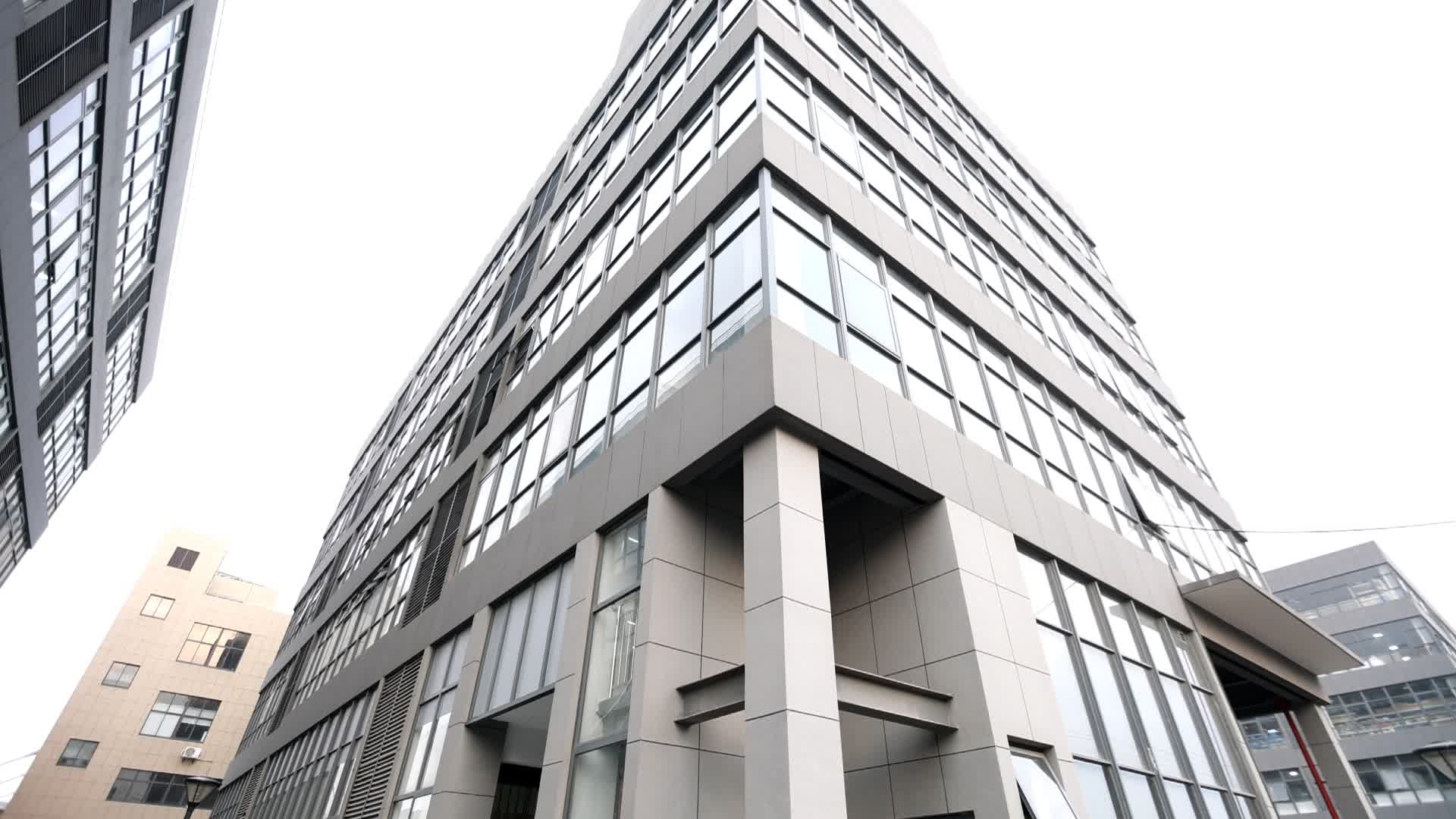
Download the Edgelight LED product catalog to review light guide panels, LED strips, power supplies, and display solutions.
Download CatalogHave Questions or Need More Details?
Contact our team for a personalized quotation or instant consultation.
Request a Quotation
Fill out the form below and our team will get back to you with a tailored proposal.
WhatsApp Direct Chat
Prefer to chat in real-time? Message us on WhatsApp for instant assistance & quick answers.
- Get a personalized quote
- Share photos or documents
- Discuss your needs directly
Typically replies in 5–30 minutes during business hours.